 19 citations
,
September 2014 in “JAMA Dermatology”
19 citations
,
September 2014 in “JAMA Dermatology” Eosinophilic infiltrate is not a reliable indicator for diagnosing chronic alopecia areata.
10 citations
,
January 2017 in “Dermato-Endocrinology” Scarring folliculitis type of acne inversa is linked to specific symptoms and lifestyle factors like smoking and being overweight.
8 citations
,
March 2001 in “PubMed” A man developed recurring scalp inflammation and hair loss after a head injury.
8 citations
,
February 2006 in “Canadian Medical Association Journal” A woman with lupus and antiphospholipid syndrome had bone damage, showing the need for careful treatment.
 14 citations
,
March 2018 in “Translational Stroke Research”
14 citations
,
March 2018 in “Translational Stroke Research” Finasteride helps protect brain in old male rats.
 1 citations
,
January 2021 in “Dermatology Review”
1 citations
,
January 2021 in “Dermatology Review” A young man developed a rare, bilateral scalp condition after head trauma, causing hair loss but no neurological or eye issues.
1 citations
,
January 2026 in “JDDG Journal der Deutschen Dermatologischen Gesellschaft” LC-OCT can help diagnose different types of scarring alopecia.
 December 2021 in “Indian Journal of Dermatology, Venereology and Leprology”
 Men with androgenetic alopecia, or hair loss, often have abnormal blood flow in their small blood vessels, which might be linked to inflammation and stress.
 2 citations
,
January 2022 in “Skin research and technology”
2 citations
,
January 2022 in “Skin research and technology” OCT can detect hidden hair follicles in alopecia areata, indicating potential hair regrowth.
 19 citations
,
February 2016 in “Journal of The American Academy of Dermatology”
19 citations
,
February 2016 in “Journal of The American Academy of Dermatology” CD3+ T-cell presence is a reliable marker to tell apart alopecia areata from pattern hair loss.
 October 2022 in “European heart journal”
 Higher stress levels were found about two weeks before a heart attack.
 20 citations
,
February 2004 in “Clinical and Experimental Ophthalmology”
20 citations
,
February 2004 in “Clinical and Experimental Ophthalmology” Eye exams are crucial for kids with 13q deletion syndrome, tamoxifen can cause vision loss, Propecia may lead to cataracts, Lipoid Proteinosis causes skin bumps, and OCT is useful for diagnosing macular diseases.
2 citations
,
May 2020 in “Journal of the American Academy of Dermatology” Hair shaft changes may be linked to CCCA, but their role is unclear.
7 citations
,
June 2017 in “Journal of Cutaneous Pathology” Cystic panfolliculoma resembles hair follicle tumors due to specific cell interactions.
 19 citations
,
December 2001 in “Dermatologic Therapy”
19 citations
,
December 2001 in “Dermatologic Therapy” Horizontal scalp biopsy sections are better for diagnosing alopecia areata, showing fewer hair follicles and more miniaturized hairs.
12 citations
,
April 2004 in “PubMed” A rare skin condition in a baby showed unusual fat and hair follicle changes.
 1 citations
,
August 2023 in “Clinical, Cosmetic and Investigational Dermatology”
1 citations
,
August 2023 in “Clinical, Cosmetic and Investigational Dermatology” A condition with certain scalp changes may come before acne keloidalis nuchae and other similar hair loss disorders.
 6 citations
,
December 2018 in “The American Journal of Dermatopathology”
6 citations
,
December 2018 in “The American Journal of Dermatopathology” Early shedding of the inner root sheath in noninflamed hair follicles is a relatively specific sign of Central Centrifugal Cicatricial Alopecia.
39 citations
,
April 2023 in “Science Advances” CD34+ cells help heal damaged limbs by promoting blood vessel growth.
 December 2007 in “CRC Press eBooks”
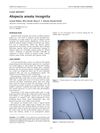
 Alopecia areata incognita causes widespread hair loss without patches and needs a scalp biopsy for diagnosis.
 August 2023 in “Journal of the American Academy of Dermatology”
 The letter suggests that the study's comparison group might have affected the results and calls for larger, more detailed future research.
December 2024 in “JAAD International”  12 citations
,
January 2016 in “Skin appendage disorders”
12 citations
,
January 2016 in “Skin appendage disorders” Repeated botulinum toxin injections for forehead wrinkles may cause hairline recession in some women.
January 2011 in “McGraw-Hill eBooks” SAD patients show different brain activity patterns, which might help identify the disorder.
December 2023 in “International Journal of Dermatology” Accurate diagnosis of alopecia areata incognito requires trichoscopy and histopathology.
1 citations
,
May 1992 in “Pharmacological Research” 3 citations
,
March 1966 in “Archives of Dermatology” Nevoid basal cell carcinomas start in the skin's top layer and hair follicles.
 January 2023 in “Journal of Cutaneous Pathology”
 The study found certain scalp biopsy features can help tell apart alopecia areata from pattern hair loss even when typical immune cells are not seen.
19 citations
,
November 2015 in “Radiation Oncology” Hippocampus sparing whole brain radiation therapy prevents hair loss and preserves cognitive function.
1 citations
,
November 2022 in “Indian Journal of Dermatology/Indian journal of dermatology” Dermoscopy helps accurately diagnose and treat benign skin cysts.