Monocyclic aromatic compounds are important for developing various drugs and treatments.
 June 2026 in “Current Oncology Reports”
 Sacituzumab Tirumotecan shows promise in treating gynecologic cancers with manageable side effects.
 December 2025 in “Scientific Reports”
 Gut microbiota and metabolic pathways may play a key role in PCOS development.
Hit15 shows promise as a COVID-19 treatment by reducing virus infection and inflammation.
 January 2023 in “Han'gug mi'saengmul saengmyeong gong haghoeji/Han-guk misaengmul saengmyeong gonghak hoeji”
 NOC-4 extract promotes black hair and hair growth effectively.
 May 2017 in “bioRxiv (Cold Spring Harbor Laboratory)”
 The peach gene pCTG134 helps control the interaction between auxin and ethylene hormones during fruit ripening.
The document explains how certain drugs block hormones to treat cancers like breast and prostate cancer.
 January 2006 in “The Journal of Korean Medicine Ophthalmology and Otolaryngology and Dermatology”
 Rubus coreanum may help hair growth but not through the tested mechanisms, and none of the herbal extracts help with acne.
 4 citations
,
January 2014 in “RSC Advances”
4 citations
,
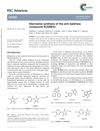
January 2014 in “RSC Advances” A new, less toxic and more efficient method to create the anti-baldness compound RU58841 was developed in 2014.
March 2009 in “European Urology Supplements”  February 2019 in “Neoreviews”
 The infant with a urea cycle disorder improved with treatment and a liver transplant.
 9 citations
,
March 1968 in “The BMJ”
9 citations
,
March 1968 in “The BMJ” A woman's severe skin reaction was caused by an allergy to a skin treatment.
22 citations
,
May 2011 in “European Journal of Cancer” The drug combination was safe and showed promise in treating advanced tumors.
 359 citations
,
September 2017 in “European Journal of Epidemiology”
359 citations
,
September 2017 in “European Journal of Epidemiology” The Rotterdam Study updated findings on elderly health, focusing on heart disease, genetics, lifestyle effects, and disease understanding.
 9 citations
,
January 2017 in “Organic Process Research & Development”
9 citations
,
January 2017 in “Organic Process Research & Development” In 2017, a new method was created to efficiently produce a topical antiandrogen, a compound used to treat excess sebum and acne, with a high yield and purity.

Understanding hair surface properties is key for effective hair care products.
 January 2018 in “Przegla̧d dermatologiczny”
 The Polish Dermatological Society recommends personalized treatment for cutaneous lupus, including lifestyle changes, medications, and monitoring, with specific drugs for severe cases.
 37 citations
,
September 2003 in “Journal of Medicinal Chemistry”
37 citations
,
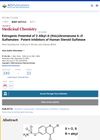
September 2003 in “Journal of Medicinal Chemistry” A substance called Compound 2g can strongly block STS (a hormone-related enzyme) without affecting estrogen levels, making it potentially good for treating breast cancer.
16 citations
,
September 1999 in “Journal of Investigative Dermatology Symposium Proceedings”  July 2025 in “International Journal of Health and Medicine”
 Tamsulosin and solifenacin together effectively reduce symptoms in BPH patients.
 16 citations
,
October 1994 in “The Journal of Steroid Biochemistry and Molecular Biology”
16 citations
,
October 1994 in “The Journal of Steroid Biochemistry and Molecular Biology” Two non-steroidal antiandrogens, RU 58841 and RU 56187, form a common metabolite at different rates, which may influence their effects; RU 56187 could be used for prostate cancer treatment and RU 58841 for acne treatment.
 7 citations
,
March 2013 in “Tetrahedron Letters”
7 citations
,
March 2013 in “Tetrahedron Letters” New method makes important drug ingredients more easily without needing extra purification steps.
 5 citations
,
October 2014 in “Scottish medical journal”
5 citations
,
October 2014 in “Scottish medical journal” Nitrofurantoin may cause sub-acute cutaneous lupus erythematosus.
New steroid derivatives show promise as anticancer agents, even against resistant cells.
 15 citations
,
January 2020 in “RSC advances”
15 citations
,
January 2020 in “RSC advances” The new palladium catalyst is effective and reusable for making pharmaceutical ingredients.
 6 citations
,
November 2004 in “Bioorganic & Medicinal Chemistry Letters”
6 citations
,
November 2004 in “Bioorganic & Medicinal Chemistry Letters” Scientists created iodinated arylhydantoins and arylthiohydantoins that could potentially be used for imaging prostate cancer. Some versions with specific side-chains showed high potential for this use.
14 citations
,
June 2014 in “World Journal of Urology” The herbal combination of saw palmetto and stinging nettle reduces nighttime urination in men with urinary issues.
 January 2019 in “Nihon Yakuri Gakkai nenkai yoshishu”
 Current treatments for lower urinary tract symptoms include α1-blockers, 5ARIs, PDE5 inhibitors, anticholinergic agents, and β3-adrenergic receptor agonists.
 22 citations
,
January 2018 in “European urology focus”
22 citations
,
January 2018 in “European urology focus” New drugs and combination therapies are improving treatment for lower urinary tract symptoms.
January 2018 in “Haydarpaşa Numune Hastanesi tıp dergisi” Tamsulosin's sulfonamide group may contribute to floppy iris syndrome.