9 citations
,
March 1993 in “Biochemical Pharmacology” Rat skin can convert minoxidil into its active form, aiding hair growth.
6 citations
,
April 1989 in “Nuclear Instruments and Methods in Physics Research Section B Beam Interactions with Materials and Atoms” Sulphur in hair follicles increases from the bulb and then levels off, while other elements vary in distribution.
175 citations
,
December 1980 in “Archives of Dermatology” Trichothiodystrophy is a condition with brittle hair and various physical and mental issues due to low sulfur in proteins.
26 citations
,
January 1983 in “PubMed” Trichothiodystrophy involves brittle hair due to low sulfur amino acids, not a transport defect.
13 citations
,
March 1999 in “Biochemical Journal” Overexpressing SSAT in mice makes them highly sensitive to polyamine analogues, causing liver damage and high mortality.
 April 2024 in “Advances in Redox Research”
 Human hair strength and health are linked to sulfur compounds that can be reduced by stress but improved with sulfur supplements.
305 citations
,
March 2008 in “AJP Endocrinology and Metabolism” SSAT is a key enzyme affecting cell growth and metabolism, with potential but risky use in disease treatment.
January 2011 in “대한피부과학회지” A 7-year-old girl was diagnosed with trichothiodystrophy due to low sulfur levels in her hair.
2 citations
,
November 1973 in “PubMed” Sulfur-35 can be used to track hair growth and past exposure.
 14 citations
,
November 2015 in “Annals of the New York Academy of Sciences”
14 citations
,
November 2015 in “Annals of the New York Academy of Sciences” Changing the diet of mice lacking the enzyme CBS can affect symptoms related to the genetic condition.
January 2016 in “Zurich Open Repository and Archive (University of Zurich)” Dietary L-serine supplementation can reduce symptoms of HSAN1 by lowering harmful 1-deoxySL levels.
 January 2025 in “Advances in Dermatology and Allergology”
 Eating foods with sulfhydryl may worsen pemphigus vulgaris.
62 citations
,
December 2007 in “Journal of biological chemistry/The Journal of biological chemistry” A specific chemical change in the S100A3 protein leads to the formation of a four-part structure important for hair formation.
January 2008 in “Chinese Journal of Spectroscopy Laboratory” Cysteine formation on hair indicates damage, best detected at pH 4.5.
June 1998 in “Pathophysiology” Selenium is crucial for health, but both deficiency and excess can cause problems.
September 2016 in “Journal of Engineering and Technological Science” Women with telogen effluvium have an imbalance in thiol-disulphide, suggesting oxidative stress may contribute to hair loss.
 111 citations
,
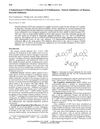
August 2002 in “Journal of Medicinal Chemistry”
111 citations
,
August 2002 in “Journal of Medicinal Chemistry” New compounds were made that block an enzyme linked to breast cancer better than existing treatments.
 9 citations
,
March 1968 in “The BMJ”
9 citations
,
March 1968 in “The BMJ” A woman's severe skin reaction was caused by an allergy to a skin treatment.
February 2026 in “UiTM Institutional Repositories (Universiti Teknologi MARA)” Cis-UCA can form new compounds without enzymes, and sulphide donors reduce its UVB-induced toxicity in skin cells.
14 citations
,
September 2016 in “Journal of Photochemistry and Photobiology B Biology” UV exposure damages hair, increasing thiols and altering protein structure.
January 2011 in “Linchuang pifuke zazhi” 37 citations
,
February 2005 in “Journal of Investigative Dermatology” Overexpression of SSAT causes hair loss and skin issues, but reducing putrescine can help.
2 citations
,
January 1968 in “PubMed” Sulfur-containing radioprotectors can protect hair from X-ray damage if given before exposure but worsen damage if given after.
 January 2024 in “International Journal of Cosmetic Science”
 A new method using 1,4-n-butylene dimaleate effectively repairs and strengthens damaged hair.
March 1990 in “Journal of Dermatological Science” 14 citations
,
March 2014 in “Experimental and Molecular Pathology” Sulfur mustard damages hair follicles and sebaceous glands in mice.
 June 2011 in “Journal of clinical and experimental investigations”
 Oral zinc sulphate is an effective and safe treatment for thallium poisoning.
The transporter protein SH1446 in Staphylococcus hominis is key to underarm odor production.
30 citations
,
August 1984 in “Journal of the American Academy of Dermatology” Low-sulfur hair syndrome can cause UVB sensitivity and testicular failure.
13 citations
,
November 2017 in “Neurotoxicity research/Neurotoxicity resarch” Sodium metabisulfite increases sodium channel activity, leading to higher cell excitability and potential damage.