 5 citations
,
June 1994 in “Journal of Cutaneous Pathology”
5 citations
,
June 1994 in “Journal of Cutaneous Pathology” No CD44 in alopecia areata, present in normal and androgenetic alopecia.
 15 citations
,
October 2022 in “Allergy”
15 citations
,
October 2022 in “Allergy” Dupilumab treatment reduces Th2-related markers and helps hair growth in alopecia areata, showing Th2's role in the condition.
October 2024 in “Cosmetics” Electric stimulation at 448 kHz can promote hair growth by enhancing cell activity in hair follicles.
7 citations
,
June 2001 in “PubMed” Pig ear skin is similar to human skin, making it useful for research, but it has some differences.
 3 citations
,
April 2002 in “The Lancet”
3 citations
,
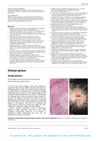
April 2002 in “The Lancet” Painful hair loss in an elderly woman was caused by giant cell arteritis, not just aging.
24 citations
,
January 1985 in “Dermatology” Higher levels of certain immune cells in hair follicles may contribute to alopecia areata.
 4 citations
,
August 2017 in “Journal of cutaneous pathology”
4 citations
,
August 2017 in “Journal of cutaneous pathology” An 8-year-old girl had a rare, benign skin tumor on her forehead.
31 citations
,
April 2016 in “Journal of the American Academy of Dermatology” Oral dexamethasone may help regrow hair in adults with alopecia totalis and universalis.
 March 2000 in “Aesthetic Surgery Journal”
 Hair transplantation techniques have improved and are beneficial for aesthetic surgery practices.
37 citations
,
September 2010 in “Journal of Hospital Infection” Hair follicles in the nose may need better cleaning to prevent Staphylococcus aureus infections.
January 2026 in “Biospecies” A 70% black ear mushroom extract hair tonic effectively stops M. furfur growth.
 5 citations
,
January 2019 in “Skin appendage disorders”
5 citations
,
January 2019 in “Skin appendage disorders” The conclusion is that it's important to tell apart alopecia areata from lipedematous alopecia for proper treatment, as alopecia areata can be reversed.
 February 2026 in “Cureus”
 Trichoscopy helps correctly diagnose alopecia areata, not syphilitic alopecia, in patients with recent syphilis.
Alopecia areata causes patchy hair loss on the scalp and body.
 February 2025 in “Brazilian Journal of Hair Health”
 Multiparametric ultrasound effectively monitors scalp changes after using vasoconstrictive cosmetics.
33 citations
,
March 2015 in “Experimental Dermatology” LHX2 and SOX9 identify unique hair follicle cell groups, crucial for hair maintenance.
 July 2024 in “JAAD Case Reports”
 Corticosteroid injections for hair loss may cause eye problems, so caution is needed.
 April 2017 in “Journal of Investigative Dermatology”
 SB414 may be an effective treatment for atopic dermatitis by reducing swelling and bacterial infection.
4 citations
,
October 2024 in “Experimental Dermatology” CD8A and FOXD2-AS1 may be key for diagnosing and treating alopecia areata.
40 citations
,
April 1999 in “Journal of Histochemistry & Cytochemistry” S100A3 protein is mainly found in specific parts of human hair cells.
December 2020 in “Journal of Face Aesthetics” Trichoscopy effectively helps diagnose different types of hair loss in women.
22 citations
,
February 2000 in “Journal of the American Academy of Dermatology” Eosinophils are not a reliable marker for diagnosing alopecia areata.
 1 citations
,
August 2023 in “Genome research”
1 citations
,
August 2023 in “Genome research” The spiny mouse regenerates ear tissue asymmetrically, with gene expression differences possibly explaining its unique healing abilities.
 November 2022 in “The journal of investigative dermatology/Journal of investigative dermatology”
 Researchers made a detailed map of gene activity for different parts of human hair follicles to help create targeted hair disorder treatments.
5 citations
,
January 1983 in “PubMed” Human skin releases different steroids, with some coming from sebaceous glands and others from sweat glands.
2 citations
,
May 2018 in “Dermatologic Surgery” January 2014 in “Medical Innovation of China” Androgen receptor differences may contribute to hair loss in AGA patients.
January 2018 in “JAMA dermatology” Facial papules can occur with lichen planopilaris.
September 2025 in “Journal of the American Academy of Dermatology” Deuruxolitinib significantly improves hair satisfaction in severe alopecia areata patients.
 90 citations
,
October 1983 in “British Journal of Dermatology”
90 citations
,
October 1983 in “British Journal of Dermatology” The unit area trichogram is a reliable method to assess hair loss and treatment response in people with androgenic alopecia by measuring hair density and thickness.