 77 citations
,
April 1999 in “Dermatologic Clinics”
77 citations
,
April 1999 in “Dermatologic Clinics” The document concludes that follicular unit transplantation offers more natural results and better graft survival than older hair transplant methods.
 37 citations
,
May 2016 in “Deutsches Arzteblatt International”
37 citations
,
May 2016 in “Deutsches Arzteblatt International” Hair loss requires customized treatments based on its various causes and types.
 14 citations
,
January 2015 in “Current problems in dermatology”
14 citations
,
January 2015 in “Current problems in dermatology” Female pattern hair loss treatments vary in effectiveness and may have side effects.
 8 citations
,
April 2001 in “Dermatologic Surgery”
8 citations
,
April 2001 in “Dermatologic Surgery” Michael L. Beehner proposed a standardized way to describe balding areas on the scalp to help hair restoration experts communicate better.
 7 citations
,
December 1984 in “The Journal of Dermatologic Surgery and Oncology”
7 citations
,
December 1984 in “The Journal of Dermatologic Surgery and Oncology” Early transplantation helps avoid embarrassment and allows relaxed transplant sessions, but be cautious with young patients with thinning hair.
 3 citations
,
July 1987 in “Dermatologic Clinics”
3 citations
,
July 1987 in “Dermatologic Clinics” Scalp reduction can treat severe hair loss, but success depends on scalp flexibility and it may cause complications like pain, infection, and cosmetic issues.
 August 2018 in “Journal of The American Academy of Dermatology”
 A 90-year-old woman's hand lesion was a rare, aggressive skin cancer treated successfully with surgery.
 April 2001 in “Dermatologic Surgery”
 Michael L. Beehner proposed a standardized naming system for balding scalp areas to help hair restoration surgery.
 November 1995 in “Dermatologic Surgery”
 The concentric mini-micrografting method is effective for extensive baldness, creating a natural look and efficiently using donor hair.
 February 2007 in “Facial Plastic Surgery”
 Dr. Sheldon S. Kabaker acknowledges the progress in hair restoration surgery and the shift towards natural results, stressing the need for patient education and future advancements.
 November 2009 in “Cambridge University Press eBooks”
 The document's conclusion cannot be provided because the content is not accessible.
 41 citations
,
July 2017 in “Journal of The American Academy of Dermatology”
41 citations
,
July 2017 in “Journal of The American Academy of Dermatology” Men with Frontal fibrosing alopecia typically lose hair on the front scalp and sometimes on sideburns and upper lip, with treatments showing varied success.
 34 citations
,
December 1995 in “Pediatric Dermatology”
34 citations
,
December 1995 in “Pediatric Dermatology” Congenital Triangular Alopecia is a rare, non-scarring hair loss that can be surgically treated in females for cosmetic reasons.
 6 citations
,
January 2017 in “British Journal of Dermatology”
6 citations
,
January 2017 in “British Journal of Dermatology” Frontal fibrosing alopecia is a scarring hair loss condition mainly affecting older women, with no known cause and treatments that may help stabilize hair loss.
 3 citations
,
January 2021
3 citations
,
January 2021 Non-surgical treatments like thread lifts, PRP therapy, HIFU, and radiofrequency effectively rejuvenate and tighten facial skin.
 3 citations
,
September 2010 in “International Society of Hair Restoration Surgery”
3 citations
,
September 2010 in “International Society of Hair Restoration Surgery” Balancing artistic design and precision improves hair transplant results.
 2 citations
,
January 2014 in “Archives of Aesthetic Plastic Surgery”
2 citations
,
January 2014 in “Archives of Aesthetic Plastic Surgery” The procedure effectively created natural-looking hairlines and improved facial balance in female patients.
 1 citations
,
August 2013 in “Facial Plastic Surgery Clinics of North America”
1 citations
,
August 2013 in “Facial Plastic Surgery Clinics of North America” Hair restoration has evolved into a refined art, providing happiness to patients and doctors.
December 2025 in “Journal of Pharmacy And Bioallied Sciences” Trichoscopy effectively shows early positive effects of minoxidil in male pattern hair loss, improving patient satisfaction.
 December 2019 in “Journal of pediatrics & neonatology”
 A 13-year-old boy had a rare, stable type of hair loss with little chance of regrowth, but treatment is available for looks.
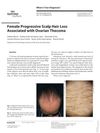 January 2019 in “Skin appendage disorders”
 A woman's hair loss was linked to a rare hormone-secreting ovarian tumor, treated with surgery and hair loss medication.
 May 2011 in “Archives of Plastic Surgery”
 Korean men in their 20s and 30s most commonly have an inverted U-shaped hairline.
 January 1997 in “Journal of Toxicology-cutaneous and Ocular Toxicology”
 The book "Hair Replacement" is a detailed guide on hair transplant and treatments, useful for surgeons and clinicians.
 September 2015 in “SelfCare Journal”
 Two treatments for male pattern hair loss are minoxidil and finasteride, but they have side effects and may not satisfy everyone.
 August 2014 in “Aesthetic Surgery Journal”
 Book covers all aspects of hair restoration surgery, highly recommended.
 100 citations
,
April 2010 in “Expert Opinion on Pharmacotherapy”
100 citations
,
April 2010 in “Expert Opinion on Pharmacotherapy” Hair loss in men treated best with early medication or transplant, new treatments researched.
 March 2025 in “Journal of Craniofacial Surgery”
 Natural hairline asymmetry should be embraced for better-looking hair transplants.
October 2025 in “The Laryngoscope” The Endotine Forehead-mini effectively lowers the hairline with lasting results and minimal risks.
 339 citations
,
February 2014 in “Journal of The American Academy of Dermatology”
339 citations
,
February 2014 in “Journal of The American Academy of Dermatology” Most patients with frontal fibrosing alopecia are postmenopausal women, and treatments like finasteride and dutasteride can improve or stabilize the condition.
 175 citations
,
November 2009 in “PLOS ONE”
175 citations
,
November 2009 in “PLOS ONE” Women look young for their age due to larger lips, less sun damage, and genes that prevent gray hair and wrinkles.