 9 citations
,
August 2013 in “PLOS ONE”
9 citations
,
August 2013 in “PLOS ONE” Genetic variants at 20p11 increase baldness risk in Chinese Han people.
5 citations
,
December 2022 in “Genes” Genetic differences affect how people respond to COVID-19.
4 citations
,
January 2014 in “Bone marrow transplantation” Alopecia areata can be transferred through stem cell transplants from affected siblings.
12 citations
,
October 2024 in “Cell”  26 citations
,
December 2022 in “Journal of the American Academy of Dermatology”
26 citations
,
December 2022 in “Journal of the American Academy of Dermatology” Monkeypox skin lesions show full-thickness skin death and swollen skin cells, with the virus found in affected cells.
 17 citations
,
January 2011 in “The Korean Journal of Hepatology”
17 citations
,
January 2011 in “The Korean Journal of Hepatology” Vogt-Koyanagi-Harada disease can develop during interferon therapy for chronic hepatitis C.
May 2005 in “Molecular Carcinogenesis” mrp/plf-mRNA can indicate tumor-promoting effects in skin.
April 2005 in “Journal of Investigative Dermatology” Vitamin D helps protect skin, PSORS1 gene's risk interval for psoriasis is expanded, hair follicles can be generated from mouse cells, and interferon-γ may cause pigmented skin lesions.
14 citations
,
February 1991 in “FEBS Letters” Introducing the rat OTC gene partially corrected OTC deficiency in mice.
January 2007 in “Edward Elgar eBooks” TSPO might help treat anxiety and depression.
13 citations
,
March 2023 in “Tissue Engineering and Regenerative Medicine” 20 citations
,
August 2021 in “Clinical and Experimental Dermatology” A skin rash after the AstraZeneca COVID-19 vaccine was treated successfully with medication.
April 2016 in “Archivio Istituzionale della Ricerca (Universita Degli Studi Di Milano)” Sox9 is important in the development of tumors in domestic animals.
 September 2012 in “Reactions Weekly”
 Two girls experienced temporary hair loss after getting the HPV vaccine, which may be related to the vaccine.
 January 2026 in “Nanoscale Advances”
 The nanocomposite effectively targets lung cancer cells without harming normal cells.
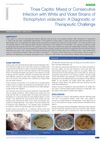 3 citations
,
January 2015 in “Journal of clinical and diagnostic research”
3 citations
,
January 2015 in “Journal of clinical and diagnostic research” Treating a boy's scalp infection was challenging because two different colors of the same fungus appeared.
 May 2022 in “Голова и шея.”
 Chronic tonsillitis is linked to NETosis activity, which may help tailor treatments and reduce tonsil removal surgeries.
20 citations
,
July 2020 in “bioRxiv (Cold Spring Harbor Laboratory)” Six existing drugs may help block virus entry in COVID-19.
 12 citations
,
August 2020 in “Annals of Oncology”
12 citations
,
August 2020 in “Annals of Oncology” Androgen deprivation therapy might be better for preventing COVID-19 than treating it.
 139 citations
,
December 1998 in “The journal of investigative dermatology/Journal of investigative dermatology”
139 citations
,
December 1998 in “The journal of investigative dermatology/Journal of investigative dermatology” K6hf is a unique protein found only in a specific layer of hair follicles.
 April 2026 in “Human Genome Variation”
 The MBTPS2 gene variant c.970+5G>A is a common mutation causing IFAP syndrome.
3 citations
,
April 2012 in “Cancer research” Mouse skin cancer progression involves a unique group of cells marked by ABCG2 and MTS24.
May 2025 in “Journal of the Egyptian Womenʼs Dermatologic Society” Hair follicles in nonsegmental vitiligo are better protected from immune attacks than in alopecia areata.
July 2024 in “Journal of Investigative Dermatology” INTASYL is a promising, adaptable RNAi technology for treating skin cancers.
21 citations
,
June 2004 in “Experimental Dermatology” Ber‐EP4 marks cells related to the secondary hair germ in hair follicles.
February 2026 in “Advanced Science” TTNPB helps turn stem cells into neural stem cells, improving depression-like behaviors in rats.
 1 citations
,
December 2020 in “Journal of Experimental Biology and Agricultural Sciences”
1 citations
,
December 2020 in “Journal of Experimental Biology and Agricultural Sciences” COVID-19 is caused by a virus from bats, and efforts focus on prevention and treatment research.
 19 citations
,
June 2008 in “Journal of Investigative Dermatology”
19 citations
,
June 2008 in “Journal of Investigative Dermatology” HPV genes in mice improve ear tissue healing by speeding up skin growth and repair.
 30 citations
,
December 2019 in “PLoS ONE”
30 citations
,
December 2019 in “PLoS ONE” The new delivery system improved raloxifene's skin absorption and effectiveness against cancer cells.
January 2009 in “Xumu shouyi xuebao” Sheep cells were successfully modified to include a spider silk protein gene.