Search
for
Sort by
Research
570-600 / 1000+ results
research P53 Acute west nile virus infection in an SLE patient – diagnostic and therapeutic challenges
SLE patients need careful diagnosis to distinguish infections from disease flares for proper treatment.
research Challenges associated with the identification of germline variants on myeloid malignancy genomic profiling—a Singaporean experience
Genomic profiling for myeloid cancers can find important inherited mutations, but it's challenging when these mutations aren't related to the patient's symptoms.
research Arsenic Trioxide as Effective Therapy for Relapsed Acute Promyelocytic Leukemia
Arsenic trioxide effectively treats relapsed acute promyelocytic leukemia with manageable side effects.
research Ichthyosiform Rash and Fever in a Child
The child has a scaly rash and fever, but tests show no infection.
research Poxvirus and Toxoplasma gondii co-infection in a free-ranging Paraguayan hairy dwarf porcupine (Coendou spinosus), Brazil
Neotropical porcupines can get co-infected with poxvirus and Toxoplasma gondii.
research TWEAK-conjugated selenoviologen as a novel photosensitizer for selective wound accumulation and synergistic healing of drug-resistant bacterial infections
SeV-Tp speeds up healing of drug-resistant infections by targeting wounds and killing bacteria with light activation.
research SWEET SYNDROME: AN UNUSUAL PRESENTATION OF CHRONIC GRANULOMATOUS DISEASE IN A CHILD
A child with Sweet syndrome was found to have chronic granulomatous disease and improved with treatment.
research Morphologic and molecular characterization of two novel Krt71 (Krt2-6g) mutations: Krt71 rco12 and Krt71 rco13
research The Human Papillomavirus Type 11 Upstream Regulatory Region Triggers Hair-Follicle-Specific Gene Expression in Transgenic Mice
The HPV type 11 region activates hair-specific gene expression in mice.

research DIAGNOSTIC VALUE OF CHROMOSOMAL MICROARRAY ANALYSIS IN PATIENTS WITH CONGENITAL ANOMALIES AND DYSMORPHIC FEATURES; DETAILS OF TWO NEW PATIENTS WITH 2q33 DELETIONS
Chromosomal microarray analysis is important for diagnosing rare genetic variations and guiding treatment.

research 944 Non-coding double stranded RNA induces retinoic acid synthesis and retinoid signaling to control regeneration
Non-coding RNA boosts retinoic acid production and signaling, aiding regeneration.
research Ha 1 and Ha 4-Trichocytic Cytokeratin Subunits Expression during Hair Development in Rat Embryonal Skin
The study investigated the expression of trichocytic cytokeratin subunits during hair development in rat embryonal skin, focusing on the Ha 1 and Ha 4 subunits. Researchers developed a monoclonal antibody (MAb 17) that specifically reacted with trichocytic cytokeratins, particularly Ha 1 and Ha 4, but not with other type I or type II keratin families. Using two-dimensional gel electrophoresis and immunoblotting, they found that MAb 17 recognized epitopes preserved in Ha 1 and Ha 4. Immunohistochemical analysis revealed that trichocytic cytokeratin expression began at embryonic day 18 in body hair and by day 17 in whiskers, suggesting a correlation between hair follicle formation and the onset of trichocytic cytokeratin expression, with whisker follicle formation occurring earlier than body hair.

research Syphilis: A great imitator
Syphilis has a wide range of symptoms that can look like other diseases, and if not treated, it can progress to a more serious stage, especially in HIV-positive patients.
research Secondary Syphilis in Cali, Colombia: New Concepts in Disease Pathogenesis
Secondary syphilis in Cali, Colombia, shows high Treponema pallidum presence and challenges in early diagnosis, needing better public health strategies.

research ESGCT and FSGT Collaborative Congress Helsinki, Finland September 17–20, 2015 Abstracts
The congress highlighted new gene therapy techniques and cell transplantation methods for treating diseases.
research MITF E318K naevus phenotype: the modifying role of MC1R Red Hair Variants
research Alopecia induced by lopinavir plus ritonavir therapy in an HIV patient.
An HIV patient's complete hair loss was reversed after switching from lopinavir/ritonavir to nelfinavir.
research Follicular Hybrid Cyst With Isthmic-Catagen, Pilomatrical, and Syringocystadenoma Papilliferum Components
A rare neck cyst in a 47-year-old man showed diverse skin cell types and was not linked to HPV.
research Moth-eaten alopecia
"Moth-eaten alopecia" can be a sign of secondary syphilis, treatable with penicillin.
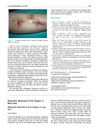
research Metastatic Melanoma of the Tongue: A Rare Case
An 86-year-old man had a rare tongue melanoma but refused treatment, showing the need for early cancer detection and treatment.
research 307 Computer-assisted epitope prediction revealed potential autoantigens associated with human alopecia areata
Melanogenesis-related proteins may trigger immune responses in alopecia areata patients.
research A mutation in the type II hair keratin KRT86 gene in a Han family with monilethrix
A new mutation in the KRT86 gene causes monilethrix in a Han family.
research Epidermal hyperplasia and oral carcinoma in mice overexpressing the transcription factor ATF3 in basal epithelial cells
Overexpressing ATF3 in mice's epithelial cells may lead to oral cancer.
research Non‐myeloablative stem cell transplants
Non-myeloablative stem cell transplants are a promising, less toxic option for older or weaker patients, with fewer side effects and good outcomes.

research Fatal autoimmunity results from the conditional deletion of Snai2 and Snai3
Deleting Snai2 and Snai3 causes fatal autoimmunity.
research An outline of SARS-CoV-2 pathogenesis and the complement cascade of immune system
Understanding SARS-CoV-2's spread and immune response is key to developing treatments and vaccines, but preventive measures remain important.
research P422 : Eruptive syringoma: an unusual presentation with androgenetic alopecia
A 25-year-old man had an unusual case of benign skin tumors and hair loss.
research A polarizing light microscopy can be an easy and reliable diagnostic tool of congenital keratinizing disorders including Netherton syndrome
Polarizing light microscopy can easily and reliably diagnose congenital keratinizing disorders like Netherton syndrome.
research Immunohistochemical assessment of SOX10 and its relation to the immune cellular infiltrate in alopecia areata follicles
SOX10 in hair follicles is linked to inflammation in alopecia areata.