 5 citations
,
December 2022 in “Toxins”
5 citations
,
December 2022 in “Toxins” Neurotoxins can affect neurotransmitter release and have potential in treating muscle, pain, and cancer conditions, but more research is needed on how they work.
 July 2026 in “Discover Food”
 Rosemary may help manage aging-related health issues.
Sensory neuron remodeling and Merkel-cell changes in the skin happen independently.
Sensory neuron and Merkel-cell changes in the skin happen independently during normal skin maintenance.
Sensory neuron and Merkel cell changes in the skin happen independently during normal skin maintenance.
 88 citations
,
January 2004 in “Journal of Neuroscience”
88 citations
,
January 2004 in “Journal of Neuroscience” Neurosteroids regulate synaptic inhibition in the spinal cord and may help manage spinal pain.
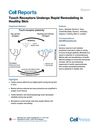 31 citations
,
November 2016 in “Cell Reports”
31 citations
,
November 2016 in “Cell Reports” Touch sensitivity in mouse skin decreases during hair growth due to changes in touch receptors.
 14 citations
,
March 2017 in “Brain research”
14 citations
,
March 2017 in “Brain research” Progesterone and its byproducts control a specific receptor in the brain independently of progesterone receptors, affecting conditions related to the menstrual cycle.
A new imaging method helps see and study touch nerve endings in mouse skin.
 April 2019 in “Journal of Investigative Dermatology”
 Non-coding RNA boosts retinoic acid production and signaling, aiding regeneration.
 10 citations
,
November 2019 in “Cold Spring Harbor Perspectives in Biology”
10 citations
,
November 2019 in “Cold Spring Harbor Perspectives in Biology” Stem cells are more dynamic and adaptable than previously believed.
 4 citations
,
January 2025 in “Translational Psychiatry”
4 citations
,
January 2025 in “Translational Psychiatry” Remote photobiomodulation improves brain injury outcomes and behavior in rats.
 February 2026 in “Journal of Integrative Neuroscience”
 NGF-modified hair follicle stem cells may help treat Alzheimer's by improving brain function and reducing harmful proteins.
 85 citations
,
May 2019 in “Journal of neuroendocrinology”
85 citations
,
May 2019 in “Journal of neuroendocrinology” The article concludes that better understanding gene regulation related to seasonal changes can offer insights into the mechanisms of seasonal timing in mammals.
 70 citations
,
June 2017 in “Nature Communications”
70 citations
,
June 2017 in “Nature Communications” A new laser technique can precisely remove specific cell types in living animals without harming nearby cells.
 February 2023 in “bioRxiv (Cold Spring Harbor Laboratory)”
 Merkel cells stabilize nerve endings in the skin, and they change independently of each other.
 October 2021 in “Journal of Investigative Dermatology”
 The study concluded that the developed models are effective for studying hair growth mechanisms and testing new treatments.
33 citations
,
December 2017 in “Journal of neuroendocrinology” Sex and stress steroids quickly change brain cell structures in the hippocampus.
20 citations
,
January 2017 in “Epilepsia” Blocking neurosteroid production can lead to more seizures and faster epilepsy onset in rats.
Sensory neuron remodeling and Merkel-cell changes happen independently during skin maintenance.
Sensory neuron changes and Merkel-cell changes in the skin happen independently during normal skin maintenance.
Sensory neuron and Merkel cell changes in the skin happen independently during normal skin maintenance.
Sensory neurons and Merkel cells remodel at different rates during normal skin maintenance.
July 2013 in “Neurosurgery” Spinal fMRI can help understand brainstem and spinal cord function, especially in spinal cord injury patients.
 81 citations
,
July 2012 in “Translational Psychiatry”
81 citations
,
July 2012 in “Translational Psychiatry” Memantine may slightly improve memory in people with Down syndrome, but more research is needed.
 October 2012 in “European Neuropsychopharmacology”
 People with early psychosis eat more calories, saturated fat, and sugar, and the drug olanzapine may lead to eating even more calories.
 6 citations
,
February 2022 in “The journal of neuroscience/The Journal of neuroscience”
6 citations
,
February 2022 in “The journal of neuroscience/The Journal of neuroscience” Deleting the PTEN gene in mice causes nerve cells to grow larger and heal better after injury, but may cause overgrowth and hair loss in older mice.
 40 citations
,
December 2012 in “Epilepsia”
40 citations
,
December 2012 in “Epilepsia” Neurosteroids change how GABA_A receptors work in the brain, which could be important for treating temporal lobe epilepsy.
 82 citations
,
July 2011 in “Journal of Neuroscience”
82 citations
,
July 2011 in “Journal of Neuroscience” Ethanol boosts brain steroid production by activating NMDA receptors, affecting memory formation.
 December 2021 in “Research Square (Research Square)”
 Hair follicle sampling is a feasible method to measure FMRP and FMR1 mRNA levels in children.