5 citations
,
November 2025 in “Cells” Advancements in wound healing aim to improve personalized treatments and enhance healing outcomes.
 2 citations
,
January 2023 in “Annals of Dermatology”
2 citations
,
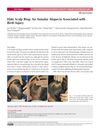
January 2023 in “Annals of Dermatology” A hairless patch on a boy's scalp from birth injury improved with minoxidil treatment.
 May 2026 in “International Journal of Molecular Sciences”
 Chemotherapy-induced hair loss may be linked to immune system changes, and certain treatments could help but need careful use.
 January 2026 in “Current Issues in Molecular Biology”
 FGF-7 helps hair grow by activating hair follicles and is a promising target for hair loss treatments.
 September 2025 in “Frontiers in Cell and Developmental Biology”
 Retinoic acid may help heal skin without scars by reducing fibrosis and supporting skin regeneration.
September 2025 in “Current Issues in Molecular Biology” IGF-1 can help regrow hair and may be a promising treatment for hair loss.
January 2025 in “Advances in Clinical Medicine” Injection therapies show promise as effective treatments for hair loss.
 34 citations
,
July 2010 in “Expert Opinion on Drug Delivery”
34 citations
,
July 2010 in “Expert Opinion on Drug Delivery” The document concludes that there is no agreed-upon best method for measuring drug delivery within hair follicles and more research is needed to validate current techniques.
 263 citations
,
February 2013 in “Wiley interdisciplinary reviews. Nanomedicine and nanobiotechnology”
263 citations
,
February 2013 in “Wiley interdisciplinary reviews. Nanomedicine and nanobiotechnology” Polymeric nanoparticles show promise for treating skin diseases.
 89 citations
,
November 2014 in “International Journal of Nanomedicine”
89 citations
,
November 2014 in “International Journal of Nanomedicine” Using nanostructured lipid carriers to deliver spironolactone could improve treatment for hair loss.
 25 citations
,
December 2013 in “Journal of Investigative Dermatology Symposium Proceedings”
25 citations
,
December 2013 in “Journal of Investigative Dermatology Symposium Proceedings” New methods like nanoparticles and microneedles show promise for better skin drug delivery, especially for hair disorders.
 60 citations
,
July 2020 in “ACS Nano”
60 citations
,
July 2020 in “ACS Nano” Using CRISPR for gene editing in the body is promising but needs better delivery methods to be more efficient and specific.
 8 citations
,
December 2021 in “Military Medical Science Letters”
8 citations
,
December 2021 in “Military Medical Science Letters” Nanoemulgel is a promising method for delivering drugs, especially for those that don't dissolve well in water.
 6 citations
,
January 2016 in “Springer eBooks”
6 citations
,
January 2016 in “Springer eBooks” Invasomes effectively deliver drugs through the skin and have potential for improved treatments.
 1 citations
,
July 2005 in “Informa Healthcare eBooks”
1 citations
,
July 2005 in “Informa Healthcare eBooks” Hair follicles could be used for targeted drug delivery, with liposomal systems showing promise for this method.
 85 citations
,
January 2007 in “Journal of Drug Targeting”
85 citations
,
January 2007 in “Journal of Drug Targeting” Liposomes better deliver minoxidil for hair loss treatment than niosomes.
 72 citations
,
December 2012 in “Expert Opinion on Drug Delivery”
72 citations
,
December 2012 in “Expert Opinion on Drug Delivery” Niosomes are promising for skin drug delivery, offering benefits like improved drug penetration and stability.
 68 citations
,
March 2002 in “Journal of pharmaceutical sciences”
68 citations
,
March 2002 in “Journal of pharmaceutical sciences” Nonionic liposomes are the best for delivering genes to skin cells.
 61 citations
,
May 2016 in “Scientific reports”
61 citations
,
May 2016 in “Scientific reports” The peptide IMT-P8 can effectively deliver proteins into the skin and cells for potential skin treatments.
 41 citations
,
August 2024 in “Drug Delivery and Translational Research”
41 citations
,
August 2024 in “Drug Delivery and Translational Research” 3D-printed microneedles improve drug delivery by being precise, cost-effective, and less invasive.
 33 citations
,
November 2019 in “Journal of Controlled Release”
33 citations
,
November 2019 in “Journal of Controlled Release” Microneedles with enhancer effectively promote hair growth and increase hair density.
 16 citations
,
November 2019 in “Nanomedicine”
16 citations
,
November 2019 in “Nanomedicine” Thermoresponsive nanogels show promise for delivering medicine through the skin but need more safety testing and regulatory approval before clinical use.
 15 citations
,
November 2019 in “Cutaneous and Ocular Toxicology”
15 citations
,
November 2019 in “Cutaneous and Ocular Toxicology” Minoxidil tretinoin liposomal based hydrogel shows promise for effective treatment of hair loss by delivering both drugs at the same time.
 15 citations
,
February 2018 in “Journal of Cosmetic and Laser Therapy”
15 citations
,
February 2018 in “Journal of Cosmetic and Laser Therapy” Laser-assisted drug delivery improves hair loss.
 15 citations
,
October 2012 in “InTech eBooks”
15 citations
,
October 2012 in “InTech eBooks” Niosomes are a promising and effective way to deliver drugs through the skin.
 14 citations
,
February 2020 in “Stem Cells International”
14 citations
,
February 2020 in “Stem Cells International” Umbilical cord cells safely improve healing in long-term nonhealing wounds better than a placebo.
 13 citations
,
October 2012 in “InTech eBooks”
13 citations
,
October 2012 in “InTech eBooks” Nanocarriers could improve how drugs are delivered through the skin but require more research to overcome challenges and ensure safety.
 February 2026 in “Frontiers in Bioengineering and Biotechnology”
 Liposome-based systems improve skin wound healing effectively.
 January 2025 in “RSC Pharmaceutics”
 Smart microneedles using advanced tech could improve psoriasis treatment.
 260 citations
,
January 2019 in “Pharmaceutics”
260 citations
,
January 2019 in “Pharmaceutics” Niosomes are a promising, stable, and cost-effective drug delivery system with potential for improved targeting and safety.