3 citations
,
March 2016 in “Practical radiation oncology” Total skin electron therapy is an effective treatment for mycosis fungoides, balancing effectiveness and side effects.
2 citations
,
April 2023 in “American Journal of Dermatopathology” CCCA may involve the PD1/PDL1 pathway and increased caspase 3, leading to permanent hair loss.
2 citations
,
July 2022 in “The Kaohsiung Journal of Medical Sciences” FTY720 helps transplanted fat survive better by reducing immune rejection and improving blood vessel growth.
2 citations
,
October 2019 in “Nanomedicine” Pharmaceutical care in transplantation faces challenges but has promising future opportunities for better outcomes.
 2 citations
,
November 1998 in “Journal of The European Academy of Dermatology and Venereology”
2 citations
,
November 1998 in “Journal of The European Academy of Dermatology and Venereology” A patient with a severe type of hair loss experienced partial hair regrowth after treatment with a specific light therapy and a medication called interferon α2a.
2 citations
,
May 2023 in “The Journal of Immunology” NXC736 significantly reduced hair loss in mice with alopecia areata.
1 citations
,
January 2025 in “International Journal of Dermatology” Dupilumab can both improve and worsen alopecia areata, with higher IgE levels linked to better outcomes.
1 citations
,
March 2024 in “International journal of molecular sciences” Radiation therapy damages skin structure and immune function, causing inflammation and potential hair loss.
 1 citations
,
October 2023 in “Journal of the Pakistan Medical Association”
1 citations
,
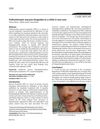
October 2023 in “Journal of the Pakistan Medical Association” Folliculotropic mycosis fungoides can occur in children and is diagnosed with specific tests, but often stays in early stages with treatment.
1 citations
,
July 2020 in “Qanun Medika - Medical Journal Faculty of Medicine Muhammadiyah Surabaya” Timely treatment with antibiotics and antiretrovirals can significantly improve health in HIV patients with syphilis.
 1 citations
,
April 2019 in “The journal of investigative dermatology/Journal of investigative dermatology”
1 citations
,
April 2019 in “The journal of investigative dermatology/Journal of investigative dermatology” Melanocyte-associated antigens may play a key role in alopecia areata and could be targets for new treatments.
 1 citations
,
November 2016 in “International Journal of Research in Dermatology”
1 citations
,
November 2016 in “International Journal of Research in Dermatology” The study found no significant link between the symptoms, tissue analysis, and immunofluorescence results in scarring hair loss conditions.
 1 citations
,
September 2013 in “The Journal of Dermatology”
1 citations
,
September 2013 in “The Journal of Dermatology” An 8-year-old girl developed a rare skin condition in a linear pattern on one side of her body after a lung infection, which improved with treatment.
 1 citations
,
June 2013 in “Science-business Exchange”
1 citations
,
June 2013 in “Science-business Exchange” Increasing the levels of a protein called FGF9 can promote hair growth, but humans may not respond the same way due to a lack of certain cells.
 1 citations
,
July 2012 in “British Journal of Dermatology”
1 citations
,
July 2012 in “British Journal of Dermatology” New treatments and management strategies for skin conditions like melanoma and Spitz naevi were discussed at the dermatologists' meeting.
1 citations
,
April 2024 in “The Journal of Dermatology” Untreated epidermolysis bullosa acquisita can cause total hair and nail loss.
 July 2026 in “Plastic & Reconstructive Surgery Global Open”
 Plant exosome injections may help regrow hair and reduce inflammation.
 April 2026 in “Frontiers in Immunology”
 Blocking the CXCL12–CXCR4 axis may help treat hair loss in alopecia.
 April 2026 in “Journal of Inflammation Research”
 Alopecia areata and atopic dermatitis share immune system issues, and treatments like JAK inhibitors can help both.
 March 2026 in “Journal of Zhejiang University (Medical Sciences)”
 Angelica sinensis helps repair and regenerate the thymus in mice.
January 2026 in “IECCMEXICO” Chronic inflammatory skin disorders are caused by immune system problems, not just skin issues.
 January 2026 in “Forum Dermatologicum”
 JAK inhibitors and combination therapies show promise for treating severe alopecia areata.

Deuruxolitinib is approved to treat severe alopecia areata in adults.
January 2026 in “Dermatologic Therapy” Folliculotropic Mycosis Fungoides requires stage-based treatment, with early stages using skin therapies and advanced stages needing aggressive treatments.
November 2025 in “The Journal of Immunology” The S1PR 1&4 modulator may effectively treat alopecia areata by reducing hair loss and immune cell activity.
Thymoma with alopecia areata may be linked to abnormal immune cells.
 May 2025 in “Frontiers in Pharmacology”
 Targeting gut microbiome and metabolome may help treat autoimmune skin diseases like alopecia areata.
May 2025 in “OPAL (Open@LaTrobe) (La Trobe University)” Targeting specific metabolic and ionic pathways may improve alopecia areata treatment.
May 2025 in “OPAL (Open@LaTrobe) (La Trobe University)” Linoleic acid and magnesium are key in alopecia areata progression, and tofacitinib can help by affecting their pathway.
May 2025 in “OPAL (Open@LaTrobe) (La Trobe University)” Targeting specific metabolic and ionic pathways may improve alopecia areata treatment.