6 citations
,
August 2016 in “Journal of Visualized Experiments” The CUBIC protocol allows detailed 3D visualization of proteins in mouse skin biopsies.
215 citations
,
November 2000 in “Journal of Investigative Dermatology” The system allows precise control of gene expression in mouse skin, useful for studying skin biology.
37 citations
,
January 1997 in “Journal of Pharmaceutical Sciences” Hairless rats absorb substances through their skin more easily than hairy rats.
 42 citations
,
April 2008 in “Acta materialia”
42 citations
,
April 2008 in “Acta materialia” Different ethnicities and treatments affect human hair strength and structure.
11 citations
,
January 1956 in “Journal of Investigative Dermatology” 8 citations
,
September 2011 in “Scanning” Multiphoton microscopy effectively images mouse skin layers and structures.
January 1999 in “Chinses Journal of Hand Surgery” Human hair keratin artificial tendon is a safe and effective tendon substitute.
September 2025 in “Immunological Reviews” The skin can independently form immune responses through special structures, offering new ways to treat skin diseases.
47 citations
,
August 2012 in “Cell Cycle” Stem cells in hair follicles can become neurons and other cells, especially in the upper part, useful for nerve repair.
 1 citations
,
September 2005 in “Oncology times”
1 citations
,
September 2005 in “Oncology times” Wearing a frozen glove during chemotherapy can reduce nail and skin problems but may not be comfortable for everyone.
September 2023 in “Journal of the American Academy of Dermatology” Oral difelikefalin significantly reduces itch in notalgia paresthetica.
 19 citations
,
July 1993 in “The journal of investigative dermatology/Journal of investigative dermatology”
19 citations
,
July 1993 in “The journal of investigative dermatology/Journal of investigative dermatology” Dermal-epidermal interactions are crucial for hair growth and maintenance.
 January 2024 in “Wiadomości Lekarskie”
 Shifting attention can reduce physical pain.
25 citations
,
August 1991 in “Journal of Investigative Dermatology” 34 citations
,
August 2012 in “Calcified Tissue International” 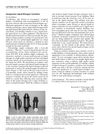 3 citations
,
February 2002 in “Dermatologic Surgery”
3 citations
,
February 2002 in “Dermatologic Surgery” Using a handheld massage device during hair transplant significantly reduces pain for most patients.
 December 2025 in “Zenodo (CERN European Organization for Nuclear Research)”
 Thermal protectants help reduce hair damage from heat styling.
 December 2025 in “Zenodo (CERN European Organization for Nuclear Research)”
 Thermal protectants help reduce hair damage from heat styling.
18 citations
,
December 2022 in “Frontiers in Bioengineering and Biotechnology” Superwettable bio-interfaces improve wound care by better managing fluids.
 6 citations
,
October 2012 in “Journal of Heredity”
6 citations
,
October 2012 in “Journal of Heredity” The Itpr3 gene causes a specific hair pattern in mice.
 21 citations
,
September 2016 in “Journal of Dermatological Treatment”
21 citations
,
September 2016 in “Journal of Dermatological Treatment” The new classification system for skin disorders emphasizes the importance of understanding a patient's awareness of their condition for better treatment.
 10 citations
,
August 2023 in “Developmental cell”
10 citations
,
August 2023 in “Developmental cell” The research maps the complex development of early mouse skin, identifying diverse cell types and their roles in forming skin layers and structures.

Early detection and treatment of hair-thread tourniquet syndrome in young girls is important to prevent serious harm.
26 citations
,
February 1991 in “PubMed” Trichotillomania can be identified by a "Friar Tuck sign" and nail-biting.
 28 citations
,
July 2007 in “Development”
28 citations
,
July 2007 in “Development” TAF4 is important for skin cell growth and helps prevent skin cancer in mice.
37 citations
,
February 2024 in “Military Medical Research” Biomaterials can help heal wounds without scars and regenerate skin features.
638 citations
,
October 1997 in “Nature” July 2024 in “Journal of Investigative Dermatology” Cell movements and forces shape feather growth in chicken skin.
April 2023 in “bioRxiv (Cold Spring Harbor Laboratory)” Gap junctions help control feather pattern formation by enabling cell communication.
 3 citations
,
August 2018 in “Deleted Journal”
3 citations
,
August 2018 in “Deleted Journal” Guasha changed rat skin appearance and blood vessels temporarily without affecting certain nerve proteins or fiber structure.