17 citations
,
September 2022 in “Biomaterials Research” The film-trigger applicator improves microneedle skin delivery and drug efficiency using simple finger force.

Mechanical surface cues can control macrophage behavior for better immunotherapy and tissue healing.
Sox13 is a marker for early hair follicle development but not essential for skin and hair growth.
 17 citations
,
September 2014 in “PLoS ONE”
17 citations
,
September 2014 in “PLoS ONE” SK2 channels help control sensory signals in rat muscle spindles and hair follicles.
 April 2018 in “Journal of Investigative Dermatology”
 STIM1 is essential for sweat secretion.
April 2019 in “Journal of Investigative Dermatology” FGFR2 signaling controls Merkel cell formation in different skin regions.
29 citations
,
March 2012 in “Journal of Experimental Biology” Tarantula feet likely have chemoreceptors, not silk-producing parts.
 April 2023 in “Journal of Investigative Dermatology”
 A new pain-measuring system using sensors and AI can effectively detect pain in mice, which may help assess pain in humans and develop treatments.
 April 2023 in “The journal of investigative dermatology/Journal of investigative dermatology”
 The TRPV3 channel structure changes linked to severe itch and hyperkeratosis were identified using cryo-EM.
6 citations
,
January 2010 in “Journal of Biochemical and Molecular Toxicology” The ID2 gene can help distinguish between sensitizers and irritants in skin cells.
36 citations
,
February 1998 in “Journal of Anatomy” Fibre optic confocal imaging can visualize skin layers, blood vessels, and nerves in live mice.
 2 citations
,
April 2022 in “PLoS ONE”
2 citations
,
April 2022 in “PLoS ONE” Vibration treatment may reduce migraine pain by changing cell structures.
1 citations
,
December 2024 in “Tissue Barriers” The epidermis is the stiffest skin layer.

Sensory neuron remodeling and Merkel-cell changes happen independently during skin maintenance.
2 citations
,
September 2020 in “bioRxiv (Cold Spring Harbor Laboratory)” The laser system helps study brain cell functions by precisely removing specific cells and observing changes.
1 citations
,
February 2025 in “Archives of Dermatological Research” Transcutaneous electrical acustimulation helps wounds heal faster in mice.
 28 citations
,
January 2010 in “Biological & pharmaceutical bulletin”
28 citations
,
January 2010 in “Biological & pharmaceutical bulletin” Certain essential oils can activate a human skin receptor, potentially helping with skin disorders.
 13 citations
,
April 2001 in “Journal of The American Academy of Dermatology”
13 citations
,
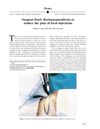
April 2001 in “Journal of The American Academy of Dermatology” Using a vibrating device during injections can help reduce pain.
Sphingosine 1-phosphate helps control mechanical pain.
1 citations
,
October 2025 Smart hydrogels improve wound healing by adapting to needs and releasing medicine.
1 citations
,
January 1996 in “Aesthetic Plastic Surgery” The tumescent technique makes hair micrografting more comfortable and efficient.
 124 citations
,
December 2016 in “Pharmaceuticals”
124 citations
,
December 2016 in “Pharmaceuticals” TRP channels in the skin are important for sensation and health, and targeting them could help treat skin disorders.

Sensory neuron and Merkel cell changes in the skin happen independently during normal skin maintenance.
46 citations
,
April 1987 in “Brain Research” Hair-follicle nerves in cats' spinal cords can be inhibited by GABA-related connections.
2 citations
,
December 2010 in “PubMed” The new stiffness test works well for gels but not for sprays.
The model explains how mammal ear hair cells respond to sound and adapt.
8 citations
,
October 2020 in “Clinical Psychopharmacology and Neuroscience” rTMS may help treat trichotillomania in some patients.
49 citations
,
March 1996 in “Experimental Brain Research” 
Sensory neuron remodeling and Merkel-cell changes in the skin happen independently.
227 citations
,
February 1989 in “The Journal of Comparative Neurology” CGRP-IR axons may help maintain and renew tissues.