86 citations
,
August 2000 in “Pigment cell research” Melanocyte activity in hair follicles is linked to the hair growth cycle, being active in growth phases and inactive in rest phases.
6 citations
,
August 1985 in “Archives of dermatology” A lotion helped remove hair casts, which seem to come from a specific part of the hair follicle, and patients with hair casts can be grouped based on the cause.
January 2005 in “Digital Commons - University of South Florida (University of South Florida)” Concerns about attractiveness and skin aging strongly influence tanning behaviors.
1 citations
,
December 2014 in “Zenodo (CERN European Organization for Nuclear Research)” The method effectively induces skin cancer in mice for studying tumor development.
75 citations
,
January 1980 in “Journal of Investigative Dermatology” 
Skin changes throughout life, from development before birth to aging effects like wrinkles, influenced by both genetics and environment.
10 citations
,
September 1994 in “International Journal of Dermatology” Three Iranian men had reddish-brown facial pigmentation with no effective treatment.
 November 2022 in “Journal of Investigative Dermatology”
 Scientists found a new type of skin cell that could help with skin repair and these cells work better with a certain protein.
 September 2021 in “CRC Press eBooks”
 Pregnancy can cause normal skin changes, including darkening of certain areas, nail changes, vascular changes, and breast changes like stretch marks.
4 citations
,
April 1986 in “Cancer Letters” GSH-T levels in hair follicles are similar in smokers and non-smokers and don't increase with certain treatments.
 56 citations
,
March 2010 in “Journal of Dermatology”
56 citations
,
March 2010 in “Journal of Dermatology” Most cases of Temporal Triangular Alopecia are found in early childhood and may be related to genetic conditions.
October 2021 in “DOAJ (DOAJ: Directory of Open Access Journals)” Trichoscopy effectively distinguishes between severe and mild male pattern hair loss.
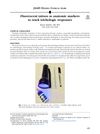 July 2018 in “Journal of The American Academy of Dermatology”
 Fluorescent tattoos are a good way to mark the scalp for hair treatments because they're accurate, invisible in normal light, and have low risk.
 November 2017 in “Pediatrics in Review”
 A 4-year-old girl with hair loss was diagnosed with early-onset trichotillomania and improved with behavioral interventions.
 34 citations
,
July 2011 in “Journal of the European Academy of Dermatology and Venereology”
34 citations
,
July 2011 in “Journal of the European Academy of Dermatology and Venereology” The study concluded that scalp tumors show different patterns based on age, gender, and tumor thickness, and emphasized the importance of early detection and scalp examinations.
 17 citations
,
August 1979 in “Journal of The American Academy of Dermatology”
17 citations
,
August 1979 in “Journal of The American Academy of Dermatology” A new staining method helps tell growing from resting hairs to diagnose hair loss.
15 citations
,
February 2015 in “Anais brasileiros de dermatologia/Anais Brasileiros de Dermatologia” Dermoscopy helps accurately diagnose temporal triangular alopecia, avoiding unnecessary treatments.
 April 2023 in “The journal of investigative dermatology/Journal of investigative dermatology”
 Researchers found three types of melanocytes in developing mouse skin, each with different genes and locations.
148 citations
,
October 1997 in “Journal of Investigative Dermatology”  9 citations
,
February 2018 in “Journal of The American Academy of Dermatology”
9 citations
,
February 2018 in “Journal of The American Academy of Dermatology” Researchers developed a new method using methylene blue staining to more accurately identify the growth stage of human hair follicles.

Melanoma characteristics vary by age, which could help doctors with diagnosis and prevention.
October 2022 in “Hair Transplantation” Temporary scalp trichopigmentation creates a shaved hair look on the scalp using pigments that fade over time.
 2 citations
,
March 2018 in “The Journal of Dermatology”
2 citations
,
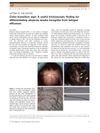
March 2018 in “The Journal of Dermatology” The "color-transition sign" helps tell apart alopecia areata incognita from telogen effluvium by looking at hair color changes.
January 2004 in “Linchuang pifuke zazhi” All-trans retinoic acid helps amelanotic melanocytes in hair follicles develop and produce pigment while reducing their growth.
January 2023 in “Indian Dermatology Online Journal” A 23-year-old man has a benign, non-progressive hair loss patch that doesn't respond to treatment but can be cosmetically treated.

The document concludes that dermatology training and grading scales need to better represent dark-skinned individuals to improve diagnosis and assessment of skin conditions.
161 citations
,
June 1994 in “The journal of investigative dermatology/Journal of investigative dermatology” Hair stops producing melanin as it transitions from the growth phase to the resting phase.
45 citations
,
January 2010 in “Forensic science international” Neonatal hair can help determine drug exposure during pregnancy.
11 citations
,
April 2013 in “Homo” Darker skin in 10-year-old girls may be an early sign of puberty.
 November 2022 in “Journal of the Endocrine Society”
 Always consider xanthomatous hypophysitis before deciding on pituitary surgery.