September 2025 in “International Journal of Medical Informatics” A machine learning model can predict scarring in lichen planopilaris using factors like vitamin D levels and diagnostic delay.
 July 2020 in “Benha Medical Journal”
 People with severe Alopecia Areata have higher levels of TGF-β1, which may play a role in the condition.
34 citations
,
June 2005 in “Journal of cosmetic dermatology” Medium-depth peels are safer and effective for improving skin appearance compared to deep peels.
10 citations
,
May 2023 in “Journal of Investigative Dermatology” Actinic keratosis is more common in older men with certain genetic traits, but smoking seems to reduce its odds.
2 citations
,
June 2025 in “Drug Testing and Analysis” The method effectively detects MeT and TP in dried blood spots after cream application.
 July 2022 in “Research Square (Research Square)”
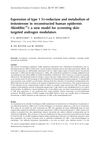
 Hair analysis can somewhat track past testosterone levels but is influenced by factors like hair washing, growth rate, sex, and hair color.
 3 citations
,
December 2000 in “International Journal of Cosmetic Science”
3 citations
,
December 2000 in “International Journal of Cosmetic Science” The study created a new method to test drugs that affect hormone processing in skin.
15 citations
,
June 1986 in “Pediatric Dermatology” Androgens increase pigmentation in young hamsters, but estrogens can reverse this effect.
 September 2017 in “Journal of Investigative Dermatology”
 Thermal imaging is a useful non-invasive method to diagnose active inflammation in frontal fibrosing alopecia.
19 citations
,
April 1999 in “British Journal of Dermatology” Keratin 2e shows a unique pattern in developing fetal skin, different from other keratins.
March 2026 in “Pakistan Armed Forces Medical Journal” Trichoscopy is useful for diagnosing and assessing androgenetic alopecia severity.
210 citations
,
May 2006 in “The FASEB journal” Oxidative stress causes hair to gray by damaging and killing pigment cells.
 60 citations
,
May 2014 in “British Journal of Dermatology”
60 citations
,
May 2014 in “British Journal of Dermatology” Caffeine affects hair growth and health differently in men and women.
November 2021 in “CRC Press eBooks” Hair color is determined by melanin and can be affected by genetic conditions like albinism.
 January 2011 in “International Journal of Trichology”
 The document concludes that doctors should recognize congenital triangular alopecia to avoid unnecessary treatments, as it does not respond to steroids like alopecia areata does.
5 citations
,
September 2023 in “Frontiers in Medicine” Early dermatological referrals are important for women and girls with Turner syndrome to improve life quality.
April 2015 in “Journal of Investigative Dermatology”  December 2023 in “International journal of research in dermatology”
 Most pregnant women experience common skin changes like linea nigra and stretch marks.
7 citations
,
January 2017 in “Sub-cellular biochemistry/Subcellular biochemistry” 
Traumatic anserine folliculosis is a harmless skin condition in young males that needs correct diagnosis to avoid unnecessary treatments.
June 2025 in “Journal of Cutaneous Medicine and Surgery” 21 citations
,
June 2004 in “Experimental Dermatology” Ber‐EP4 marks cells related to the secondary hair germ in hair follicles.
 40 citations
,
June 2009 in “Journal of Cutaneous Pathology”
40 citations
,
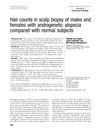
June 2009 in “Journal of Cutaneous Pathology” AGA patients have fewer hairs and smaller follicles; T:V ratio above 4:1 may indicate AGA.
 36 citations
,
March 2011 in “Nature Communications”
36 citations
,
March 2011 in “Nature Communications” Cells from a skin condition can create new hair follicles and similar growths in mice, and a specific treatment can reduce these effects.
 21 citations
,
January 2016 in “Skin appendage disorders”
21 citations
,
January 2016 in “Skin appendage disorders” Alfredo Rebora suggested a new, easier way to classify hair loss in Telogen Effluvium, adding a type possibly related to autoimmune diseases.
4 citations
,
September 2024 in “Development” Researchers converted human embryonic stem cells into trophoblast stem cells using specific transcription factors.
12 citations
,
September 1990 in “The Anatomical Record” Human anagen hair follicles have unique carbohydrate patterns during keratinization.
April 2007 in “Linchuang pifuke zazhi” TGF-β1 and 2 may play a role in hair loss in AGA.
Trichoscopic examination is crucial for diagnosing congenital triangular alopecia.
 7 citations
,
March 2012 in “Journal of Investigative Dermatology”
7 citations
,
March 2012 in “Journal of Investigative Dermatology” Some thymic peptides can increase human hair growth, while others may inhibit it.