 July 2024 in “Periodontology 2000”
 Autologous platelet concentrates show promise in esthetic treatments but need more standardized research.
January 2020 in “Global dermatology” Iontophoresis with a growth factor cocktail helps hair growth in patients with androgenetic alopecia.
April 2025 in “JAAD reviews.” Skin issues can signal substance use, helping early detection and treatment.
 19 citations
,
March 2019 in “International Journal of Dermatology”
19 citations
,
March 2019 in “International Journal of Dermatology” The tattoo machine method safely delivers an average of 1,175 µg/cm² of medication into the skin.
1 citations
,
September 2019 in “Hair transplant forum international” The laser-based microjet injector delivers tattoo pigment accurately with less tissue damage.
1 citations
,
May 2016 in “Hair transplant forum international” The best dot density for scalp tattoos gives women with hair loss a natural look and high satisfaction.
 January 2026 in “International Society of Hair Restoration Surgery”
 Tattoo machine-assisted drug delivery may improve hair growth in androgenetic alopecia.
 1 citations
,
July 2016 in “Cosmetics”
1 citations
,
July 2016 in “Cosmetics” Black henna tattoos can cause severe allergies to hair and textile dyes, and there's a need for greater public awareness and regulation.
 June 2018 in “Journal of Clinical Periodontology”
 Finasteride may cause gum problems, but stopping the drug can improve these issues.
 June 2011 in “International Journal of Dermatology”
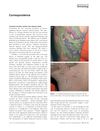
 A man's red tattoo caused a skin reaction and hair loss in his beard, which improved after treatment.
 January 2024 in “Genetics in Medicine Open”
 Adults with Tatton-Brown-Rahman syndrome may have serious heart problems and need lifelong heart monitoring.
2 citations
,
May 2018 in “Dermatologic Surgery” September 2025 in “Наукові інновації та передові технології”  March 2026 in “Portuguese Journal of Dermatology and Venereology”
 Avoid hair dye after microneedling to prevent scalp pigmentation.
 10 citations
,
March 2015 in “PubMed”
10 citations
,
March 2015 in “PubMed” Scalp micropigmentation, a cosmetic tattoo technique, is a promising non-surgical treatment for hair and scalp deformities, despite potential complications.
 2 citations
,
November 2020 in “Scientific Reports”
2 citations
,
November 2020 in “Scientific Reports” Metallic-glass coated needles reduce skin trauma and improve tattoo quality.
 1 citations
,
January 2014 in “Aesthetic Plastic Surgery”
1 citations
,
January 2014 in “Aesthetic Plastic Surgery” Tattooing improves appearance of scalp alopecia and scars.
 November 2025 in “Dermatology Reports”
 Microinfusion using tattoo devices effectively treats hair loss and skin conditions with minimal side effects.
 September 2025 in “International Society of Hair Restoration Surgery”
 Printable templates improve hair transplant accuracy and efficiency.

Scalp micropigmentation usually needs two to three sessions, but factors like genetics, coverage area, and health conditions can require more.
 November 2019 in “Quality in primary care”
 Scalp micropigmentation is a tattooing method that can mimic a full head of hair without surgery and has no healing time.
 September 2017 in “Journal of Investigative Dermatology”
 Injections of special skin cells showed potential in treating hair loss, with some participants experiencing increased hair density.
August 2021 in “Journal of Investigative Dermatology” The technique effectively promotes hair growth in young men with androgenetic alopecia.
 24 citations
,
August 2013 in “Facial Plastic Surgery Clinics of North America”
24 citations
,
August 2013 in “Facial Plastic Surgery Clinics of North America” SMP is a medical tattoo for hair loss, improving appearance and camouflaging scars, but requires skill and has limitations.
June 2026 in “The Journal of Cosmetic Medicine” Scalp micropigmentation effectively creates the look of fuller hair but requires skilled application and touch-ups.
January 2026 in “Updates in clinical dermatology” Various products and techniques can help hide hair loss on the scalp and eyebrows.
October 2022 in “Hair Transplantation” Scalp micropigmentation offers a versatile solution for hair loss and scalp scarring.
July 2021 in “CRC Press eBooks” Healthy scalp is crucial for hair growth and preventing hair loss.
January 2019 in “Clinical pediatric dermatology” Scalp micropigmentation is a non-surgical alternative to hair transplants that mimics hair follicles and requires no downtime.
 January 2001 in “Clinical and Experimental Dermatology”
 A test for nail fungus was most accurate with PAS stain, low-dose spironolactone helped two-thirds of acne patients, metformin reduced symptoms of HIV-related fat distribution changes with some side effects, and skin examination with dermoscopy was better at detecting abnormal moles, while temporary tattoos can cause skin reactions.