October 2023 in “Indian Journal of Skin Allergy” Nab-paclitaxel chemotherapy can rarely cause lupus-like skin issues.
 June 2024 in “Journal of Clinical Oncology”
 The combination of TACE and Donafenib is effective and tolerable for treating unresectable liver cancer.
34 citations
,
November 2023 in “Applied Materials Today” Nanoemulsions can effectively treat skin cancer with fewer side effects.
3 citations
,
October 2018 in “Journal of Mind and Medical Sciences” Biological therapy boosts the immune system to effectively fight melanoma.
 13 citations
,
August 1980 in “Cancer”
13 citations
,
August 1980 in “Cancer” Multimodal primary treatment improves survival in premenopausal breast cancer patients and is also beneficial for postmenopausal women.
1 citations
,
April 2020 in “Journal of the Endocrine Society” Immunotherapy with pembrolizumab significantly reduced cancer in a young woman with adrenocortical carcinoma.
 2 citations
,
January 1990 in “Leukemia & Lymphoma”
2 citations
,
January 1990 in “Leukemia & Lymphoma” The combination of mitoxantrone, etoposide, and prednisolone is effective for treating relapsed lymphoma with manageable side effects.
 June 2024 in “ESMO Gastrointestinal Oncology”
 The combination treatment showed a higher response rate but no significant survival benefits.
28 citations
,
October 2010 in “Targeted Oncology” Trastuzumab may cause tufted hair folliculitis as a side effect.
 8 citations
,
December 2008 in “Clinical and Experimental Dermatology”
8 citations
,
December 2008 in “Clinical and Experimental Dermatology” Radiotherapy was effective for treating a large scalp plaque of Bowen's disease when other treatments failed.
 11 citations
,
January 2018 in “Acta dermato-venereologica”
11 citations
,
January 2018 in “Acta dermato-venereologica” Tofacitinib works better and is more tolerable for severe alopecia than conventional treatments and DPCP immunotherapy.
March 2026 in “Journal of Enzyme Inhibition and Medicinal Chemistry” PROTACs show promise in cancer treatment by effectively degrading specific harmful proteins.
 January 2020 in “bioRxiv (Cold Spring Harbor Laboratory)”
 Semecarpus anacardium leaf extracts may offer safe, effective cancer treatment alternatives.
9 citations
,
January 2021 in “BioMed research international” Human hair-derived particles can effectively carry and release the cancer drug Paclitaxel in a pH-sensitive manner, potentially targeting cancer cells while sparing healthy ones.
 3 citations
,
October 2003 in “Annals of Oncology”
3 citations
,
October 2003 in “Annals of Oncology” A woman with low thyroid function did not lose her hair during chemotherapy, possibly because her hair follicles were less affected by the treatment.
January 2005 in “世界胃肠病学杂志:英文版(电子版)” Etoposide makes radiation therapy more effective against tumors without major side effects.
 January 2025 in “Nanoscale”
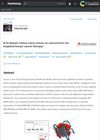
 Boron/nitrogen-doped carbon nano-onions improve targeted breast cancer treatment by enhancing drug delivery and reducing side effects.
 44 citations
,
August 1996 in “Drugs & Aging”
44 citations
,
August 1996 in “Drugs & Aging” Mitoxantrone is effective for treating acute leukemia, especially in older patients, with a lower risk of heart damage.
 April 2026 in “Biomedical Materials”
 Gold nanoparticle-phytochemical combinations work better against melanoma in 3D models than separate components.
 3 citations
,
February 2023 in “Journal of drug delivery science and technology”
3 citations
,
February 2023 in “Journal of drug delivery science and technology” The new drug carriers show promise for better targeting and treating ovarian cancer.
 November 2020 in “Journal of The American Academy of Dermatology”
 Certain immune markers may predict chemotherapy response in mesothelioma, and nivolumab is a tolerable and effective treatment for advanced non-small cell lung cancer.
 82 citations
,
December 2015 in “Nanomedicine”
82 citations
,
December 2015 in “Nanomedicine” Nanoparticle systems make cancer treatment less toxic.
 28 citations
,
December 2006 in “Clinical lung cancer”
28 citations
,
December 2006 in “Clinical lung cancer” Early recognition and management of skin side effects from new cancer therapies can prevent treatment delays.
 2 citations
,
April 2025 in “Cureus”
2 citations
,
April 2025 in “Cureus” Ki-67 levels do not predict treatment response in triple-negative breast cancer.
3 citations
,
May 2008 in “Journal of Clinical Oncology” Panitumumab treatment can cause unusual hair growth in some colorectal cancer patients.
 43 citations
,
February 2020 in “Clinica chimica acta”
43 citations
,
February 2020 in “Clinica chimica acta” Nano-sized plant-based chemicals could improve cervical cancer treatment by being more effective and causing fewer side effects than current methods.
4 citations
,
February 2023 in “Frontiers in Oncology” Nano-Pulse Stimulation™ Therapy is more effective and less damaging than cryoablation for treating melanoma tumors in mice.
 April 2026 in “bioRxiv (Cold Spring Harbor Laboratory)”
 A new microneedle patch significantly improves melanoma treatment by using a special material to activate cancer-fighting drugs and disrupt cancer cells.
 August 2023 in “The journal of investigative dermatology/Journal of investigative dermatology”
 Longer immunotherapy treatment may improve outcomes for Merkel cell carcinoma patients.
 4 citations
,
March 2012 in “Annals of oncology”
4 citations
,
March 2012 in “Annals of oncology” New treatment with green tea polyphenols and nicotinamide improves skin problems from cancer therapy.