 2 citations
,
July 2021 in “Biochemical and Biophysical Research Communications”
2 citations
,
July 2021 in “Biochemical and Biophysical Research Communications” CTHRC1 helps hair grow back, and plantar dermis mixture boosts it.
 13 citations
,
March 2002 in “Pediatric Dermatology”
13 citations
,
March 2002 in “Pediatric Dermatology” A child was initially wrongly diagnosed with a fungal scalp infection but actually had a non-scarring hair loss condition called Temporal Triangular Alopecia.
 August 2012 in “Nature Cell Biology”
 A pathway helps maintain long telomeres in both stem and cancer cells.
September 2021 in “The journal of investigative dermatology/Journal of investigative dermatology” Three genes linked to the development of trichilemmal cysts were found.
 September 2025 in “Cureus”
 There is no standard treatment for CCCA, and practices vary widely.
1 citations
,
October 2024 in “European Journal of Histochemistry” Telocytes in silky fowl embryos develop distinct features and connections by the 20th day of incubation.
May 2025 in “International Journal of Women’s Dermatology” CCCA mainly affects Black women and is linked to high-tension hairstyles, heating tools, chemical relaxants, and genetics.
52 citations
,
February 2012 in “PloS one” Lack of Ctip2 in skin cells delays wound healing and disrupts hair follicle stem cell markers in mice.
 January 2025 in “Biomedical Reports”
 Telitacicept helped stabilize complement levels in a patient with lupus and thyroid cancer.
 32 citations
,
November 2011 in “International Journal of Dermatology”
32 citations
,
November 2011 in “International Journal of Dermatology” Diagnose and manage CCCA with thorough history, exams, and labs; treat with anti-inflammatory agents, stress reduction, and stopping harmful hair practices.
37 citations
,
January 1986 in “Carcinogenesis” ODC expression in mouse skin and tumors is varied and can be inhibited by retinoic acid or cycloheximide.
 75 citations
,
March 2009 in “Journal of The American Academy of Dermatology”
75 citations
,
March 2009 in “Journal of The American Academy of Dermatology” CCCA is a hair loss type affecting African women, possibly caused by grooming and chemicals, with various treatments and needing more research.
December 2018 in “Dermatologic Surgery” Using a 25% trichloroacetic acid peel improves dermabrasion results in vitiligo surgery.
5 citations
,
April 2023 in “Life” CCCA affects adolescents too, with genetic and environmental links, requiring careful diagnosis.
March 2026 in “Journal of Investigative Dermatology” CCCA can occur in children and needs early diagnosis to prevent permanent hair loss.

Skin tumor cells in patients with tuberous sclerosis have higher levels of a protein called cathepsin B.
 160 citations
,
April 2012 in “Journal of Cellular and Molecular Medicine”
160 citations
,
April 2012 in “Journal of Cellular and Molecular Medicine” Telocytes might help with skin repair and regeneration.
21 citations
,
May 2014 in “Toxicological Sciences” Toluene diisocyanate exposure can cause immune sensitization by interacting with proteins in hair follicles and sebaceous glands.
Trichoepithelioma and desmoplastic trichoepithelioma have distinct features that can be identified using reflectance confocal microscopy.
 July 2022 in “Berkala Ilmu Kesehatan Kulit dan Kelamin/Berkala ilmu kesehatan kulit dan kelamin (Periodical of dermatology and venerology)”
 Most tinea capitis patients were young boys with cat contact, had scaly patches caused by Microsporum canis, and improved with griseofulvin treatment.
79 citations
,
October 2003 in “PubMed” Overexpression of PKCepsilon leads to increased TNFalpha, promoting metastatic squamous cell carcinoma in mice.
21 citations
,
March 2003 in “Acta Dermato Venereologica” Tacalcitol ointment effectively improves bilateral nevus comedonicus.
 1 citations
,
April 2022 in “The Journal of Family Practice”
1 citations
,
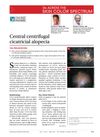
April 2022 in “The Journal of Family Practice” CCCA causes progressive hair loss in Black women, starting from a central scalp patch.
 5 citations
,
July 2019 in “Photodiagnosis and photodynamic therapy”
5 citations
,
July 2019 in “Photodiagnosis and photodynamic therapy” Using tacalcitol ointment with photodynamic therapy may effectively treat follicular mucinosis with scalp hair loss.
13 citations
,
August 2018 in “Clinical Chemistry” Total testosterone levels can help diagnose androgen-producing tumors and hyperandrogenism in women.
September 2017 in “The journal of investigative dermatology. Symposium proceedings/The Journal of investigative dermatology symposium proceedings” CCCA can affect both genders and all ages, and it has a genetic component.
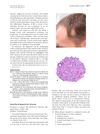
The man has Temporal Triangular Alopecia, a stable, non-scarring hair loss condition best treated with hair transplantation.
 1 citations
,
May 2025 in “Frontiers in Medicine”
1 citations
,
May 2025 in “Frontiers in Medicine” Dual-targeted therapy is effective and safe for difficult-to-treat inflammatory bowel disease.
188 citations
,
June 1998 in “Molecular cell” Researchers created a mouse with the same mutation as humans with trichothiodystrophy, showing similar symptoms and confirming the condition is due to defects in DNA repair and gene activity.
July 2025 in “Materials Today Bio” TFC-loaded microneedles effectively promote hair regrowth in androgenetic alopecia.