 January 2012 in “Current Therapy In Oral and Maxillofacial Surgery”
 Endoscopic forehead and brow lifting safely and consistently improves aged eyebrows, but may have complications.
 70 citations
,
December 2004 in “Differentiation”
70 citations
,
December 2004 in “Differentiation” The study identified and characterized new keratin genes linked to hair follicles and epithelial tissues.
September 2023 in “Journal of the American Academy of Dermatology” CTP-543 significantly improved eyebrow and eyelash regrowth and patient satisfaction in adults with alopecia areata.
21 citations
,
January 2000 in “Fetal Diagnosis and Therapy” Prenatal diagnosis of trichothiodystrophy is possible in the second trimester using fetal eyebrow biopsy, with sulfur content analysis being more reliable.
January 2026 in “Indian Journal of Ophthalmology - Case Reports” Trichilemmal cysts can appear on children's eyelids and may be mistaken for other conditions.
1 citations
,
January 2008  1 citations
,
September 2024 in “Indian Journal of Postgraduate Dermatology”
1 citations
,
September 2024 in “Indian Journal of Postgraduate Dermatology” Trichoscopy effectively diagnoses temporal triangular alopecia in children.
7 citations
,
March 2004 in “Journal of the American Academy of Dermatology” Tiger tail banding and hair abnormalities are reliable indicators for diagnosing trichothiodystrophy.
15 citations
,
February 2015 in “Anais brasileiros de dermatologia/Anais Brasileiros de Dermatologia” Dermoscopy helps accurately diagnose temporal triangular alopecia, avoiding unnecessary treatments.
 2 citations
,
March 2023 in “Skin research and technology”
2 citations
,
March 2023 in “Skin research and technology” Temporal triangular alopecia in infants is mostly seen in males at birth, with unique features that help with diagnosis.
 1 citations
,
January 2023 in “European Journal of Research in Dentistry”
1 citations
,
January 2023 in “European Journal of Research in Dentistry” Tideglusib with a bacterial cellulose hydrogel improves wound healing in rats.
June 2007 in “Taiwan Journal of Ophthalmology” Young patients with Vogt-Koyanagi-Harada syndrome may have poor vision outcomes despite treatment due to frequent recurrences.
35 citations
,
September 2011 in “The Journal of Dermatology” Trichoscopy helps accurately diagnose temporal triangular alopecia.
 December 2015 in “Dermatologic Surgery”
 Double trichophytic closure effectively repairs thin scalp scars, reducing financial burden.
 10 citations
,
January 2013 in “Journal of Cutaneous and Aesthetic Surgery”
10 citations
,
January 2013 in “Journal of Cutaneous and Aesthetic Surgery” Narrower donor strips and special closure techniques in hair transplants lead to smaller scars and happier patients.
January 2023 in “Indian Dermatology Online Journal” A 23-year-old man has a benign, non-progressive hair loss patch that doesn't respond to treatment but can be cosmetically treated.
5 citations
,
February 2017 in “Cochrane library” There is not enough evidence to know if different ways of putting in eye drops for glaucoma work better than others.
 April 2012 in “Informa Healthcare eBooks”
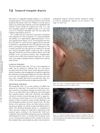
 Temporal triangular alopecia is a lifelong condition with hairless patches on the side of the head that may be present from birth.
April 2016 in “Journal of Investigative Dermatology” Mutations in the TSPEAR gene cause a new form of ectodermal dysplasia affecting hair and tooth development.
11 citations
,
July 2022 in “International Journal of Molecular Sciences” Tight junctions help control skin shedding and may be targets for treating certain skin conditions.
32 citations
,
August 2016 in “Journal of the American Academy of Dermatology” Temporal triangular alopecia is a non-scarring hair loss in children, often linked to other health conditions.
Trichoscopic examination is crucial for diagnosing congenital triangular alopecia.
7 citations
,
February 2017 in “Open veterinary journal” Tiger cubs fed artificial milk lacking certain amino acids developed eye problems and hair loss.
 4 citations
,
October 2020 in “Journal of oral and maxillofacial surgery”
4 citations
,
October 2020 in “Journal of oral and maxillofacial surgery” Tisseel shows promise for bone graft stabilization but needs more clinical trials to confirm its effectiveness.
 1 citations
,
January 2017 in “Yonsei Medical Journal”
1 citations
,
January 2017 in “Yonsei Medical Journal” Hair is thinner near the scalp in acute hair shedding conditions.
A wavy two-layer closure in hair transplants makes scars nearly invisible for most patients.
 2 citations
,
February 2018 in “Journal of dermatology & cosmetology”
2 citations
,
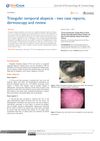
February 2018 in “Journal of dermatology & cosmetology” Triangular temporal alopecia is a benign hair loss pattern best diagnosed with dermoscopy, with limited treatment options like surgery and hair transplantation.
 15 citations
,
January 2019 in “Experimental Dermatology”
15 citations
,
January 2019 in “Experimental Dermatology” Lanyu pigs show that partial-thickness wounds can partially regenerate important skin structures, which may help improve human skin healing.
 3 citations
,
August 2018 in “Journal der Deutschen Dermatologischen Gesellschaft”
3 citations
,
August 2018 in “Journal der Deutschen Dermatologischen Gesellschaft” The technique effectively repairs skin after tumor removal, maintaining appearance and function without complications.
11 citations
,
March 2002 in “Pediatric Dermatology” Temporal triangular alopecia is a non-scarring hair loss seen in some Asian children.