 January 2023 in “Tehnika”
 Biomedical engineers are crucial for developing better treatments for chronic and autoimmune diseases.
 January 2018 in “Stem cell biology and regenerative medicine”
 The conclusion is that the nuclear lamina and LINC complex in skin cells respond to mechanical signals, affecting gene expression and cell differentiation, which is important for skin health and can impact skin diseases.
 September 2017 in “Journal of Investigative Dermatology”
 Fermented mackerel oil was found to promote hair growth by activating certain cell signals and increasing cell growth.
 September 2017 in “Journal of Investigative Dermatology”
 Certain products and treatments can improve hair health and growth.
 September 2017 in “Journal of Investigative Dermatology”
 The combination of Stemoxydine® and Resveratrol improves hair density in women with Female Pattern Hair Loss.
 September 2017 in “Journal of Investigative Dermatology”
 Mackerel fermented fish oil protects skin cells from damage by UVB light.
 September 2017 in “Journal of Investigative Dermatology”
 Hair care products used for 4 weeks made hair smoother.
 January 2017 in “Chemistry & Industry”
 Eating fewer calories may slow aging and removing old cells can increase lifespan in mice.
 November 2017 in “British Journal of Dermatology”
 Genes controlling hair growth and immune response are disrupted in male pattern baldness.
39 citations
,
December 1998 in “Journal of Cell Science” The LEF-1 binding site enhances gene expression in hair follicles, with other proteins aiding specific regulation.
4 citations
,
September 2023 in “Bioscience Biotechnology and Biochemistry” Scalp bacteria affect genes linked to hair health and growth.
7 citations
,
January 2017 in “Sub-cellular biochemistry/Subcellular biochemistry” 37 citations
,
January 2010 in “Human Molecular Genetics” FTase and GGTase-I are essential for skin keratinocyte health.
 182 citations
,
August 2016 in “Development”
182 citations
,
August 2016 in “Development” ATP-dependent chromatin-remodeling complexes are crucial for gene regulation, cell differentiation, and organ development in mammals.
May 2024 in “Archives of Dermatological Research” TAT-GILZ peptide promotes hair growth by boosting stem cell activity.
 11 citations
,
March 2024 in “Cell and Tissue Research”
11 citations
,
March 2024 in “Cell and Tissue Research” Telocytes have potential in therapy and tissue regeneration, but challenges in identification and cultivation remain.
24 citations
,
September 2023 in “Science Advances” Mettl3 is essential for normal tissue development and self-renewal by regulating gene expression.
January 2011 in “Archivio Istituzionale della Ricerca (Universita Degli Studi Di Milano)” New molecules can prevent cell death in hair follicles.
 59 citations
,
November 2015 in “International Journal of Cosmetic Science”
59 citations
,
November 2015 in “International Journal of Cosmetic Science” Oxidative stress damages hair and contributes to aging, and managing it can help maintain hair health.
 29 citations
,
August 2017 in “Skin appendage disorders”
29 citations
,
August 2017 in “Skin appendage disorders” IGF-1 may affect hair growth and loss, but more research is needed to confirm effective and safe treatments.
 25 citations
,
May 2020 in “Daehan saengsik uihak hoeji/Clinical and experimental reproductive medicine”
25 citations
,
May 2020 in “Daehan saengsik uihak hoeji/Clinical and experimental reproductive medicine” Injecting platelet-derived growth factors into ovaries may improve IVF outcomes by enhancing egg quality and embryo health.
 6 citations
,
June 2021 in “Developmental biology”
6 citations
,
June 2021 in “Developmental biology” Dermal EZH2 controls skin cell development and hair growth in mice.
 1 citations
,
November 2017
1 citations
,
November 2017 The document concludes that while some organisms can regenerate body parts, mammals generally cannot, and cancer progression is complex, involving mutations rather than a strict stem cell hierarchy.
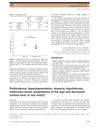 January 2013 in “Journal of dermatology”
 A new medical syndrome may include skin changes, hair loss, sweating issues, bone malformations, leg swelling, and low cortisol.
 47 citations
,
January 2019 in “Nature communications”
47 citations
,
January 2019 in “Nature communications” Polyamines help fix DNA damage accurately in cells.
July 2024 in “Journal of Investigative Dermatology” Topical melatonin may reduce skin aging by inhibiting certain cellular pathways.
36 citations
,
November 2005 in “Forensic Science International” BioPlex-11 improves DNA profiling from telogen hair roots in forensic work.
71 citations
,
June 1993 in “Journal of Investigative Dermatology” 24 citations
,
June 2003 in “Journal of Structural Biology” Sheet formation is key to macrofibril structure differences in wool.
7 citations
,
January 2024 in “Cancer Research Communications” TAp63 and NRF2 work together to manage oxidative stress, preventing premature aging and aiding skin functions.