5 citations
,
January 2005 in “PubMed” Apoptosis is important in the hair cycle of dogs.
 155 citations
,
September 2008 in “British journal of dermatology/British journal of dermatology, Supplement”
155 citations
,
September 2008 in “British journal of dermatology/British journal of dermatology, Supplement” FFA is more common in postmenopausal women, can affect younger women, and may stabilize over time.
 17 citations
,
October 2017 in “Journal of Cutaneous Medicine and Surgery”
17 citations
,
October 2017 in “Journal of Cutaneous Medicine and Surgery” No treatment has been proven to effectively stop hair loss or regrow hair in Frontal Fibrosing Alopecia, and more research is needed.
 9 citations
,
January 2018 in “Journal of the European Academy of Dermatology and Venereology”
9 citations
,
January 2018 in “Journal of the European Academy of Dermatology and Venereology” A male patient developed frontal fibrosing alopecia after antiandrogen therapy for prostate cancer.
132 citations
,
September 2009 in “Experimental Dermatology” A reliable system was developed to distinguish hair growth stages, aiding in identifying hair growth promoters or inhibitors.
 June 2010 in “Melanoma research”
 LDE225 is a promising skin-applied treatment for basal cell carcinoma with good skin penetration and effectiveness.
 1 citations
,
November 2014
1 citations
,
November 2014 The document explains hair and nail biology, common hair loss conditions and treatments, oral and genital skin diseases, and the risks and treatments associated with squamous cell carcinoma.
 26 citations
,
August 2016 in “Actas Dermo-Sifiliográficas”
26 citations
,
August 2016 in “Actas Dermo-Sifiliográficas” Frontal Fibrosing Alopecia in men is often missed and can come with symptoms like facial bumps and hair loss on eyebrows and limbs.
 151 citations
,
December 2004 in “Annals of the New York Academy of Sciences”
151 citations
,
December 2004 in “Annals of the New York Academy of Sciences” Congenital Adrenal Hyperplasia is a genetic disorder with two forms, causing symptoms like early puberty and severe acne, but can be identified through screening and treated with glucocorticoids.
 1 citations
,
May 2018 in “Hair transplant forum international”
1 citations
,
May 2018 in “Hair transplant forum international” Hair transplant techniques and scalp micropigmentation can effectively hide scars and hair loss after cranial surgery.
 31 citations
,
August 2021 in “Stem Cell Research & Therapy”
31 citations
,
August 2021 in “Stem Cell Research & Therapy” The conclusion is that understanding how hair follicle stem cells live or die is important for maintaining healthy tissue and repairing injuries, and could help treat hair loss, but there are still challenges to overcome.
 17 citations
,
June 2017 in “British Journal of Dermatology”
17 citations
,
June 2017 in “British Journal of Dermatology” The article concludes that hair loss is a common side effect of drugs treating skin cancer by blocking the hedgehog pathway, but treatment should continue, and more selective drugs might prevent this side effect.
January 2014 in “Jaypee Brothers Medical Publishers (P) Ltd. eBooks” Androgenetic alopecia is the most common cause of hair loss, affecting both men and women, with varying patterns and prevalence among different races.
 May 2026 in “Scholars Journal of Medical Case Reports”
 Intralesional betamethasone and oral hydroxychloroquine improved hair loss in a woman with frontal fibrosing alopecia.
1 citations
,
January 2025 in “Advances in Wound Care” Dermal sheath cells help heal wounds by showing both skin and connective tissue traits.
2 citations
,
January 2024 in “Revista Paulista de Pediatria” A rare genetic mutation caused severe symptoms in a 6-year-old girl with mandibuloacral dysplasia type A.
 33 citations
,
January 2010 in “Case reports in dermatology”
33 citations
,
January 2010 in “Case reports in dermatology” Dermoscopy helps diagnose frontal fibrosing alopecia by distinguishing it from other hair loss conditions.
 January 2025 in “Indian Journal of Dermatology”
 Frontal fibrosing alopecia is a challenging hair loss condition with no known cause or definitive treatment.
 49 citations
,
January 2003 in “Clinical and Experimental Dermatology”
49 citations
,
January 2003 in “Clinical and Experimental Dermatology” The document concludes that post-menopausal frontal fibrosing alopecia is a poorly understood condition that does not respond well to common treatments.
 8 citations
,
September 2011 in “European Journal of Dermatology”
8 citations
,
September 2011 in “European Journal of Dermatology” Most treatments for Frontal Fibrosing Alopecia are ineffective, but early anti-inflammatory therapy may help and the condition may stabilize over time.
 8 citations
,
November 2018 in “Australasian Journal of Dermatology”
8 citations
,
November 2018 in “Australasian Journal of Dermatology” Frontal fibrosing alopecia in families shows similar signs to individual cases and may have a genetic link.
325 citations
,
June 1994 in “Archives of Dermatology” Postmenopausal frontal fibrosing alopecia may be a unique condition linked to postmenopausal changes.
6 citations
,
June 2015 in “Journal of theoretical biology” The model showed that immune system guardians and the cytokine interferon-γ are key in alopecia areata progression.

Frontal fibrosing alopecia in men is often misdiagnosed and needs better diagnostic criteria and treatments.
3 citations
,
February 2017 in “The American journal of dermatopathology/American journal of dermatopathology” Sarcoidosis can mimic other skin disorders, making diagnosis challenging.
 17 citations
,
January 2015 in “International Journal of Trichology”
17 citations
,
January 2015 in “International Journal of Trichology” Frontal fibrosing alopecia may affect nails and could be a type of lichen planus, treatable with certain medications.
 33 citations
,
August 2013 in “British Journal of Dermatology”
33 citations
,
August 2013 in “British Journal of Dermatology” Lack of small, fine hair on the front hairline is a key sign of frontal fibrosing alopecia.
 8 citations
,
January 2007 in “International Society of Hair Restoration Surgery”
8 citations
,
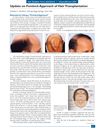
January 2007 in “International Society of Hair Restoration Surgery” The forelock approach in hair transplants improves natural appearance by focusing hair density in one area.
 10 citations
,
December 2010 in “British Journal of Dermatology”
10 citations
,
December 2010 in “British Journal of Dermatology” After menopause, some women lose scalp hair and gain facial hair, with patterns suggesting different underlying causes.
 January 2016 in “Springer eBooks”
 The document concludes that there are various causes and treatments for hair loss, with hair transplantation being a notable option.