 6 citations
,
November 2008 in “Hair transplant forum international”
6 citations
,
November 2008 in “Hair transplant forum international” Using a special knife helps improve hairline scars from surgery.
 December 2025 in “Голова и шея.”
 The (bi)eyebrow approach is better for frontal sinus injuries, reducing scarring and complications.
 1 citations
,
July 2021 in “Aesthetic Plastic Surgery”
1 citations
,
July 2021 in “Aesthetic Plastic Surgery” The new triangular flag-shaped design for incisions in hair transplant surgery provides better hair alignment and cosmetic appearance without extra scarring, especially for patients with specific hair directions.
 2 citations
,
September 2020 in “Hair transplant forum international”
2 citations
,
September 2020 in “Hair transplant forum international” A new tool makes hair transplant surgeries faster by creating multiple cuts in one go.
 33 citations
,
January 1991 in “The Journal of Dermatologic Surgery and Oncology”
33 citations
,
January 1991 in “The Journal of Dermatologic Surgery and Oncology” Incisional slit grafting for hair transplantation gives natural-looking results and has a high success rate.
12 citations
,
February 2017 in “Graefe s Archive for Clinical and Experimental Ophthalmology” Gore-Tex is effective for severe congenital ptosis, with the open approach better for no lid crease and the closed approach better for a preserved crease.
 August 2019 in “Journal of The American Academy of Dermatology”
 The document concludes that using micropore tape on an 18-gauge needle can control depth in hair restoration surgery, reducing scalp trauma and complications.
 2 citations
,
May 2011 in “Hair transplant forum international”
2 citations
,
May 2011 in “Hair transplant forum international” The Intruder is a tool used for safely preparing the area where a donor's tissue is taken.
 25 citations
,
January 2001 in “Facial Plastic Surgery”
25 citations
,
January 2001 in “Facial Plastic Surgery” Both tissue expansion and serial excision are effective for scar revision in the head and neck area.
 7 citations
,
September 2017 in “Journal der Deutschen Dermatologischen Gesellschaft”
7 citations
,
September 2017 in “Journal der Deutschen Dermatologischen Gesellschaft” Occipital donor sites for skin grafts heal faster, hurt less, look better, and have fewer complications than femoral sites.
 1 citations
,
December 2015 in “Dermatologic Surgery”
1 citations
,
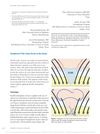
December 2015 in “Dermatologic Surgery” Double trichophytic closure effectively treats thin scalp scars and reduces patient costs.
 December 2015 in “Dermatologic Surgery”
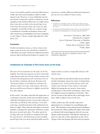
 Double trichophytic closure effectively repairs thin scalp scars, reducing financial burden.
July 2019 in “Dermatologic Surgery” 10 citations
,
January 1979 in “PubMed” Minimal scalp shaving before neurosurgery reduces infections and offers psychological benefits.
A wavy two-layer closure in hair transplants makes scars nearly invisible for most patients.
1 citations
,
August 2023 in “International Journal of Surgery Case Reports” Using titanium mesh and thigh tissue is effective for complex scalp reconstruction.
 1 citations
,
February 2004 in “Dermatologic Surgery”
1 citations
,
February 2004 in “Dermatologic Surgery” Deep Plane Fixation in scalp surgeries allows for more tissue removal with less tension, leading to better healing and less scarring.
4 citations
,
August 2008 in “Plastic & Reconstructive Surgery” The flap effectively sealed leaks and served as a barrier, with minor complications, for anterior skull base surgery.
 10 citations
,
January 2013 in “Journal of Cutaneous and Aesthetic Surgery”
10 citations
,
January 2013 in “Journal of Cutaneous and Aesthetic Surgery” Narrower donor strips and special closure techniques in hair transplants lead to smaller scars and happier patients.
 9 citations
,
December 1984 in “The Journal of Dermatologic Surgery and Oncology”
9 citations
,
December 1984 in “The Journal of Dermatologic Surgery and Oncology” Layered suture closure for hair transplant donor sites results in smaller scars and easier future harvesting but takes more time and may temporarily increase hair shedding.
 7 citations
,
March 2017 in “Annals of Plastic Surgery”
7 citations
,
March 2017 in “Annals of Plastic Surgery” The new Mercedes flap variant effectively closed medium-sized scalp defects in a single operation with good cosmetic results and no complications.
 February 2004 in “Dermatologic Surgery”
 Deep Plane Fixation in scalp surgeries allows for more tissue removal with less tension and minimal scarring.
May 2007 in “Archives of Plastic Surgery” The Frechet flap technique effectively hides scalp surgery scars with good results and minimal issues.
March 2019 in “Dermatologic Surgery” October 2022 in “The Laryngoscope” The InCISE score is a promising tool for assessing wound healing in head and neck surgery but needs more research for broader use.
February 2019 in “Dermatologic Surgery” September 2018 in “Dermatologic Surgery”  May 2015 in “Plastic and Reconstructive Surgery”
 A new method using bands and finger sheaths from gloves to manage hair during surgery is effective, quick, and reduces hair damage.
1 citations
,
June 2023 in “JPRAS Open” The hole technique is faster and effective for hair transplant site creation.
 October 2010 in “Journal of Drugs in Dermatology”
 In 2010, Marco Toscani's team introduced a new scalpel for hair transplants that cuts parallel to hair follicles, reducing hair loss and improving on previous methods.