 April 2026 in “npj Parkinson s Disease”
 VPS13C variants are linked to more severe REM sleep disorder and faster progression to Parkinson's disease.
 April 2026 in “Frontiers in Pharmacology”
 Many medications may be linked to cognitive disorders, but most lack warnings on labels.
 April 2026 in “Cellular and Molecular Immunology”
 SPT6 prevents excessive skin inflammation by blocking a feedback loop.
 February 2026 in “Cureus”
 Recognizing and managing skin side effects from chemotherapy improves patient quality of life and treatment success.
 February 2026 in “Psycho-Oncologie”
 Alopecia areata causes significant psychological distress in cancer patients, needing integrated care.
 January 2026 in “Frontiers in Pharmacology”
 Certain drugs can cause male infertility, so fertility counseling and sperm preservation are advised.
 January 2026 in “Clinical Cosmetic and Investigational Dermatology”
 Early diagnosis and targeted anti-inflammatory treatments can improve outcomes in androgenetic alopecia with perifollicular inflammation and fibrosis.
 January 2026 in “Journal of Epidemiology”
 Severe hair loss is linked to higher risks of hypertension and diabetes, especially in younger adults and women.
 December 2025 in “Italian Journal of Anatomy and Embryology”
 Understanding embryologic layers improves skin disorder diagnosis and supports developing targeted therapies.
 November 2025 in “Scientific Reports”
 Liver disease is linked to hair loss, especially in women and those with unhealthy lifestyles.
 November 2025 in “Frontiers in Immunology”
 Immune cells are crucial for normal skin development and their dysfunction can cause skin disorders.
 October 2025 in “Dermatology Practical & Conceptual”
 ChatGPT 4.0 and Gemini 1.5 Flash are effective for educating patients about androgenetic alopecia, while Deepseek R1 is less reliable.
 July 2025 in “Journal of Dermatology Research Reviews & Reports”
 A 10-year-old girl with hair and eyelash loss showed significant regrowth after treatment.
 January 2025 in “Bright Sky Publications eBooks”
 Aesthetic medicine is rapidly advancing with new technologies for safer, personalized, and less invasive treatments.
 October 2024 in “Internal Medicine”
 Stopping nalfurafine reversed hair loss in a hemodialysis patient.
 July 2024 in “Journal of Rare Diseases”
 Woodhouse-Sakati syndrome shows varied symptoms and genetic differences within families.
 January 2024 in “bioRxiv (Cold Spring Harbor Laboratory)”
 The gene Ascl4 is not necessary for the development of hair, teeth, or mammary glands.
 September 2023 in “Scientific reports”
 Segmental hair analysis can track testosterone over time but needs adjustments for sex, hair color, and washing frequency.
 June 2023 in “International journal of pharmaceutical quality assurance”
 Videodermoscopy is effective for diagnosing different types of non-scarring hair loss.
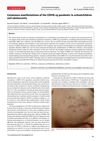 January 2023 in “Acta dermatovenerologica Alpina, Pannonica et Adriatica (Tiskana izd.)”
 The article concludes that schoolchildren and adolescents experienced various skin issues during the COVID-19 pandemic, including acne from masks and other skin reactions from the virus and vaccines.
 January 2023 in “Åbo Akademi University Research Portal”
 Vimentin is crucial for wound healing, cell growth, and managing immune responses.

Lower LDL-c levels predict higher COVID-19 mortality.
Social media data can help track and predict COVID-19 symptoms and trends.
A mange outbreak nearly wiped out vicuña and guanaco populations in San Guillermo National Park.
 January 2020 in “Revista da Sociedade Portuguesa de Dermatologia e Venereologia”
 Frontal fibrosing alopecia in Brazil mostly affects postmenopausal women, often linked with hypothyroidism and eyebrow hair loss.

Wildebeest stress and hormone levels are influenced by food availability, human presence, and reproductive cycles.
 November 2019 in “Harper's Textbook of Pediatric Dermatology”
 The document is a detailed medical reference on skin and genetic disorders.
 July 2018 in “Elsevier eBooks”
 Frontal Fibrosing Alopecia is a type of hair loss affecting mostly older women, with no agreed best treatment.
 January 2018 in “Stem cell biology and regenerative medicine”
 The nucleus is key in controlling skin growth and repair by coordinating signals, gene regulators, and epigenetic changes.
 March 2017 in “Fundamental & Clinical Pharmacology”
 The model and estimator can predict drug exposure in kidney transplant patients well.