14 citations
,
January 2014 in “Indian Journal of Dermatology Venereology and Leprology” Frontal fibrosing alopecia can affect men's beards and leads to permanent hair loss.
 April 2023 in “Journal of Cutaneous and Aesthetic Surgery”
 The conclusion is that a safe donor area for hair transplants varies and should be chosen based on individual factors like race, future hair loss, family history, and specific thinning patterns.
 3 citations
,
March 2019 in “Archives of Plastic Surgery”
3 citations
,
March 2019 in “Archives of Plastic Surgery” Hair transplantation effectively corrects hairline issues after midface-lifting surgery with high patient and physician satisfaction.
 July 2025 in “Journal of Medical Science And clinical Research”
 A 21-year-old male has a rare scalp condition with excessive skin folds.
 2 citations
,
August 2010 in “Journal of the American Academy of Dermatology”
2 citations
,
August 2010 in “Journal of the American Academy of Dermatology” A 65-year-old woman has a growing bald spot on her scalp.
 July 2018 in “Elsevier eBooks”
 Frontal Fibrosing Alopecia is a type of hair loss affecting mostly older women, with no agreed best treatment.
 June 2023 in “Clinical Case Reports”
 Complete surgical removal and regular check-ups are essential for treating a rare skin cancer, and hair transplant can help fix scars from cancer surgery.
 14 citations
,
March 2015 in “Facial plastic surgery clinics of North America”
14 citations
,
March 2015 in “Facial plastic surgery clinics of North America” Individualized assessment and meticulous planning are crucial for successful brow and upper eyelid surgery.
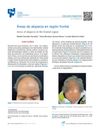 January 2025 in “Revista del Centro Dermatológico Pascua”
 Early diagnosis and treatment can help manage fibrosing alopecia in older women.
1 citations
,
May 2024 in “International journal of medicine and psychology.” EHF radiation and ozone therapy together improve skin flap healing.
 53 citations
,
May 2010 in “Dermatologic Surgery”
53 citations
,
May 2010 in “Dermatologic Surgery” Hair transplantation may not work for Frontal Fibrosing Alopecia as transplanted hair was lost when the disease came back.
 4 citations
,
February 1988 in “Journal of the American Academy of Dermatology”
4 citations
,
February 1988 in “Journal of the American Academy of Dermatology” Congenital triangular alopecia is more common than thought and some treatments can be beneficial for appearance concerns.
14 citations
,
January 2010 in “Dermatology” Some people with congenital triangular alopecia have a central tuft of hair in the bald patch, but the cause is unknown.
December 2016 in “Anales del sistema sanitario de Navarra” Frontal fibrosing alopecia is increasing, especially in postmenopausal women, and treatment with finasteride can improve it.
 9 citations
,
November 2008 in “Facial Plastic Surgery”
9 citations
,
November 2008 in “Facial Plastic Surgery” Effective scalp reconstruction requires a wide range of surgical skills and an understanding of hair biology.
 October 2023 in “Archives of Aesthetic Plastic Surgery”
 Blepharoptosis surgery usually lowers the eyebrows, especially near the nose.
 23 citations
,
September 2014 in “JEADV. Journal of the European Academy of Dermatology and Venereology/Journal of the European Academy of Dermatology and Venereology”
23 citations
,
September 2014 in “JEADV. Journal of the European Academy of Dermatology and Venereology/Journal of the European Academy of Dermatology and Venereology” Laser treatments are the most effective for porokeratotic adnexal ostial nevus.
December 1987 in “Pediatric Dermatology” Hair bands are a new symptom of facio-genito-popliteal syndrome.
February 2026 in “American Journal of Case Reports” AS-OCT is crucial for diagnosing VZV interstitial keratitis and avoiding unnecessary treatments.
 March 2025 in “Authorea (Authorea)”
 PRP injections for hair growth can cause temporary vision loss, which may be resolved with treatment.
 January 2004 in “Springer eBooks”
 Telogen effluvium is a condition that causes temporary hair loss.
 4 citations
,
January 2015 in “Annals of Dermatology”
4 citations
,
January 2015 in “Annals of Dermatology” A woman's temporary hair loss after face lift surgery stopped on its own, and hair grew back.
 January 2024 in “Wiadomości Lekarskie”
 Interdisciplinary treatment is crucial for effective recovery from facial skull injuries.
 January 2023 in “Skin appendage disorders”
 Hair restoration surgery can change the appearance of hair when examined with a special magnifying tool.
2 citations
,
December 2018 Alopecia frontal fibrosante affects facial vellus hair and can be diagnosed with dermatoscopy.
40 citations
,
November 2007 in “Journal of oral and maxillofacial surgery” Facelift surgery has a low complication rate, with bleeding under the skin being the most common issue.
5 citations
,
October 2019 in “JAAD Case Reports” These hair loss conditions might be part of a spectrum, not separate issues.
2 citations
,
November 1999 in “Journal of Cutaneous Medicine and Surgery” 
The document describes a rare case of IFAP syndrome, a genetic condition with symptoms of hair loss, light sensitivity, and scaly skin.
 January 2017 in “Elsevier eBooks”
 The document concludes that choosing the right forehead and brow lifting technique based on individual patient characteristics is crucial to prevent complications and achieve desired results.