 August 2007 in “Microscopy and Microanalysis”
 Hair fibers break by cuticle cell slipping, shape changing, cuticle fraying, and surface cracking when stretched under specific conditions.
 December 2023 in “Data in Brief”
 Curly hair's strength and flexibility vary with moisture and temperature.
12 citations
,
February 2011 in “Zenodo (CERN European Organization for Nuclear Research)” Hair properties vary with age and ethnic origin.
8 citations
,
July 2019 in “The journal of investigative dermatology/Journal of investigative dermatology” Curly hair is mechanically different from straight hair and may need new testing methods.
8 citations
,
April 2017 in “Journal of The Royal Society Interface” Giant axonal neuropathy changes the structure of keratin in human hair.
4 citations
,
June 2022 in “ACS applied materials & interfaces” New wig coating technique makes them more durable, UV resistant, and less static.
 January 2024 in “International Journal of Cosmetic Science”
 A new method using 1,4-n-butylene dimaleate effectively repairs and strengthens damaged hair.
Giant axonal neuropathy changes the structure of keratin in human hair, making it stiffer and stronger.
11 citations
,
May 2016 in “PubMed” New imaging and testing methods can effectively assess hair shape changes and damage.
 3 citations
,
September 2020 in “Journal of cosmetic dermatology”
3 citations
,
September 2020 in “Journal of cosmetic dermatology” Coconut oil makes hair stronger and more flexible than mineral oil.
 6 citations
,
December 1966 in “Textile Research Journal”
6 citations
,
December 1966 in “Textile Research Journal” Animal hair fibers like wool and mohair are strong when dry, but vicuna fibers are very brittle.
January 2023 in “SSRN Electronic Journal” The fibroin-based formulation strengthens and repairs chemically damaged hair.
September 2011 in “Daehan miyong hakoeji” Henna orange powder, especially with alkali, protects and colors hair better than oxidizing colorants.
 April 2025 in “Pharmaceuticals”
 APA is a promising new compound for repairing damaged hair, outperforming Olaplex® in strength and elasticity.
 February 2025 in “Brazilian Journal of Hair Health”
 The Brazilian candle flame technique can damage hair by melting the cuticle and exposing the cortex.
March 2026 in “International Journal of Cosmetic Science” Pal-KCV peptide strengthens hair and reduces breakage by up to 52%.
 April 2025 in “International Journal For Multidisciplinary Research”
 The nano-herbal hair spray effectively strengthens hair and reduces dandruff naturally.
January 2016 in “Belarusian State Pedagogical University repository (Belarusian State Pedagogical University)” A 6-group geometric classification of human scalp hair is more reliable and objective for testing than an 8-group system.
 17 citations
,
July 2018 in “International Journal of Cosmetic Science”
17 citations
,
July 2018 in “International Journal of Cosmetic Science” Keratin-based particles safely improve hair strength, smoothness, and heat protection.
 May 2023 in “Current Applied Science and Technology”
 Higher power CO2 laser causes more severe skin burns and damage.
May 2026 in “International Journal of Cosmetic Science” A plant-based treatment from Avena strigosa seeds effectively repairs and strengthens damaged hair.
 22 citations
,
September 2019 in “ACS omega”
22 citations
,
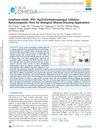
September 2019 in “ACS omega” The new nanocomposite films are stronger, protect against UV, speed up wound healing, and are antibacterial without being toxic.
 42 citations
,
April 2008 in “Acta materialia”
42 citations
,
April 2008 in “Acta materialia” Different ethnicities and treatments affect human hair strength and structure.
 1 citations
,
March 2005 in “International Journal of Cosmetic Science”
1 citations
,
March 2005 in “International Journal of Cosmetic Science” Twisting hair weakens it, but strength can be recovered at low twist levels.
 November 2020 in “INDIAN JOURNAL OF APPLIED RESEARCH”
 Women with hair loss have weaker hair that breaks more easily.
6 citations
,
January 2016 in “International journal of trichology” Children's hair is more elastic, but tensile strength is similar across different factors.
January 2023 in “Minds at UW (University of Wisconsin)” More research is needed to understand how shampoo chemicals affect hair strength and structure.
 October 2012 in “Advanced Materials Research”
 Higher temperatures improve rabbit hair strength up to 50°C, but moisture weakens it.
 13 citations
,
January 1995 in “Journal of the American Institute for Conservation”
13 citations
,
January 1995 in “Journal of the American Institute for Conservation” Researchers developed a less damaging way to extract red dyes from wool using EDTA and DMF, preserving the fiber's strength for further analysis.
NaOH treatment improves hair strength and suitability for textiles.