Search
for
Sort by
Research
210-240 / 1000+ results
research 2000 Manfred Lucas and Follicle Awards
The document's conclusion cannot be summarized because the content is not accessible or understandable.
research Lichen planopilaris: retrospective study on the characteristics and treatment of 291 patients
Women are more likely to have Lichen planopilaris, and treatments with cyclosporine and methotrexate are most effective but less safe than mycophenolate mofetil.

research 017 Lichen Planus Colocalized with Vitiligo: Coincidence?
Some people with the skin color loss condition, vitiligo, also develop the skin inflammation condition, lichen planus, possibly due to local trauma, sun damage, or genetic factors.
research Low-level light-assisted photodynamic therapy using a wearable cap-like device for the treatment of actinic keratosis of the scalp
A wearable cap-like device using light therapy reduced scalp skin lesions by 71% and was painless.
research Lupus erythematosus tumidus (LET) with autoimmune thyroid dysfunction (AITD) as the first presentation of systemic lupus erythematosus: A case report and review of the literature
Recognizing LET and AITD can help diagnose SLE early for better treatment.
research Pure Leydig cell tumor of the ovary: a rare presentation of a rare entity in a pregnant patient
A rare benign ovarian tumor was found in a pregnant woman, but both mother and baby remained healthy.
research ALOPECIA AREATA TREATED WITH THORIUM-X
research ALOPECIA AREATA TREATED WITH THORIUM-X
research Lichen Planopilaris: Retrospective Study and Stepwise Therapeutic Approach
No treatment showed clear superiority for lichen planopilaris.
research Low Level Laser and Light Therapy
Low-Level Laser Therapy can stimulate healing and cell function, potentially leading to wider medical use.
research 565 Cutaneous delivery of LEKTI via an engineered strain of staphylococcus epidermidis for the treatment of netherton syndrome
ATR12-351 ointment safely delivers LEKTI protein to the skin, reducing enzyme activity in Netherton syndrome.
research Platelet-Rich Concentrates in the Management of Lichen Planus—A Comprehensive Review
Platelet-rich concentrates can be an alternative treatment for oral lichen planus, especially when steroids don't work.

research LLLT Part 3: Critically Assessing Recent Published LLLT Device Trials: Limitations, Recommendations, and Conclusions
The review concluded that better studies are needed to prove if Low-Level Laser Therapy devices for hair growth really work.
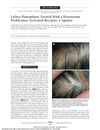
research Lichen Planopilaris Treated With a Peroxisome Proliferator–Activated Receptor γ Agonist
A specific drug can help treat Lichen Planopilaris, a condition causing permanent hair loss.
research Geometric alopecia associated with lupus erythematosus panniculitis of the scalp: a case series of nine Korean patients
Lupus erythematosus panniculitis on the scalp can cause unique geometric hair loss patterns.
research Mitochondrial Dysfunction in Lichen Planopilaris with Focus on Oxidative Stress and Metabolic Reprogramming
Mitochondrial dysfunction and oxidative stress may play a role in Lichen Planopilaris.
research Novel small‐insertion mutation in the LIPH gene in a patient with autosomal recessive woolly hair/hypotrichosis
Researchers found a new mutation in the LIPH gene of a woman with a rare hair condition.
research Quantitative proteomic analysis of dermal papilla from male androgenetic alopecia comparing before and after treatment with low‐level laser therapy
Low-level laser therapy improves hair growth and dermal papilla cell function.
research The role of lysophosphatidic acid in the physiology and pathology of the skin
Lysophosphatidic acid is important for skin health and disease, and could be a target for new skin disorder treatments.
research Frequency of Dyslipidemia in Patients with Lichen Planus: A Comparative Cross-Sectional Study
People with lichen planus are more likely to have abnormal blood fats than healthy people.

research A Look at the 6th Annual Live-Surgery Workshop
The document's conclusion cannot be provided because the document is not accessible or understandable.
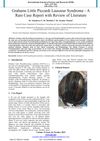
research Grahams Little Piccardi Lausseur Syndrome - A Rare Case Report with Review of Literature
Early diagnosis of GLPLS is crucial to prevent complications, but scarring alopecia is irreversible.
research Diffuse alopecia of the scalp in borderline-lepromatous leprosy in an Indian patient
A neglected leprosy treatment led to rare scalp hair loss in an Indian woman, which improved with proper medication.
research Lichen Planopilaris in Women
Women with lichen planopilaris often have thyroid disease, depression, anxiety, and may respond to treatment with slowed disease progression.

research Lichen Planus Pigmentosus as a Cutaneous Extrahepatic Manifestation of Chronic Hepatitis C Virus Infection: A Case Report
Lichen planus pigmentosus may indicate undetected hepatitis C infection.
research Poly‑D,L‑lactic acid (PDLLA) scalp microinjection protocol with optional light microneedling priming for non‑scarring alopecia: A prospective pilot case series
PDLLA scalp injections improved hair regrowth in most patients with non-scarring alopecia.
research Medical management of Trichophyton dermatophytosis using a novel treatment regimen in L'Hoest's monkeys (Cercopithecus lhoesti)
The monkeys' skin infection was cured in eight weeks using oral terbinafine, topical washes, and disinfectant fogging.
research Efficacy of Platelet-Rich Plasma Therapy in Oral Lichen Planus: A Systematic Review
Platelet-rich plasma therapy improves oral lichen planus symptoms with few side effects.
research Abstracts Pt.30
Terbinafine is more effective than itraconazole for toenail fungus, especially in older patients, and debridement improves its effectiveness.