 January 2022 in “Experimental Dermatology”
 Minoxidil solution and foam both increase hair growth, but the solution works better than the foam.
 34 citations
,
February 2012 in “Journal of Cutaneous Pathology”
34 citations
,
February 2012 in “Journal of Cutaneous Pathology” The research found specific signs to diagnose alopecia areata incognito and noted patients generally regrow hair after steroid treatment.
 12 citations
,
June 2006 in “Anais Brasileiros de Dermatologia”
12 citations
,
June 2006 in “Anais Brasileiros de Dermatologia” The study found average numbers for different types of hair follicles in the scalp and observed differences between men and women, suggesting reasons for more common hair shedding in women.
 9 citations
,
October 1988 in “Clinics in Dermatology”
9 citations
,
October 1988 in “Clinics in Dermatology” Hair loss is caused by genetics and hormones, diagnosed through examination and biopsy, and treated with medications or surgery.
 3 citations
,
October 2021 in “Journal of Cosmetic Dermatology”
3 citations
,
October 2021 in “Journal of Cosmetic Dermatology” Trichoscopy helps tell apart Frontal Fibrosing Alopecia and Lichen planopilaris by showing different hair and scalp features.
October 2024 in “Journal of Cutaneous Pathology” Compound follicles in folliculitis decalvans mainly have active hair follicles.
3 citations
,
February 2025 in “Journal of the American Academy of Dermatology” Feminizing hormone therapy increases hair counts and improves hair-related quality of life, while masculinizing therapy may reduce large terminal hairs.
102 citations
,
July 2020 in “International journal of molecular sciences” Hormones like testosterone and estrogen significantly affect hair growth and structure.
Low-level light therapy, possibly combined with other treatments, may become a leading hair loss treatment, while hirsutism often worsens with age and lacks preventive options.
 2 citations
,
May 2009 in “Medicine”
2 citations
,
May 2009 in “Medicine” Hair and nails can help diagnose diseases, with nail issues often linked to skin conditions and hair loss having various causes and treatments.

Platelet-rich plasma treatment significantly improved hair density and regrowth in both men and women suffering from pattern hair loss, with even better results when combined with certain medications.
January 2000 in “Proyectar La Rioja” COVID-19 can cause hair loss a few months after infection.
 9 citations
,
January 1992 in “Journal of Investigative Dermatology”
9 citations
,
January 1992 in “Journal of Investigative Dermatology” Sugar molecule helps hair growth, less in balding, returns with treatment.
 2 citations
,
December 2015 in “International Journal of Dermatology”
2 citations
,
December 2015 in “International Journal of Dermatology” Washing test helps identify hair loss type, low iron levels significant.
 6 citations
,
June 2019 in “Skin Research and Technology”
6 citations
,
June 2019 in “Skin Research and Technology” Finasteride works for hair loss by maintaining existing hair follicles, not reversing miniaturization.
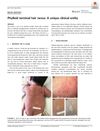 August 2018 in “Pediatric Dermatology”
 A baby had a unique skin condition with a pale patch and surrounding dark hairs, not linked to other health issues.
 16 citations
,
May 2013 in “Australasian Journal of Dermatology”
16 citations
,
May 2013 in “Australasian Journal of Dermatology” Hair loss in Cronkhite-Canada syndrome is reversible by treating the gut issues and doesn't need steroid treatment for the hair itself.
 8 citations
,
August 2014 in “Clinical and Experimental Dermatology”
8 citations
,
August 2014 in “Clinical and Experimental Dermatology” CTE and FPHL are different hair loss types with unique causes.
 47 citations
,
September 2008 in “British Journal of Dermatology”
47 citations
,
September 2008 in “British Journal of Dermatology” Ludwig pattern hair loss in women results from varying sensitivity in hair follicles, causing fewer visible hairs.
 14 citations
,
January 2016 in “Experimental Dermatology”
14 citations
,
January 2016 in “Experimental Dermatology” Hair regrowth doesn't convert thin hairs to thick hairs, but increases overall hair density.
 13 citations
,
December 2010 in “Archives of Dermatology”
13 citations
,
December 2010 in “Archives of Dermatology” Minoxidil use can cause trichostasis spinulosa in long-term hair loss patients.
 83 citations
,
November 2002 in “British Journal of Dermatology”
83 citations
,
November 2002 in “British Journal of Dermatology” Low iron levels are not directly linked to chronic hair loss and iron supplements may not help.
 47 citations
,
December 2006 in “Therapy”
47 citations
,
December 2006 in “Therapy” The dietary supplement helped increase hair growth in women with hair loss.
 31 citations
,
April 2007 in “Experimental Dermatology”
31 citations
,
April 2007 in “Experimental Dermatology” Stress in mice delays hair growth and treatments blocking substance P can partly reverse this effect.
 22 citations
,
February 2008 in “Journal of Dermatological Science”
22 citations
,
February 2008 in “Journal of Dermatological Science” EPR spectroscopy showed that spontaneous hair growth results in thicker skin and less pigmented hair than depilation-induced growth.
 June 2024 in “Al- Anbar Medical Journal”
 Acute telogen effluvium can be resolved by addressing causes, but chronic telogen effluvium is harder to treat.
 March 2021 in “British Journal of Dermatology”
 PRP helps hair regrowth and thickness.
 125 citations
,
September 2001 in “The FASEB Journal”
125 citations
,
September 2001 in “The FASEB Journal” Stress can cause hair loss by negatively affecting hair follicles and this effect might be reversed with specific treatments.
 11 citations
,
April 2020 in “Journal of The American Academy of Dermatology”
11 citations
,
April 2020 in “Journal of The American Academy of Dermatology” Microinflammation is more intense in smaller hair follicles and may be linked to hair loss.
 120 citations
,
November 2014 in “Biological Reviews”
120 citations
,
November 2014 in “Biological Reviews” The telogen phase of hair growth is active and important for preparing hair follicles for regeneration, not just a resting stage.