
Dual TCR Treg cells are common in various mouse tissues and show diverse characteristics.
 5 citations
,
June 2012 in “The journal of investigative dermatology/Journal of investigative dermatology”
5 citations
,
June 2012 in “The journal of investigative dermatology/Journal of investigative dermatology” Putting thymidine dinucleotide on newborn mice's skin can delay and reduce skin cancer.
 52 citations
,
October 1999 in “Developmental Dynamics”
52 citations
,
October 1999 in “Developmental Dynamics” Mutations in the hairless gene in mice affect its expression and lead to a range of developmental issues in multiple tissues.
December 2025 in “Animals” TGFBR1 slows down cell growth in fine-wool sheep hair follicles.
 17 citations
,
November 2017 in “Asian-Australasian journal of animal sciences”
17 citations
,
November 2017 in “Asian-Australasian journal of animal sciences” Certain gene mutations are linked to wool quality in sheep and could help in breeding for better wool.
26 citations
,
September 2023 in “Journal of Allergy and Clinical Immunology” Regulatory T cells help prevent autoimmunity and have potential for treating autoimmune diseases.
 April 2020 in “Research Square (Research Square)”
 Trichilemmal carcinoma shares genetic traits with other skin cancers, suggesting similar treatment options.
 July 2023 in “New phytologist”
 The BUZZ gene is important for root hair growth and overall root structure in the plant Brachypodium distachyon.
6 citations
,
January 2025 in “Differentiation” WNT10A is important for tissue development and linked to various human disorders.
19 citations
,
January 2015 in “Development” Hoxc8 gene helps start mammary gland development by controlling specific signals.
33 citations
,
September 2017 in “Journal of Investigative Dermatology” A mutation in the KRT25 gene causes woolly hair and hair loss.
193 citations
,
June 2007 in “The Plant Journal” GhDET2 is crucial for cotton fiber growth.
 January 2024 in “Inflammation and regeneration”
 Th22 cells are essential for Tβ15-induced hair growth in mice.
July 2017 in “Cancer Research” Krt15+ cells in mice can resist radiation, regenerate tissue, and start tumors, suggesting new cancer treatment targets.
47 citations
,
September 2002 in “Journal of Bone and Mineral Research” A mutation in the vitamin D receptor causes severe resistance to vitamin D, affecting bone health but not hair growth.
7 citations
,
November 1997 in “Pediatric Dermatology” Trichothiodystrophy can be linked to urologic issues and high calcium in urine.
November 2023 in “Вопросы современной педиатрии” Genetic testing can diagnose hair loss linked to DSG4 gene variants.
27 citations
,
January 2000 in “Developmental Dynamics” Mutations in the Whn gene affect hair keratin gene expression differently.
41 citations
,
January 2015 in “Development” Atoh1 expression can create new Merkel cells in the skin.
Matriptase-2 helps control iron levels by suppressing hepcidin, and its deficiency can cause iron-deficiency anemia.
 April 2017 in “Journal of Investigative Dermatology”
 Deep phenotyping helps distinguish between xeroderma pigmentosum and trichothiodystrophy, aiding in diagnosis and treatment.
409 citations
,
May 1991 in “Genes & Development” TGF-alpha affects skin thickness, hair growth, and may contribute to psoriasis and papilloma formation.
 January 2016 in “Journal of Investigative Dermatology”
 Some cells may slow melanoma growth, a protein could affect skin pigmentation, a gene-silencing method might treat hair defects, skin bacteria changes likely result from eczema, and a defensin protein could help treat multiple sclerosis.
April 2023 in “bioRxiv (Cold Spring Harbor Laboratory)” Gap junctions help control feather pattern formation by enabling cell communication.
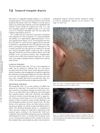 April 2012 in “Informa Healthcare eBooks”
 Temporal triangular alopecia is a lifelong condition with hairless patches on the side of the head that may be present from birth.
176 citations
,
February 2006 in “Cancer Research” Patched1 helps prevent tumors by controlling cell growth.
11 citations
,
November 2014 in “Behavior Genetics” 2 citations
,
January 1989 Tay syndrome is a unique genetic disorder causing skin, hair, and developmental issues.
30 citations
,
August 2005 in “British journal of dermatology/British journal of dermatology, Supplement” A specific gene mutation causes hair loss and potential eye issues, even if vision seems normal.
8 citations
,
December 2022 in “International journal of molecular sciences” Mice without the enzyme HSD17B3 still produce normal testosterone, suggesting they have different ways to make it compared to humans.