 166 citations
,
October 2018 in “Endocrine Reviews”
166 citations
,
October 2018 in “Endocrine Reviews” Hormone treatments for transgender individuals generally improve mental health and physical transition, with some health risks that require medical supervision.
 51 citations
,
April 1999 in “The Journal of Steroid Biochemistry and Molecular Biology”
51 citations
,
April 1999 in “The Journal of Steroid Biochemistry and Molecular Biology” Testosterone replacement may improve sexual desire and bone health in women with low androgen levels, but more research is needed on its long-term safety.
 32 citations
,
January 2018 in “American Journal of Clinical Dermatology”
32 citations
,
January 2018 in “American Journal of Clinical Dermatology” Hormone therapy affects hair growth in transgender individuals, with testosterone potentially causing hair loss in trans men and estrogen reducing facial/body hair in trans women; treatment options vary.
 17 citations
,
June 2018 in “Sexual Medicine Reviews”
17 citations
,
June 2018 in “Sexual Medicine Reviews” The document concludes that non-operative treatment for gender dysphoria is safe and effective, and hormone therapy does not increase cancer risk.
 14 citations
,
January 2018 in “Advances in Clinical Chemistry”
14 citations
,
January 2018 in “Advances in Clinical Chemistry” The document concludes that hormonal biomarkers are key for diagnosing hyperandrogenemia in women and hypogonadism in men.
 5 citations
,
December 2021 in “Physiological Research”
5 citations
,
December 2021 in “Physiological Research” Men, particularly those with hair loss, are more likely to get the virus, and those with prostate cancer may have milder symptoms. Testosterone's role in the disease is unclear, and the virus doesn't seem to harm male fertility. Women with PCOS might be at higher risk. More research is needed.
 3 citations
,
April 2015 in “American journal of biomedical sciences”
3 citations
,
April 2015 in “American journal of biomedical sciences” Androgens play a key role in hair growth and disorders like baldness and excessive hairiness.
 2 citations
,
November 2012 in “InTech eBooks”
2 citations
,
November 2012 in “InTech eBooks” The document concludes that sex hormones are crucial for mammalian reproduction, health, and behavior, and require more research for therapeutic use.
 April 2026 in “International Journal of Impotence Research”
 Anabolic steroid abuse can cause sexual, fertility, and health problems.

Female hair loss is often hereditary and can be treated with medication, hair transplants, and lasers.
175 citations
,
January 2020 in “European Journal of Endocrinology” Test thyroid function in all obese patients and prioritize weight loss for hormonal balance.
 120 citations
,
June 2008 in “American Journal of Epidemiology”
120 citations
,
June 2008 in “American Journal of Epidemiology” A simple screening method found that 6.3% of women in a semiurban area in Sri Lanka have polycystic ovary syndrome, with most showing menstrual irregularities.
 61 citations
,
January 2017 in “Human Reproduction Open”
61 citations
,
January 2017 in “Human Reproduction Open” The review recommends hormone replacement therapy for women with premature ovarian insufficiency to manage symptoms and protect health, with specific approaches for different groups.
 46 citations
,
November 1997 in “Journal of Neural Transmission”
46 citations
,
November 1997 in “Journal of Neural Transmission” Seborrhea in Parkinson's disease may be linked to hormones, not autonomic impairment.
 44 citations
,
July 2012 in “Endocrine Practice”
44 citations
,
July 2012 in “Endocrine Practice” We need to learn more about 5α-reductases and neuroactive steroids to safely make drugs targeting these enzymes.
 22 citations
,
January 2002 in “Treatments in endocrinology”
22 citations
,
January 2002 in “Treatments in endocrinology” Birth control pills help treat skin and hair growth problems linked to high male hormone levels.
 22 citations
,
September 1994 in “The Journal of Clinical Endocrinology and Metabolism”
22 citations
,
September 1994 in “The Journal of Clinical Endocrinology and Metabolism” Finasteride reduces dihydrotestosterone, increases testosterone, and may treat hirsutism in women.
 19 citations
,
March 2008 in “Nature clinical practice endocrinology & metabolism”
19 citations
,
March 2008 in “Nature clinical practice endocrinology & metabolism” A combined drug and laser treatment improved hirsutism in a PCOS patient, also enhancing her heart health and requiring regular liver and kidney checks.
 18 citations
,
August 1985 in “European journal of endocrinology”
18 citations
,
August 1985 in “European journal of endocrinology” Cyproterone acetate is effective for treating hirsutism, but some patients may feel worse on low-dose maintenance therapy.
 16 citations
,
February 2018 in “European Journal of Endocrinology”
16 citations
,
February 2018 in “European Journal of Endocrinology” Diagnosing hyperandrogenism in women is complex and requires accurate testing methods and consideration of SHBG levels.
12 citations
,
June 2024 in “Nutrients” Natural antioxidants like flavonoids and resveratrol may help prevent low testosterone in aging men.
 6 citations
,
June 2000 in “Psychiatric Services”
6 citations
,
June 2000 in “Psychiatric Services” Maintaining sexual health after menopause is possible with patient approaches, hormone supplements, and therapy, despite needing more research.
5 citations
,
April 2021 in “Journal of Academic Research in Medicine” FAI is a reliable marker for identifying and monitoring hyperandrogenism in obese adolescent females with PCOS.
 2 citations
,
March 2004 in “Reviews in Gynaecological Practice”
2 citations
,
March 2004 in “Reviews in Gynaecological Practice” Hormonal changes and psychological issues can cause sexual dysfunction in postmenopausal women. Behavioral therapy is recommended first, with hormone replacement helping some symptoms but not libido. Testosterone can improve libido, but its effects on overall sexual function are unclear. Emotional and relationship issues should be addressed before using medication, and the benefits and risks of testosterone supplementation should be considered.
1 citations
,
November 2023 in “Endocrine Connections” DHEA is the main sex steroid in cerebrospinal fluid, and testosterone in the fluid comes from the blood.
 1 citations
,
January 2022 in “Transgender health”
1 citations
,
January 2022 in “Transgender health” Hormone therapy in transgender individuals can increase acne and affect hair growth and loss.
 September 2021 in “Physiology News”
 Conditions affecting sex development show that sexual diversity is a natural part of human variation.
 August 2009 in “International Journal of Dermatology”
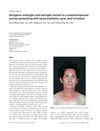
 A postmenopausal woman's facial redness, acne, and excess hair were caused by too much hormone therapy for insomnia, but improved after stopping the treatment.
 January 2022 in “World journal of pharmaceutical sciences”
 The document concludes that there are multiple ways to create PCOS in animals for research, which helps understand and treat the condition.

Women with androgenetic alopecia have normal levels of most blood steroids and binding proteins, but higher dehydroepiandrosterone. Some also have low "sex hormone-binding globulin" and "corticosteroide-binding globulin" capacity, and high "free androgen index" and "free cortisol index". Diane treatment can normalize these levels and improve hair conditions.