 36 citations
,
January 2007 in “Archives of Histology and Cytology”
36 citations
,
January 2007 in “Archives of Histology and Cytology” Type IV collagen chains vary in different parts of human skin, with specific patterns linked to melanocytes.
 2 citations
,
January 2006 in “Durham e-Theses (Durham University)”
2 citations
,
January 2006 in “Durham e-Theses (Durham University)” Androsterone and finasteride have different solid forms, with new findings correcting previous errors and identifying a new form.
13 citations
,
September 2012 in “Cell & tissue research/Cell and tissue research” pCLCA2 protein may help maintain skin structure and function.
 35 citations
,
September 2012 in “PloS one”
35 citations
,
September 2012 in “PloS one” Two distinct pathways direct proteins to vacuoles in Arabidopsis, affecting root hair growth and protein targeting.
 37 citations
,
February 2009 in “Bioorganic & Medicinal Chemistry”
37 citations
,
February 2009 in “Bioorganic & Medicinal Chemistry” Finasteride complexes with HPβCD and polymers improve solubility, potentially enhancing hair loss treatment.
58 citations
,
February 2013 in “Journal of Biological Chemistry” LGR5 mainly stays inside cells, moving to the trans-Golgi network, and this process is important for its role in cell signaling.
 June 2026 in “Acta Pharmacologica Sinica”
 Improving PROTAC delivery systems can enhance their effectiveness and speed up their use in medicine.
 1 citations
,
July 2017 in “International Journal of Advanced Research”
1 citations
,
July 2017 in “International Journal of Advanced Research” Tridax procumbens L. has compounds that can fight fungi.
 8 citations
,
January 2018 in “Journal of the American Academy of Dermatology”
8 citations
,
January 2018 in “Journal of the American Academy of Dermatology” Diphenylcyclopropenone treatment helps prevent hair loss relapse in alopecia areata patients.
 3 citations
,
May 2011 in “Journal of the American Academy of Dermatology”
3 citations
,
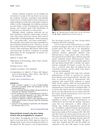
May 2011 in “Journal of the American Academy of Dermatology” A woman's excessive hair growth around a leg ulcer was linked to a treatment with Prostaglandin E1 ointment.

Steatocystomas are harmless skin cysts that can vary in size and may sometimes cause itching or pain.

Inhibiting AP-1 changes skin tumor types and affects tumor cell identity.

Inhibiting AP-1 changes skin tumor types and affects tumor cell identity.
 January 2012 in “Yearbook of Dermatology and Dermatologic Surgery”
 Electric current quickly reduces hand sweating but the effect doesn't last long.

Chirality influences the structure, strength, and biological uses of peptide-based hydrogels.
 13 citations
,
May 2011 in “Bioorganic & Medicinal Chemistry”
13 citations
,
May 2011 in “Bioorganic & Medicinal Chemistry” Changing the 6-position on benzopyran molecules affects insulin release, with some compounds showing strong inhibitory effects.
15 citations
,
August 2019 in “F1000Research” CMG2 and TEM8 receptors have distinct roles in skin and growth disorders, affecting collagen breakdown and growth.
October 2025 in “Carbohydrate Polymer Technologies and Applications” TM-β-CD improves finasteride's solubility and delivery, while β-CD offers better long-term release.
March 2019 in “Reactions Weekly” 11 citations
,
January 1989 Two patients had a unique form of trichothiodystrophy with reduced high-sulfur proteins in their hair.
26 citations
,
January 1983 in “PubMed” Trichothiodystrophy involves brittle hair due to low sulfur amino acids, not a transport defect.
Giant axonal neuropathy changes the structure of keratin in human hair, making it stiffer and stronger.
 7 citations
,
March 2024 in “Scientific Reports”
7 citations
,
March 2024 in “Scientific Reports” The neighborhood face index (NFI) accurately predicts properties of complex molecules.
 18 citations
,
November 2016 in “International clinical psychopharmacology”
18 citations
,
November 2016 in “International clinical psychopharmacology” Inositol was not more effective than a placebo in treating trichotillomania.
 6 citations
,
October 2013 in “Expert Review of Dermatology”
6 citations
,
October 2013 in “Expert Review of Dermatology” Psychotropic medications can cause skin problems, including serious conditions, and patients should be monitored closely.
109 citations
,
April 1997 in “Archives of Dermatological Research” Mast cell and nerve fiber interactions in mouse skin change with the hair cycle.
 March 2026 in “The Indian Journal of Animal Sciences”
 All Indian dromedary camel breeds have the same KRTAP7 gene affecting hair quality.
13 citations
,
January 2015 in “Steroids” The study created a model to help design new inhibitors for steroidal 5α-reductase enzymes.
March 2026 in “Drug Testing and Analysis” PTeCA is a reliable marker for detecting oxidative hair treatments.
33 citations
,
May 2017 in “Journal of Clinical Oncology” ETC-159 was safe up to 30 mg, but no tumor shrinkage was seen.