 April 2026 in “Zenodo (CERN European Organization for Nuclear Research)”
 The model improves understanding of androgen interactions by focusing on signal intensity and system capacity.
 14 citations
,
December 2010 in “Journal of human genetics”
14 citations
,
December 2010 in “Journal of human genetics” A Japanese patient with IFAP syndrome had a severe MBTPS2 gene mutation but showed milder symptoms than previously observed cases.
 2 citations
,
June 2019 in “Operative Techniques in Otolaryngology-Head and Neck Surgery”
2 citations
,
June 2019 in “Operative Techniques in Otolaryngology-Head and Neck Surgery” The pedicled temporoparietal fascial flap is a reliable and versatile option for reconstructive surgery in the head and neck area.
 April 2023 in “Cancer research”
 KRTAP2-3 could help predict cancer recurrence by identifying specific cancer cells.
 4 citations
,
January 2001 in “Archives of Biochemistry and Biophysics”
4 citations
,
January 2001 in “Archives of Biochemistry and Biophysics” Activated ras can protect kidney cells from a certain substance that causes cell death.
 January 2023 in “Revista Paulista de Pediatria”
 A Brazilian male with IFAP syndrome has a unique genetic variant causing his condition.
 28 citations
,
July 2007 in “Development”
28 citations
,
July 2007 in “Development” TAF4 is important for skin cell growth and helps prevent skin cancer in mice.
August 2020 in “Benha Journal of Applied Sciences” Higher FABP4 levels may help diagnose androgenetic alopecia early.
 30 citations
,
October 2014 in “PLOS ONE”
30 citations
,
October 2014 in “PLOS ONE” BAF200 is essential for proper heart and coronary artery formation.
 10 citations
,
June 2005 in “The journal of investigative dermatology/Journal of investigative dermatology”
10 citations
,
June 2005 in “The journal of investigative dermatology/Journal of investigative dermatology” FP-1 is a key protein in rat hair growth, active only during the growth phase.
 January 2026 in “Frontiers in Medicine”
 FFA and FAPD might be related or stages of the same disease.
 October 2023 in “Journal of dermatological science”
 New mutations in MBTPS2 reduce its function and cause IFAP syndrome with unusual symptoms.
 16 citations
,
February 2010 in “Journal of the European Academy of Dermatology and Venereology”
16 citations
,
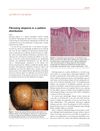
February 2010 in “Journal of the European Academy of Dermatology and Venereology” Fibrosing alopecia in a pattern distribution is a unique hair loss condition that may respond to antiandrogen therapy.
 13 citations
,
January 2019 in “Skin appendage disorders”
13 citations
,
January 2019 in “Skin appendage disorders” FAPD is a possible diagnosis for hair loss in patients of color and requires multiple evaluations for accurate diagnosis.
 January 2015 in “Hair transplant forum international”
 The document's conclusion cannot be provided because the content is not available.
 April 2012 in “Informa Healthcare eBooks”
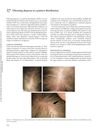
 Fibrosing alopecia in a pattern distribution is a unique hair loss condition with inflammation and scarring, resembling but distinct from common balding.
October 2024 in “Skin Appendage Disorders” Higher FABP4 levels may indicate more severe alopecia areata.
 1 citations
,
April 2017 in “Journal of Investigative Dermatology”
1 citations
,
April 2017 in “Journal of Investigative Dermatology” D-OCT shows increased blood vessel growth in response to tissue damage in Frontal Fibrosing Alopecia and is useful for diagnosis and monitoring.
 September 2021 in “CRC Press eBooks”
 Fibrosing alopecia in a pattern distribution is a type of hair loss that may often be overlooked, especially in men.
 November 2021 in “CRC Press eBooks”
 Fibrosing alopecia in a pattern distribution is a new type of scarring hair loss that resembles common baldness and an autoimmune skin disease.
Arabidopsis Formin 2 stabilizes actin filaments, affecting cell-to-cell movement and virus susceptibility.
 22 citations
,
January 2014 in “Biological & Pharmaceutical Bulletin”
22 citations
,
January 2014 in “Biological & Pharmaceutical Bulletin” Ginsenoside F2 may help prevent hair loss and promote hair growth better than finasteride.
 9 citations
,
November 2019 in “Scientific reports”
9 citations
,
November 2019 in “Scientific reports” The AC 2 peptide from Trapa japonica fruit helps protect hair cells and may treat hair loss.
April 2026 in “Human Genome Variation” Long-read RNA sequencing can identify complex gene changes in IFAP syndrome.
 January 2024 in “The Egyptian Journal of Hospital Medicine”
 Men with male pattern baldness have higher levels of A-FABP, which might help in early detection.
 June 2025 in “International Journal of Computational Intelligence Systems”
 The TPAP method effectively categorizes androgenetic alopecia patients with high accuracy, but needs real-world validation.
August 2024 in “Skin Research and Technology” TAF can be identified by excessive skin thickening and clogged hair follicles, helping distinguish it from similar skin conditions.
 10 citations
,
January 2011 in “Case reports in dermatological medicine”
10 citations
,
January 2011 in “Case reports in dermatological medicine” Hair transplant surgery effectively treated a specific type of hair loss and is recommended as a primary treatment option.
 January 2007 in “대한피부과학회지”
 The document's conclusion can't be summarized because the text is not in English and the document content is not provided.
January 2015 in “프로그램북(구 초록집)” Many Korean women with female-pattern hair loss have reduced hair density at the temples.