January 2023 in “Indian Dermatology Online Journal” A 23-year-old man has a benign, non-progressive hair loss patch that doesn't respond to treatment but can be cosmetically treated.
 16 citations
,
June 2009 in “Dermatologic Surgery”
16 citations
,
June 2009 in “Dermatologic Surgery” A 17-year-old boy with Temporal Triangular Alopecia successfully grew new hair after a hair restoration surgery using follicular unit transplantation.
Topical GT20029 effectively promotes hair regrowth and is well-tolerated for treating androgenetic alopecia.
January 2026 in “OSF Preprints (OSF Preprints)” A new treatment plan for hair loss combines targeted therapies and regenerative strategies to stabilize, reverse, and maintain hair growth.
April 2023 in “Journal of Investigative Dermatology” TGFβ-2 may cause hair loss in androgenetic alopecia.
 August 2024 in “Life Science Alliance”
 Helminth protein helps wounds heal better by reducing scarring and promoting tissue growth.
578 citations
,
April 1993 in “Cell” TGFα gene mutation in mice causes abnormal skin, wavy hair, curly whiskers, and sometimes eye inflammation.
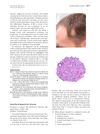
The man has Temporal Triangular Alopecia, a stable, non-scarring hair loss condition best treated with hair transplantation.
1 citations
,
January 2024 in “Pharmaceuticals” A new carrier improves skin delivery of tofacitinib for treating inflammatory skin diseases.
11 citations
,
March 2002 in “Pediatric Dermatology” Temporal triangular alopecia is a non-scarring hair loss seen in some Asian children.
 1 citations
,
April 2012 in “Informa Healthcare eBooks”
1 citations
,
April 2012 in “Informa Healthcare eBooks” Some medications for inflammation can cause a condition with scalp rashes and hair loss, often linked to Crohn's disease, and may require treatment changes to prevent permanent hair loss.
 12 citations
,
July 2021 in “Scientific Reports”
12 citations
,
July 2021 in “Scientific Reports” Glutamic acid helps increase hair growth in mice.
2 citations
,
January 1997 in “Mapping” Gambogic Amide may prevent hair greying and promote hair growth by maintaining hair pigmentation.
56 citations
,
March 1991 in “Journal of Investigative Dermatology”  15 citations
,
January 2020 in “BioMed Research International”
15 citations
,
January 2020 in “BioMed Research International” BTA safely and effectively treats hair loss, and works better with FNS.
 May 2022 in “European medical journal”
 An 11-year-old girl with Trichotillomania developed a large hairball in her stomach, treated with medication, therapy, and family education.
42 citations
,
June 2019 in “Aging” 3,4,5-tri-O-caffeoylquinic acid promotes hair growth by activating the β-catenin pathway.
April 2023 in “Russian Journal of Clinical Dermatology and Venereology” Proteoglycan replacement therapy improved hair conditions in most patients with alopecia.
 6 citations
,
April 1996 in “Journal of histochemistry and cytochemistry/The journal of histochemistry and cytochemistry”
6 citations
,
April 1996 in “Journal of histochemistry and cytochemistry/The journal of histochemistry and cytochemistry” TGF-alpha is present in sheep and ferret skin and may affect hair growth without directly stimulating cell proliferation.
4 citations
,
April 2014 in “Lasers in Surgery and Medicine” TRASER effectively targets blood vessels and hair follicles for potential use in vascular and hair removal treatments.
July 2025 in “International Journal of Trichology” Trichoscopy effectively diagnoses temporal triangular alopecia in children.
July 2020 in “Journal of Tissue Engineering and Reconstructive Surgery” 9 citations
,
May 2024 in “Journal of Clinical & Translational Endocrinology” Gender affirming hormone therapy improves outcomes in gender affirmation surgery.
November 2025 in “PROGRESS IN BIOCHEMISTRY AND BIOPHYSICS” Taurine may help reduce hair loss by improving hair growth cycles.
3 citations
,
April 2021 in “Oncology Times” Trodelvy™ helped some patients with advanced breast cancer, but had side effects.

Onabotulinum toxin A may help treat trichotillomania and promote hair growth.
January 1995 in “Journal of the Society of Cosmetic Chemists” Transglutaminase does not modify human hair.
409 citations
,
May 1991 in “Genes & Development” TGF-alpha affects skin thickness, hair growth, and may contribute to psoriasis and papilloma formation.
October 2025 in “Diagnostics” Temporal triangular alopecia is a harmless, non-progressive hair loss condition.
 40 citations
,
June 2009 in “Journal of Cutaneous Pathology”
40 citations
,
June 2009 in “Journal of Cutaneous Pathology” AGA patients have fewer hairs and smaller follicles; T:V ratio above 4:1 may indicate AGA.