9 citations
,
January 2007 in “Journal of dermatological treatment” Testosterone gel helps increase facial hair in young men with beta-thalassemia major.
 30 citations
,
January 2014 in “Dermatologic Clinics”
30 citations
,
January 2014 in “Dermatologic Clinics” Tight hairstyles, especially on chemically treated hair, can cause reversible hair loss if caught early but may become permanent if not addressed.
33 citations
,
December 2005 in “British Journal of Clinical Pharmacology” The new testosterone patch works as well as the gel.
12 citations
,
July 2016 in “Journal of dermatology” Intramuscular triamcinolone acetonide is an effective treatment for severe alopecia areata, especially in males.
January 2025 in “Journal of Ethnopharmacology” Dahuang-Gancao Decoction improves hair growth in androgenetic alopecia.
11 citations
,
January 2020 in “Journal of Drugs in Dermatology” Intralesional triamcinolone acetonide is effective and safe for treating early to mid-stage traction alopecia.
 19 citations
,
January 2007 in “Journal of medical investigation”
19 citations
,
January 2007 in “Journal of medical investigation” GFP transgenic mice help study cell origins in skin grafts.
 November 2025 in “Archives of Dermatological Research”
 Using a higher concentration of triamcinolone acetonide leads to faster hair regrowth in scalp patchy alopecia areata.
3 citations
,
February 2023 in “BMJ Case Reports” OnabotulinumtoxinA treatment improved hair-pulling disorder and hair regrowth in a woman with chronic migraines.
5 citations
,
July 1996 in “Journal of Cutaneous Medicine and Surgery” TTD patients don't have a higher skin cancer risk because their main issue is with transcription, not DNA repair.
January 1990 in “UCL Discovery (University College London)” The guinea pig α-lactalbumin gene was successfully expressed in the mammary glands of transgenic mice.
1 citations
,
September 2020 in “DOAJ (DOAJ: Directory of Open Access Journals)” Dihydrotestosterone (DHT) promotes the growth and spread of aggressive brain tumor cells.
 January 2021 in “Journal of cosmetology & trichology”
 L-(+)-Tartaric Acid may help increase certain hair growth genes without harming cells.
January 2021 in “International journal of dermatology, venereology and leprosy sciences” AGA and TE can be differentiated by specific trichoscopic features, with AGA showing more variation in hair thickness in fronto-temporal areas.
January 2025 in “Open Veterinary Journal” PRP with TM bio-dressing improves skin graft healing in cats.
 November 2023 in “Journal of Investigative Dermatology”
 γδTregs can protect hair follicles from alopecia areata and may help regrow hair.
4 citations
,
April 1986 in “Cancer Letters” GSH-T levels in hair follicles are similar in smokers and non-smokers and don't increase with certain treatments.
14 citations
,
April 2015 in “Stem Cell Research & Therapy” Granulation tissue-derived cells can aid wound healing and serve as an alternative source of stem cells for tissue repair.
 6 citations
,
December 1997 in “Journal of The American Academy of Dermatology”
6 citations
,
December 1997 in “Journal of The American Academy of Dermatology” CTE can distort results in hair growth trials, so exclude it carefully.
 November 2025 in “International Journal Of Ayurvedic And Herbal Medicine”
 A multidisciplinary approach effectively improves trichotillomania without side effects.
Combining ATRA with TPO-RA effectively stabilizes platelet counts in ITP patients.
10 citations
,
October 2014 in “Plastic & Reconstructive Surgery Global Open” Botulinum toxin type A injections improved hair growth and scalp health in a woman with radiation-induced hair loss.
24 citations
,
December 2013 in “Archives of Dermatological Research” March 2026 in “Tạp chí Da liễu học Việt Nam” Imbalance in immune cells causes hair loss in alopecia areata.
 3 citations
,
June 2002 in “Transgenic Research”
3 citations
,
June 2002 in “Transgenic Research” Scientists made a mouse that can be made to lose hair and then grow it back.
 January 2026 in “Journal of Materials Chemistry B”
 TA-Ado effectively promotes hair growth and reduces hair loss.
July 2026 in “Journal of Investigative Dermatology” Tanshinone Capsule may help regrow hair by boosting specific cell signals.
3 citations
,
March 2013 in “Journal of the Society of Cosmetic Scientists of Korea” Transglutaminase can repair damaged hair, making it stronger and shinier.
 January 2022 in “Consultant”
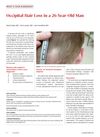
 The man's occipital hair loss was due to temporal triangular alopecia, not alopecia areata.
 12 citations
,
June 2012 in “Dermatologic Surgery”
12 citations
,
June 2012 in “Dermatologic Surgery” Hair transplantation effectively treated a woman's patchy hair loss when other treatments failed.