 4 citations
,
March 2012 in “Annals of oncology”
4 citations
,
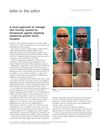
March 2012 in “Annals of oncology” New treatment with green tea polyphenols and nicotinamide improves skin problems from cancer therapy.
 May 2025 in “Journal of Nanobiotechnology”
 The gel improves hair regrowth and reduces irritation in alopecia areata treatment.
 November 2025 in “Zenodo (CERN European Organization for Nuclear Research)”
 Herbal hair gels are safer and effective alternatives to synthetic gels, promoting hair health.
December 2024 in “Chinese Chemical Letters” A new topical finasteride gel using nanoparticles shows promise for safe and effective hair regrowth.
6 citations
,
January 2025 in “Molecules” Combining polymers and lipids may improve antioxidant delivery for wound healing, but practical challenges remain.
 4 citations
,
September 2023 in “International journal of biological macromolecules”
4 citations
,
September 2023 in “International journal of biological macromolecules” The new hydrogel with silver helps wounds heal faster and better in mice.
1 citations
,
January 2022 in “Brazilian Journal of Pharmaceutical Sciences” Minoxidil can be effectively encapsulated in coated nanovesicles for potential drug delivery.
 20 citations
,
March 2023 in “Drug Delivery and Translational Research”
20 citations
,
March 2023 in “Drug Delivery and Translational Research” The new gel effectively treats MRSA-infected wounds for longer.
5 citations
,
March 2025 in “Tissue Engineering and Regenerative Medicine”  1 citations
,
October 2025 in “Nano Research”
1 citations
,
October 2025 in “Nano Research” A new microneedle patch effectively treats atopic dermatitis by reducing skin stress and restoring immune balance.
7 citations
,
June 2018 in “Cryobiology” Freezing nitrogen ethanol composite is safer than liquid nitrogen for treating musculoskeletal tumors.
 47 citations
,
September 2015 in “Journal of Drug Delivery Science and Technology”
47 citations
,
September 2015 in “Journal of Drug Delivery Science and Technology” Nanoparticulate systems improve drug delivery by controlling release, protecting drugs, changing absorption and distribution, and concentrating drugs in targeted areas.
47 citations
,
October 2021 in “Journal of Nanobiotechnology” HPDAlR nanoparticles greatly improve skin wound healing without toxicity.
February 2023 in “Journal of Microencapsulation” The finasteride nanosystem with trehalose is stable and effective for topical hair loss treatment.
7 citations
,
June 2024 in “Skin Research and Technology” Combining treatments significantly reduces dark circles and wrinkles better than nanofat alone.
 239 citations
,
December 2013 in “Scientific Reports”
239 citations
,
December 2013 in “Scientific Reports” A new method quickly creates controllable cell clusters for tissue engineering and drug testing.
January 2026 in “Chemical Engineering Journal” Engineered nanovesicles from hair follicle stem cells enable scarless healing of infected wounds.
Stinging nettle infusions improve the strength and antioxidant properties of k-carrageenan hydrogels.
 60 citations
,
January 2023 in “Biomaterials Science”
60 citations
,
January 2023 in “Biomaterials Science” PLGA-based microneedles are promising for safe and effective skin delivery of drugs and vaccines.
 1 citations
,
July 2022 in “Journal of Drug Delivery Science and Technology”
1 citations
,
July 2022 in “Journal of Drug Delivery Science and Technology” Niosomes and ethosomes can effectively carry the drug spironolactone, potentially improving treatment for hair loss and reducing side effects.
 April 2026 in “Zenodo (CERN European Organization for Nuclear Research)”
 Nanocrystals improve drug delivery and bioavailability for poorly soluble drugs.
January 2026 in “International Journal of Biological Macromolecules” The hydrogel improves hair growth treatment by enhancing drug delivery and promoting follicle repair.
 August 2023 in “International Journal of Nanomedicine”
 A new wound healing treatment using a graphene-based material with white light speeds up healing and reduces infection and scarring.
 March 2024 in “International Journal of Drug Delivery Technology”
 Electrospun nanofiber mats are effective drug carriers for improving wound healing.
 3 citations
,
June 2023 in “Advanced Materials”
3 citations
,
June 2023 in “Advanced Materials” The new dressing speeds up burn wound healing and improves recovery compared to a commercial dressing.
June 2026 in “Precision medicine and engineering.” The hydrogel dressing RD@PVA helps heal diabetic wounds by reducing stress and improving blood vessel growth.
104 citations
,
January 2022 in “Materials Today Bio” Zn-incorporated gelatin hydrogels effectively heal infected wounds by reducing inflammation and promoting tissue growth.
 April 2023 in “Journal of Investigative Dermatology”
 Keeping human skin stem cells is easier with low temperatures and mTOR inhibition.
10 citations
,
April 2008 Chitin nanofibrils can improve skin health and help deliver active ingredients into the skin.
 39 citations
,
August 2017 in “Colloids and Surfaces B: Biointerfaces”
39 citations
,
August 2017 in “Colloids and Surfaces B: Biointerfaces” 50-nm nanoparticles are better at penetrating skin and targeting hair follicles for drug delivery than 100-nm ones.