 9 citations
,
January 2007 in “Endocrine Practice”
9 citations
,
January 2007 in “Endocrine Practice” A woman's male-like symptoms and high testosterone were due to ovarian hilus-cell hyperplasia, which improved after surgery.
 October 2023 in “Journal of the Endocrine Society”
 The document concludes that doctors should thoroughly check postmenopausal women with sudden increased male traits for rare conditions like androgen-producing endometrial cancer.
24 citations
,
May 1985 in “The Journal of Clinical Endocrinology & Metabolism” A circulating inhibitor caused insulin resistance, but clomiphene improved symptoms.
 May 2002 in “British Journal of Dermatology”
 A pregnant woman's skin condition improved after giving birth, possibly due to high estrogen levels during pregnancy.
 12 citations
,
January 2009 in “Gynecological Endocrinology”
12 citations
,
January 2009 in “Gynecological Endocrinology” A postmenopausal woman's hair loss and excess hair growth improved after surgery for ovarian hyperthecosis.
 4 citations
,
March 2021 in “Case Reports”
4 citations
,
March 2021 in “Case Reports” A woman's excessive hair growth and masculine features were due to a rare benign ovarian tumor and endometrial cancer, which improved after surgery.
 12 citations
,
March 2018 in “Medicine”
12 citations
,
March 2018 in “Medicine” A postmenopausal woman's hirsutism and high testosterone levels improved after surgery for an ovarian tumor not seen on ultrasound.
Placental cell medium boosts blood vessel growth in lab tests.
May 2026 in “Annals of Internal Medicine Clinical Cases” Leydig cell tumors can cause hormone issues in postmenopausal women even if imaging looks normal.
 August 2014 in “Warwick Research Archive Portal (University of Warwick)”
 Obesity negatively affects the endometrium, leading to higher miscarriage risk and impaired cell function.
7 citations
,
October 2017 in “Journal of exotic pet medicine” A guinea pig with ovarian cysts had a uterine infection and abnormal uterus lining due to a piece of hay inside it.
 9 citations
,
May 2017 in “Gynecological Endocrinology”
9 citations
,
May 2017 in “Gynecological Endocrinology” Transvaginal hydrolaparoscopy is effective for increasing ovulation and pregnancy rates in women with PCOS who didn't respond to clomiphene.
 October 2010 in “Reproductive Biomedicine Online”
 Women with pituitary adenomas often have reproductive issues, like irregular periods and trouble getting pregnant, but not always breast milk production without pregnancy.
December 2024 in “AACE Clinical Case Reports” Ovarian hyperthecosis can cause polycythemia, and surgery can normalize symptoms.
 December 2021 in “Aegean journal of obstetrics and gynecology”
 A woman's male-like physical changes were caused by two rare ovarian conditions.
 52 citations
,
September 2020 in “Cell Death and Disease”
52 citations
,
September 2020 in “Cell Death and Disease” Overactive sonic hedgehog signaling worsens uterine scarring by reducing cell recycling.
1 citations
,
August 2015 in “PubMed” A woman with non-classic CAH had unusual heavy periods and high hormone levels, improved with treatment.
 1 citations
,
January 2018 in “Journal of SAFOMS”
1 citations
,
January 2018 in “Journal of SAFOMS” A rare ovarian tumor can cause unusual male-like symptoms, but surgery usually leads to a good outcome.
Nipple area expansion in mice needs both pregnancy hormones and mechanical strain.
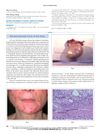 9 citations
,
May 2008 in “Journal of Clinical Oncology”
9 citations
,
May 2008 in “Journal of Clinical Oncology” A woman's ovarian tumor causing high testosterone was successfully removed, and her symptoms improved.
November 2024 in “Future Science OA” A rare benign ovarian tumor was found in a pregnant woman, but both mother and baby remained healthy.
May 2025 in “Journal of the ASEAN Federation of Endocrine Societies” Postmenopausal women with unusual hair growth should be checked for ovarian tumors.
 June 1995 in “International Journal of Gynecology & Obstetrics”
 The new method showed that endometriotic tissue has lower estrogen receptor levels but similar progesterone levels compared to normal endometrium, with both following a similar cycle.
3 citations
,
January 2021 in “touchREVIEWS in Endocrinology” Surgery removed an ovarian tumor, improving her symptoms and normalizing testosterone levels.
 June 2003 in “Obstetrical & Gynecological Survey”
 After chemotherapy for a gestational trophoblastic tumor, normal pregnancy rates are possible, but there's a slightly higher risk of the tumor reoccurring in future pregnancies.
October 1995 in “Pediatric Research”  November 2022 in “Journal of the Endocrine Society”
 A rare ovarian tumor caused high testosterone and excess hair in a woman, which was resolved after tumor removal.
 November 2023 in “JCEM Case Reports”
 A postmenopausal woman's excess male hormone symptoms improved after her ovaries were removed.
 2 citations
,
December 1994 in “The Journal of clinical endocrinology and metabolism/Journal of clinical endocrinology & metabolism”
2 citations
,
December 1994 in “The Journal of clinical endocrinology and metabolism/Journal of clinical endocrinology & metabolism” The treatment effectively reduced hair growth and was safe for patients with PCOS, but it needs better bleeding control.
 January 2021 in “touchREVIEWS in Endocrinology”
 Surgery successfully treated a hidden ovarian tumor causing hair loss and excess hair growth in a postmenopausal woman.