Search
for
Sort by
Research
870-900 / 1000+ results
research Advances in the mechanism and new therapies of alopecia areata
New treatments targeting the JAK signaling pathway, especially JAK inhibitors, show promise for alopecia areata.
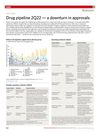
research Drug pipeline 2Q22 — a downturn in approvals
Drug approvals slowed in 2Q22, but notable drugs like Amvuttra, Camzyos, and Olumiant were approved.
research JAK inhibitors for alopecia areata: a systematic review and meta‐analysis
JAK inhibitors are effective for treating alopecia areata, with most patients seeing hair growth after treatment.
research 44182 Treatment with Oral Janus Kinase Inhibitors in Adults Patients with Alopecia Areata: A Systematic Review and Meta-Analysis
Oral Janus kinase inhibitors are effective for treating alopecia areata in adults.
research [Clinical findings with a low-dosed antiandrogene (cyproteronacetate) and aethinyloestradiol women with virilising symptoms (author's transl)].
The treatment improved acne, seborrhoea, and hirsutism, with some side effects like spotting and nervousness.
research Effect of a medicinal and edible decoction YH0618 on chemotherapy-induced dermatologic toxicity: a randomized controlled trial
YH0618 helped reduce skin and nail problems and fatigue in chemotherapy patients.
research Effectiveness of Autologous Platelet-Rich Plasma for Androgenetic Alopecia: A Double-Center, Non-Controlled, Randomized Clinical Study in Vietnam
PRP therapy effectively improves hair density and reduces hair loss in androgenetic alopecia.
research Comparison of Azelaic Acid and Anthralin for the Therapy of Patchy Alopecia Areata
Azelaic acid and anthralin are similarly effective for treating patchy hair loss.
research Evaluation of platelet‐rich plasma vs intralesional steroid in treatment of alopecia areata
Platelet-rich plasma is a safe and effective treatment for hair loss, with fewer relapses than steroid treatment.
research Tofacitinib for the treatment of severe alopecia areata and variants: A study of 90 patients
Tofacitinib is effective and safe for severe hair loss, but full regrowth is less likely after 10 years of hair loss.
research Introducing Platelet-Rich Stroma: Platelet-Rich Plasma (PRP) and Stromal Vascular Fraction (SVF) Combined for the Treatment of Androgenetic Alopecia
New treatment combining PRP and SVF increases hair density in 6-12 weeks for androgenetic alopecia patients.
research Therapeutic potential of oral tofacitinib in alopecia areata: a retrospective study
Tofacitinib is a promising and safe treatment for moderate to severe alopecia areata.
research Fluridil, a Rationally Designed Topical Agent for Androgenetic Alopecia: First Clinical Experience
Fluridil safely promotes hair growth in men with androgenetic alopecia.
research Steroid topical therapy and pulse dosing therapy for multifocal alopecia areata
Both steroid treatments effectively regrow hair in severe alopecia areata.
research Referee report. For: Autologous stromal vascular fraction cells combined with platelet-rich plasma for androgenic alopecia treatment: a case series [version 1; peer review: 2 approved with reservations]
Combining SVF cells with PRP may boost hair growth in androgenic alopecia.
research PROTAC Degraders of Androgen Receptor‐Integrated Dissolving Microneedles for Androgenetic Alopecia and Recrudescence Treatment via Single Topical Administration
A new hair loss treatment using dissolving microneedles was found to speed up hair growth and was more effective than daily use of common hair growth drugs.
research Moving Beyond Boundaries: Utilization of Longitudinal Exposure–Response Model for Bounded Outcome Score to Inform Decision Making in the Accelerated Drug Development Paradigm
A 50 mg daily dose of ritlecitinib is effective for alopecia areata, with temporary treatment breaks up to 6 weeks not affecting results.
research Multicentric parallel phase II trial of the polo-like kinase 1 inhibitor BI 2536 in patients with advanced head and neck cancer, breast cancer, ovarian cancer, soft tissue sarcoma and melanoma. The first protocol of the European Organization for Research and Treatment of Cancer (EORTC) Network Of Core Institutes (NOCI)
BI 2536 had limited effectiveness against several advanced cancers and caused significant side effects.
research Topical tretinoin as an adjunctive therapy with intralesional triamcinolone acetonide for alopecia areata. Clinical experience in northern Saudi Arabia
Using tretinoin with triamcinolone acetonide helps treat alopecia areata.
research Luncheon Symposium (LS) : Update on the efficacy and safety of dutasteride in the management of androgenetic alopecia
Dutasteride is effective and safe for treating common hair loss, and it's more potent than finasteride, leading to better hair growth and thickness.
research Comparative Efficacy and Safety of Baricitinib Against Traditional Therapies in Severe Alopecia Areata: A Retrospective Cohort Study
Baricitinib is effective for severe alopecia areata but has some side effects.
research Utility of azathioprine, methotrexate and cyclosporine as steroid‐sparing agents in chronic alopecia areata: a retrospective study of continuation rates in 138 patients
Azathioprine is the most continued treatment for chronic alopecia areata over a year, often with added low-dose prednisolone.
research Select the most correct answers – multiple answers possible for questions 1–11
Medical practitioners need to understand basic statistics to properly evaluate clinical trials and avoid unethical designs.
research Alopecia areata and ritlecitinib: Unravelling response trajectories
Ritlecitinib is effective for long-term hair regrowth in alopecia areata, especially in females and early treatment.
research Morphological Substantiation of Clinical Efficacy of Platelet Rich Plasma in the Treatment of Androgenetic Alopecia
Platelet rich plasma therapy significantly improves hair growth and increases the number of hair follicles in men with androgenetic alopecia.
research 282 WITHDRAWN
HIF-1A may aid hair growth, Backhousia citriodora improves skin, autologous cells stabilize hair loss, infrared thermography assesses alopecia, and a new treatment preserves hair.
research Growth Factor Cocktail Including Fibroblast Growth Factor 9 (Cellcurin) in the Treatment of Androgenetic Alopecia in Men and Women: A Randomized Controlled Trial
Cellcurin therapy with microneedling increases hair density and thickness in treating hair loss in men and women.
research Hair regrowth in alopecia areata patients following Stem Cell Educator therapy
Stem Cell Educator therapy helps regrow hair and improve life quality in alopecia areata patients.
research Effectiveness and safety of baricitinib in severe alopecia areata: 48‐week results
Baricitinib effectively promotes hair regrowth and improves well-being in severe alopecia areata patients.