35 citations
,
September 2003 in “Archives of dermatology” Tiger tail bands in hair are caused by wavy hair fibers with melanin, unlike straight fibers in normal hair.
26 citations
,
January 1993 in “Dermatology” A rare case of isolated trichothiodystrophy was identified, marked by brittle hair with low sulfur content.
The product made from plant extracts was tested for treating hair loss caused by genetics.
27 citations
,
July 1993 in “The journal of investigative dermatology/Journal of investigative dermatology”  October 2025 in “Quantum Journal of Medical and Health Sciences”
 Tridax procumbens is a plant with many health benefits, including healing, protecting the liver, fighting infections, and promoting hair growth.
January 2023 in “Indian Dermatology Online Journal” A 23-year-old man has a benign, non-progressive hair loss patch that doesn't respond to treatment but can be cosmetically treated.
 January 2020 in “Journal of Cosmetics, Dermatological Sciences and Applications”
 TrichoxidilTM could be a promising new treatment for hair loss.
January 2026 in “Biochemical Pharmacology” 39 citations
,
February 1990 in “The journal of cell biology/The Journal of cell biology” Trichohyalin, a hair follicle protein, has a part with repeating patterns of 23 amino acids.
Topical GT20029 effectively promotes hair regrowth and is well-tolerated.
 September 2022 in “Medical Mycology”
 Three different methods were compared for creating Titan cells, a type of fungus cell. The OZ method made the most cells initially, but the number dropped quickly. The EB method also made a lot of cells, but the number also dropped. The AA method made fewer cells, but the number stayed steady. The methods also affected which genes were active in the cells.
13 citations
,
January 2012 in “Dermatologic surgery” The trichometer is a quick and reliable tool for measuring hair quantity.
 7 citations
,
January 2016 in “Laboratory Investigation”
7 citations
,
January 2016 in “Laboratory Investigation” TR3 is mainly found in hair follicle stem cells and may be involved in hair loss.
3 citations
,
January 2020 in “International journal of trichology” Congenital triangular alopecia is a hair loss condition present from birth or early childhood with no effective treatment needed.
 5 citations
,
October 2018 in “Dermatologic therapy”
5 citations
,
October 2018 in “Dermatologic therapy” Recognizing congenital triangular alopecia is crucial to avoid unnecessary treatments.
April 2023 in “Journal of Investigative Dermatology” Trichohyalin in hair can trigger immune attacks in alopecia areata.
October 2022 in “Hair Transplantation” Temporary scalp trichopigmentation creates a shaved hair look on the scalp using pigments that fade over time.
 4 citations
,
June 2016 in “Rossiiskii Zhurnal Kozhnykh i Venericheskikh Boleznei”
4 citations
,
June 2016 in “Rossiiskii Zhurnal Kozhnykh i Venericheskikh Boleznei” Combining iron supplements with Qilib lotion is more effective for treating hair loss from iron deficiency.
 May 2022 in “Experimental dermatology”
 Trichothiodystrophy hair is structurally abnormal with protein and organization issues.
Cross-section trichometry is an accurate method to measure hair loss and growth.
January 2026 in “Indian Journal of Paediatric Dermatology” Trichoscopy effectively diagnoses and monitors treatment in children with tinea capitis.
62 citations
,
December 1941 in “Experimental biology and medicine” Eating phenylthiocarbamide made all the rats' hair go gray, but some returned to their original color after stopping.
 March 2026 in “Saudi Journal of Pathology and Microbiology”
 Personalized genomic interventions can effectively manage chronic hair loss.
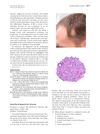
The man has Temporal Triangular Alopecia, a stable, non-scarring hair loss condition best treated with hair transplantation.
 26 citations
,
September 2016 in “International Journal of Dermatology”
26 citations
,
September 2016 in “International Journal of Dermatology” Trichoscopy is good for telling apart tinea capitis and alopecia areata in kids.
72 citations
,
May 1993 in “The Journal of Cell Biology” Trichohyalin in sheep hair follicles may help with structure and calcium binding.
23 citations
,
November 2007 in “Actas Dermo-Sifiliográficas” Thyroid hormone (T3) may reverse gray hair by stimulating hair growth.
North American ginseng extract helped regrow hair in balding mice.
5 citations
,
July 1996 in “Journal of Cutaneous Medicine and Surgery” TTD patients don't have a higher skin cancer risk because their main issue is with transcription, not DNA repair.
 February 2024 in “ACS Omega”
 The Shen Bai Hair Growing Decoction may help treat hair loss by promoting hair growth and reducing inflammation.