 October 2025 in “Indian Dermatology Online Journal”
 Trichoscopy helped correctly diagnose and treat a scalp and eyebrow fungal infection.
October 2025 in “Pediatric Dermatology” UVFD helps quickly diagnose hair loss conditions in children.
 May 2025 in “Scholars Journal of Medical Case Reports”
 A 10-year-old boy's scalp infection was cured with oral medication in two months.
April 2025 in “Indian Journal of Paediatric Dermatology” Trichorrhexis invaginata can occur with tinea capitis, though it's rare.
 January 2025 in “Journal of Clinical Medicine”
 Unsanitary barber practices can spread scalp infections, treatable with oral antifungals.
 September 2024 in “PubMed”
 Timely and correct treatment is crucial to prevent complications and scarring in children with scalp ringworm.
 September 2024 in “BMJ Case Reports”
 An adult had a rare scalp infection in the forehead area, treated successfully with itraconazole.
July 2024 in “Journal Archives of Health” Adults can get scalp fungal infections, needing quick treatment to prevent spread and hair loss.
July 2024 in “Indian Dermatology Online Journal” Tinea capitis can occur in adults and should be considered if scalp issues persist.

A Moroccan athlete got a rare scalp infection, stressing the need for better hygiene in sports.
Visible lesions are not always needed to diagnose tinea capitis.
May 2024 in “Journal of Fungi” Tinea capitis in adults, especially postmenopausal Black women, needs prompt treatment with oral antifungals to avoid scarring.

Neem leaf extract combined with eucalyptus and lemongrass oils can effectively treat Tinea capitis.
March 2024 in “Clinical Case Reports” Early detection of tinea capitis is possible by spotting specific hair patterns like comma or corkscrew hairs.

A rapid screening method using trichoscopy and clinical data can improve diagnosis and treatment of tinea capitis.
 February 2024 in “Infection and drug resistance”
 Tinea capitis in a child was caused by a fungus from cats, highlighting the need for accurate diagnosis and treatment.
 January 2024 in “Medical mycology journal”
 A mother and her two daughters got a skin infection from their cat.
 November 2023 in “Jundishapur journal of health sciences”
 Better training and awareness are needed to properly diagnose and treat tinea favosa in immigrant populations.
 November 2023 in “Cermin Dunia Kedokteran”
 Tinea capitis can affect mental health, but treatment improves both health and well-being.
 September 2023 in “Journal of the American Academy of Dermatology”
 Oral terbinafine is more effective than griseofulvin for treating certain scalp infections in children.
 August 2023 in “Authorea (Authorea)”
 Tinea capitis should be considered in adults with scalp issues for proper treatment.
 July 2023 in “International journal of dermatology, venereology and leprosy sciences”
 Most rural children with scalp ringworm had a non-inflammatory type and early treatment is important to prevent complications.
 October 2022 in “Gadua Journal of Pure and Allied Science”
 Terbinafine is the most effective treatment for tinea capitis, a scalp infection often confused with other conditions.
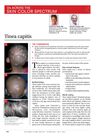 October 2022 in “The Journal of Family Practice”
 Tinea capitis is a scalp fungal infection in children that can cause hair loss, scaling, and other symptoms.
 July 2022 in “Berkala Ilmu Kesehatan Kulit dan Kelamin/Berkala ilmu kesehatan kulit dan kelamin (Periodical of dermatology and venerology)”
 Most tinea capitis patients were young boys with cat contact, had scaly patches caused by Microsporum canis, and improved with griseofulvin treatment.
May 2022 in “Journal of Cutaneous Immunology and Allergy” Asymptomatic cats can spread scalp infections to humans.
 March 2022 in “Berkala Ilmu Kesehatan Kulit dan Kelamin/Berkala ilmu kesehatan kulit dan kelamin (Periodical of dermatology and venerology)”
 Touching cats can increase the risk of getting a fungal scalp infection, especially in boys and kids over 5.
March 2022 in “JAAD case reports” Accurate diagnosis is crucial for effective treatment of hair loss.
 March 2022 in “Benha Journal of Applied Sciences”
 ULBP3 levels are higher in Tinea capitis patients and may help predict the disease's severity.
 January 2022 in “Eduvest”
 A teenage girl with a fungal scalp infection got better with antifungal and allergy medication, plus medicated shampoo.