 3 citations
,
May 2025 in “Cell Death and Disease”
3 citations
,
May 2025 in “Cell Death and Disease” Targeting METTL1 may help slow papillary thyroid cancer growth and spread.
19 citations
,
May 2001 in “Endocrinology” Mrp3 may aid in wound healing and hair growth.
 55 citations
,
June 2014 in “Nature Communications”
55 citations
,
June 2014 in “Nature Communications” Tcf3 helps cells move and heal wounds by controlling lipocalin 2.
August 2025 in “BMC Pharmacology and Toxicology” The LTF gene may help predict and manage nonspecific orbital inflammation.
34 citations
,
May 2001 in “Endocrinology” Mrp3 helps in wound healing and hair growth.
 6 citations
,
October 2012 in “Journal of Heredity”
6 citations
,
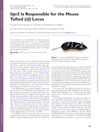
October 2012 in “Journal of Heredity” The Itpr3 gene causes a specific hair pattern in mice.
 February 2024 in “bioRxiv (Cold Spring Harbor Laboratory)”
 Activating TLR9 helps heal large wounds and regrow hair by involving a specific type of immune cell.
TLR2 is crucial for hair growth and regeneration, and boosting it can help prevent hair loss.
4 citations
,
March 2018 in “Animal biotechnology” The LAMTOR3 gene is involved in cashmere goat hair growth and is affected by certain treatments and other genes.
 105 citations
,
February 1996 in “Journal of biological chemistry/The Journal of biological chemistry”
105 citations
,
February 1996 in “Journal of biological chemistry/The Journal of biological chemistry” The TGM3 gene's promoter region is key for skin and hair cell function and may aid gene therapy.
November 2025 in “Journal of Investigative Dermatology” TEDAR is crucial for skin cell differentiation and barrier formation.
20 citations
,
April 2014 in “Autoimmunity” A specific gene variant (rs4833095) is linked to a higher risk of alopecia areata in Koreans.
 May 2026 in “Scientific Reports”
 Overexpression of LRIG3 in skin causes hair loss.
September 2017 in “Journal of Investigative Dermatology” LRIG1 protein affects hair growth by regulating skin receptors, leading to hair loss when overexpressed.
2 citations
,
September 2016 in “Journal of Dermatological Science” Reduced TRPS1 leads to increased STAT3 and SOX9 in hair follicles, affecting hair growth.
 April 2019 in “Journal of Investigative Dermatology”
 Non-coding RNA boosts retinoic acid production and signaling, aiding regeneration.
 3 citations
,
September 2022 in “Animal biotechnology”
3 citations
,
September 2022 in “Animal biotechnology” lncRNA MTC affects protein levels in goat skin cells, impacting hair growth.
5 citations
,
May 2022 in “Diagnostics” Certain genetic markers can indicate higher or lower risk for systemic lupus erythematosus.
December 2010 in “OhioLink ETD Center (Ohio Library and Information Network)” Sry may regulate fatty acid metabolism and shows different expression levels in rat tissues.
3 citations
,
February 2018 in “Experimental and Molecular Medicine/Experimental and molecular medicine” A protein called PCBP2 controls the production of a hair growth protein by interacting with its genetic message and is linked to hair loss when this control is disrupted.
April 2023 in “Journal of Investigative Dermatology” AL136131.3 slows hair growth by affecting energy processes in hair loss.
January 2022 in “Figshare” lncRNA MTC helps goat skin cells grow and may aid hair growth by controlling proteins linked to cell growth.
April 2026 in “Human Genome Variation” Long-read RNA sequencing can identify complex gene changes in IFAP syndrome.
 February 2024 in “Planta”
 TRM21 helps control flavonoid production and root hair growth in Arabidopsis thaliana.

Lnc056 helps hair follicle stem cells grow by increasing TRIP6 expression.
January 2026 in “SSRN Electronic Journal” 
The RNA AL136131.3 slows down hair growth and speeds up hair loss by affecting sugar breakdown in hair follicles.
5 citations
,
December 2023 in “Current Biology” A feedback loop between LRH and RSL4 controls root hair growth in Arabidopsis.
14 citations
,
March 2022 in “Plant Cell & Environment” The protein AtRXR3 limits root hair growth in Arabidopsis, affecting phosphorus uptake.
 April 2024 in “bioRxiv (Cold Spring Harbor Laboratory)”
 A gene network led by RSL4 is crucial for early root hair growth in response to cold in Arabidopsis thaliana.