10 citations
,
November 2024 in “Cureus” Women with PCOS have a higher risk of heart disease due to factors like insulin resistance and obesity.
 1 citations
,
January 2023 in “Metabolites”
1 citations
,
January 2023 in “Metabolites” Changes in gut bacteria can contribute to the development of Polycystic Ovary Syndrome (PCOS), affecting metabolism, immunity, and causing inflammation. Treatments may involve adjusting these factors.
1 citations
,
August 2022 in “Frontiers in Physiology” Finasteride may help treat kidney disease caused by a high-fat diet by reducing harmful toxins and improving gut bacteria.
 14 citations
,
January 2020 in “International Journal of Biological Sciences”
14 citations
,
January 2020 in “International Journal of Biological Sciences” Ranitidine and finasteride lower TMAO levels, reducing heart and kidney damage by changing gut bacteria.
 December 2022 in “Türk biyokimya dergisi”
 The conclusions are: fecal short-chain fatty acids may help prevent cancer, fiber intake can reduce obesity, weight loss is hard for obese people, low BMI cancer patients are more prone to chemotherapy side effects, intermittent fasting benefits gut health, cherry laurel has health benefits in rats, certain gene variations can increase stress in hair loss patients, fecal acids can affect blood sugar levels, cold agglutinin can affect blood test results in autoimmune patients, and people with Crohn's disease have higher levels of a certain chemical in their blood.
 13 citations
,
May 2019 in “Cancer Prevention Research”
13 citations
,
May 2019 in “Cancer Prevention Research” Grape seed extract may safely and effectively help prevent lung cancer.
7 citations
,
August 2025 in “Journal of Nanobiotechnology” Bioengineered microneedles and nanomedicine offer promising, precise treatments for tissue regeneration.
 40 citations
,
January 2010 in “Indian Journal of Dermatology, Venereology and Leprology”
40 citations
,
January 2010 in “Indian Journal of Dermatology, Venereology and Leprology” Certain diets can affect skin conditions, but more research is needed to understand these relationships fully.
 21 citations
,
March 2018 in “Experimental Dermatology”
21 citations
,
March 2018 in “Experimental Dermatology” The guide explains how to study human skin fat cells and their tissue, aiming to improve research and medical treatments.
 14 citations
,
January 2018 in “Advances in Clinical Chemistry”
14 citations
,
January 2018 in “Advances in Clinical Chemistry” The document concludes that hormonal biomarkers are key for diagnosing hyperandrogenemia in women and hypogonadism in men.
 3 citations
,
August 2023 in “World Journal of Biology and Biotechnology”
3 citations
,
August 2023 in “World Journal of Biology and Biotechnology” The human microbiome is vital for health and can help treat diseases.
 1 citations
,
December 2025 in “Frontiers in Endocrinology”
1 citations
,
December 2025 in “Frontiers in Endocrinology” Gut microbiota may significantly influence polycystic ovary syndrome.
Certain gut microbes are linked to better health in 14 conditions.

Selenium is essential for health, but too little or too much can cause serious health problems.
 December 2023 in “Frontiers in microbiology”
 Mannan oligosaccharides improve raccoon dogs' fur quality and overall health.
 January 2022 in “Dermatology Review”
 Higher IL-31 levels are linked to worse itching in chronic kidney disease patients.
 October 2022 in “The American journal of gastroenterology”
 Thymoma-associated multiorgan autoimmunity can cause liver damage and affects multiple organs, with limited treatment options and a generally poor prognosis.
Low levels of tenuazonic acid can severely damage vital organs.
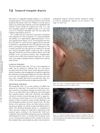 April 2012 in “Informa Healthcare eBooks”
 Temporal triangular alopecia is a lifelong condition with hairless patches on the side of the head that may be present from birth.
December 2015 in “PLOS ONE”  May 2012 in “CRC Press eBooks”
 Some patients on anti-TNF drugs experience a type of hair loss called TAIAPA.
 56 citations
,
March 2010 in “Journal of Dermatology”
56 citations
,
March 2010 in “Journal of Dermatology” Most cases of Temporal Triangular Alopecia are found in early childhood and may be related to genetic conditions.
 1 citations
,
April 2012 in “Informa Healthcare eBooks”
1 citations
,
April 2012 in “Informa Healthcare eBooks” Some medications for inflammation can cause a condition with scalp rashes and hair loss, often linked to Crohn's disease, and may require treatment changes to prevent permanent hair loss.
11 citations
,
March 2002 in “Pediatric Dermatology” Temporal triangular alopecia is a non-scarring hair loss seen in some Asian children.
 13 citations
,
March 2002 in “Pediatric Dermatology”
13 citations
,
March 2002 in “Pediatric Dermatology” A child was initially wrongly diagnosed with a fungal scalp infection but actually had a non-scarring hair loss condition called Temporal Triangular Alopecia.
35 citations
,
September 2011 in “The Journal of Dermatology” Trichoscopy helps accurately diagnose temporal triangular alopecia.
October 2025 in “Diagnostics” Temporal triangular alopecia is a harmless, non-progressive hair loss condition.
 December 2020 in “TURKDERM”
 A 3-year-old boy was diagnosed with a rare, non-scarring hair loss condition called temporal triangular alopecia.
 January 2026 in “Journal of Materials Chemistry B”
 TA-Ado effectively promotes hair growth and reduces hair loss.
1 citations
,
January 2016 in “Dermatology Online Journal” Triangular temporal alopecia can occur in adults and should be correctly identified to prevent misdiagnosis.