 5 citations
,
October 2024 in “International Journal of Biological Sciences”
5 citations
,
October 2024 in “International Journal of Biological Sciences” A peptide from hair follicle stem cells can boost hair growth.
 1 citations
,
February 2022 in “bioRxiv (Cold Spring Harbor Laboratory)”
1 citations
,
February 2022 in “bioRxiv (Cold Spring Harbor Laboratory)” A peptide from hair follicle stem cells promotes hair growth by activating specific skin cells.
 November 2025 in “International Journal of Zoology and Applied Biosciences”
 New technologies like AI, robotics, and stem cells have made hair transplants more effective and natural-looking.
 40 citations
,
January 2017 in “Intestinal Research”
40 citations
,
January 2017 in “Intestinal Research” Genotyping for NUDT15 p.Arg139Cys can help predict thiopurine side effects in Japanese IBD patients.
 February 2026 in “Indian Journal of Dermatology”
 Upadacitinib may effectively treat twenty-nail dystrophy without causing pain.
86 citations
,
November 2015 in “Journal of Gastroenterology” The NUDT15 R139C variant causes thiopurine-induced leukocytopenia through a different mechanism than previously thought in Japanese patients with inflammatory bowel disease.
January 2026 in “American Journal of Medical Genetics Part A” A new genetic variant causes trichothiodystrophy in two brothers, but their mother may carry it without showing symptoms.
3 citations
,
January 2021 in “Molecular genetics & genomic medicine” The study found two new mutations in a Chinese patient with severe biotinidase deficiency.
1 citations
,
December 2016 in “Revista română de medicină de laborator” The NIPAL4 mutation c.527C>A is common in Romanian patients with autosomal recessive congenital ichthyosis.
The study concludes that Twenty-nail dystrophy is more common in boys among children and in women among adults, with varying response to treatment.
 1 citations
,
December 2018 in “Journal of genetic medicine”
1 citations
,
December 2018 in “Journal of genetic medicine” A small change in the TRPS1 gene leads to a less severe form of a syndrome affecting hair, nose, and finger development.
April 2018 in “Journal of Investigative Dermatology” Screening for the NUDT15 gene variant can prevent severe side effects from thiopurine drugs in East-Asian people.
July 2024 in “Journal of Investigative Dermatology” DS-2325a is safe and well-tolerated, supporting further development for Netherton Syndrome treatment.
 10 citations
,
August 2020 in “Drug metabolism and drug interactions”
10 citations
,
August 2020 in “Drug metabolism and drug interactions” The NUDT15 gene variant causes severe side effects from azathioprine in some Indian patients.
 49 citations
,
January 1994 in “The Journal of Steroid Biochemistry and Molecular Biology”
49 citations
,
January 1994 in “The Journal of Steroid Biochemistry and Molecular Biology” RU 58841 may treat acne, hair loss, and excessive hair growth.
 4 citations
,
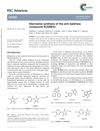
January 2014 in “RSC Advances”
4 citations
,
January 2014 in “RSC Advances” A new, less toxic and more efficient method to create the anti-baldness compound RU58841 was developed in 2014.
 7 citations
,
September 2011 in “International Journal of Dermatology”
7 citations
,
September 2011 in “International Journal of Dermatology” The Korean study found that twenty-nail dystrophy mainly affects adults, more often women, and has five distinct types with different clinical progressions.
2 citations
,
January 1989 Tay syndrome is a unique genetic disorder causing skin, hair, and developmental issues.
 March 2023 in “Journal of Cosmetic Dermatology”
 A genetic variant linked to hair thinning in Japanese women was found.
 June 2023 in “British Journal of Dermatology”
 The protein called small nuclear ribonucleoprotein polypeptide E is identified as a cause of a type of hair loss without other symptoms.
 1 citations
,
October 2021 in “Australasian Journal of Dermatology”
1 citations
,
October 2021 in “Australasian Journal of Dermatology” The document's conclusion cannot be provided because the document is not available or cannot be understood.
24 citations
,
March 2016 in “Journal of Investigative Dermatology” TIP39 and PTH2R help control calcium levels and skin cell development.
August 2024 in “American Journal of Medical Genetics Part A” Variants in the CCDC47 gene are linked to trichohepatoneurodevelopmental syndrome.
3 citations
,
November 1998 in “PubMed” 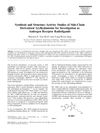 18 citations
,
April 2001 in “Bioorganic & Medicinal Chemistry Letters”
18 citations
,
April 2001 in “Bioorganic & Medicinal Chemistry Letters” The nature of the side chain in RU 58841 derivatives greatly affects its AR affinity, with the N-(iodopropenyl) derivative 13 showing the highest AR binding affinity, suggesting its potential for developing high-affinity radioiodinated AR radioligands.
July 2024 in “Journal of Investigative Dermatology” A new test helps find drugs to treat head and neck cancer by targeting c-Rel.
April 2011 in “www.virtualization.info” Early diagnosis of trachyonychia improves treatment and reduces psychological and cosmetic issues.
 61 citations
,
April 2014 in “Radiation Research”
61 citations
,
April 2014 in “Radiation Research” RTA 408 cream protects mice from radiation skin damage.
March 2022 in “Oncology Times” Tebentafusp-tebn improves survival rates in uveal melanoma patients but has common side effects like rash and fatigue.
 November 2025 in “International Journal of Research in Medical Sciences”
 Titagen® improves skin, hair, nail health, and reduces osteoarthritis symptoms safely.