 27 citations
,
February 2017 in “Clinical, Cosmetic and Investigational Dermatology”
27 citations
,
February 2017 in “Clinical, Cosmetic and Investigational Dermatology” New compounds were found to help increase hair growth and decrease hair loss.
March 2005 in “Journal of the American Academy of Dermatology” Cosmetic treatments can replenish key amino acids in damaged hair, improving its strength and appearance.
10 citations
,
May 2020 in “Dermatologic therapy” Tildrakizumab significantly improved recalcitrant lichen planopilaris and frontal fibrosing alopecia.
 6 citations
,
January 2019 in “Medical Hypotheses”
6 citations
,
January 2019 in “Medical Hypotheses” Frontal Fibrosing Alopecia might be an autoimmune disease.
 2 citations
,
July 2022 in “Frontiers in Medicine”
2 citations
,
July 2022 in “Frontiers in Medicine” The cause of Frontal fibrosing alopecia, a type of hair loss, is complex, likely involving immune responses and genetics, but is not fully understood.
3 citations
,
January 2025 in “International Journal of Biological Macromolecules” A new microneedle patch effectively promotes hair regrowth with less frequent dosing.
 54 citations
,
September 2019 in “Journal of the European Academy of Dermatology and Venereology”
54 citations
,
September 2019 in “Journal of the European Academy of Dermatology and Venereology” Tofacitinib is somewhat effective for alopecia areata, but more research is needed on its safety and long-term effects.
2 citations
,
February 2024 in “Indian Dermatology Online Journal” Tofacitinib effectively improved hair regrowth and skin condition in a woman with alopecia totalis and lichen planus hypertrophicus.
 November 2023 in “Research Square (Research Square)”
 NIR-II imaging effectively tracked stem cells that helped repair facial nerve defects in rats.
 January 2026 in “Frontiers in Medicine”
 FFA and FAPD might be related or stages of the same disease.
 September 2017 in “Journal of Investigative Dermatology”
 Certain miRNAs might be involved in a hair loss condition called frontal fibrosing alopecia and could possibly help in its diagnosis.
Arabidopsis Formin 2 stabilizes actin filaments to aid cell-to-cell trafficking.
 January 2021 in “Our Dermatology Online”
 Oral tofacitinib successfully treated total body hair loss in one patient.
 January 2024 in “Skin Research and Technology”
 Oral tofacitinib may be an effective future treatment for children with severe alopecia areata, but more research is needed.
 August 2022 in “Dermatology Online Journal”
 Oral and topical tofacitinib can effectively treat severe hair loss with minimal side effects.
 5 citations
,
August 2018 in “PubMed”
5 citations
,
August 2018 in “PubMed” An 8-year-old with severe hair loss regrew all hair after six months of tofacitinib treatment.
 36 citations
,
December 2017 in “Journal of the American Academy of Dermatology”
36 citations
,
December 2017 in “Journal of the American Academy of Dermatology” Most patients with frontal fibrosing alopecia stabilized with treatment, especially younger ones, using intralesional corticosteroids and tacrolimus.
 1 citations
,
January 2020 in “Skin appendage disorders”
1 citations
,
January 2020 in “Skin appendage disorders” Finasteride may help treat frontal fibrosing alopecia, but more research is needed.
5 citations
,
January 2015 in “Case reports in medicine” A baby was diagnosed with IFAP syndrome due to a new genetic mutation, showing severe skin and developmental issues.
 5 citations
,
June 2019 in “Open Forum Infectious Diseases”
5 citations
,
June 2019 in “Open Forum Infectious Diseases” Six African American women experienced hair loss after switching to a new HIV medication.
147 citations
,
August 2005 in “The Plant Cell” The TIP1 gene is crucial for normal plant cell growth in Arabidopsis.
 37 citations
,
October 2017 in “Clinical and Experimental Dermatology”
37 citations
,
October 2017 in “Clinical and Experimental Dermatology” Oral tofacitinib shows promise in treating atopic dermatitis and alopecia areata, but only slight improvement in vitiligo.
January 2003 in “Hepatology”  8 citations
,
February 2015 in “Cellular immunology”
8 citations
,
February 2015 in “Cellular immunology” Deleting Snai2 and Snai3 causes fatal autoimmunity.
![Influence of FHIT on Benzo[a]pyrene-Induced Tumors and Alopecia in Mice: Chemoprevention by Budesonide and N-Acetylcysteine](/images/assets/f8f56777-f891-4879-8c45-c87d6aa82563/small/35499.jpg) 24 citations
,
May 2006 in “Proceedings of the National Academy of Sciences of the United States of America”
24 citations
,
May 2006 in “Proceedings of the National Academy of Sciences of the United States of America” Budesonide and N-acetylcysteine reduced tumors and alopecia in mice, regardless of FHIT gene status.
7 citations
,
January 2024 in “Cancer Research Communications” TAp63 and NRF2 work together to manage oxidative stress, preventing premature aging and aiding skin functions.
 April 2024 in “Clinical and experimental dermatology”
 Tofacitinib is effective for severe alopecia areata, similar to oral betamethasone.
 32 citations
,
April 2006 in “The Journal of Urology”
32 citations
,
April 2006 in “The Journal of Urology” Using finasteride with TIP extends time off period for prostate cancer patients.
 May 2025 in “Journal of Investigative Medicine”
 FAI is a better marker for predicting female hair loss than testosterone or SHBG alone.
 April 2012 in “Informa Healthcare eBooks”
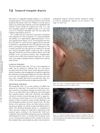
 Temporal triangular alopecia is a lifelong condition with hairless patches on the side of the head that may be present from birth.