 September 2022 in “Revista de la Asociación Colombiana de Dermatología y Cirugía Dermatológica”
 Skin symptoms appear in up to 20% of Covid-19 cases.
Clinical signs don't match inflammation levels in lichen planopilaris and frontal fibrosing alopecia.
 July 2022 in “Singapore Medical Journal”
 Most children with alopecia areata improved with treatment, but those with more hair loss had worse outcomes.
 June 2022 in “International journal of drug delivery technology”
 Nebivolol cream may be a promising hair loss treatment by improving blood flow and nourishing hair follicles.
 June 2022 in “bioRxiv (Cold Spring Harbor Laboratory)”
 ILC1-like cells can cause alopecia areata by attacking hair follicles.
 April 2022 in “Health care of Tajikistan”
 Managing alopecia areata in children needs a personalized approach considering genetic, immune, and environmental factors.
Ruxolitinib cream shows promise for vitiligo, and early melanoma diagnosis is crucial.
 January 2022 in “Dermatology Review”
 Higher IL-31 levels are linked to worse itching in chronic kidney disease patients.
 December 2021 in “Biomedical journal of scientific & technical research”
 Oral processed egg yolk improves hair regrowth and quality in alopecia patients.
 November 2021 in “Research, Society and Development”
 Individualized treatment and psychological support are crucial for alopecia.
 October 2021 in “Rheumatology Science and Practice”
 TNF-α inhibitors may cause complete hair loss in some patients with ankylosing spondylitis.
 July 2021 in “International journal of dermatology, venereology and leprosy sciences”
 Diphenylcyclopropenone is more effective and has fewer side effects than dinitrochlorobenzene for treating alopecia areata.
 July 2021 in “British Journal of Dermatology”
 A woman with systemic sclerosis developed a unique scarring hair loss combining features of systemic sclerosis and frontal fibrosing alopecia.
 April 2021 in “Sohag Medical Journal”
 Alopecia areata is an autoimmune condition causing hair loss, linked to genetic factors and immune system issues, with no cure yet.
 February 2021 in “Journal of pharmaceutical and biological sciences”
 No cure exists for alopecia areata, and treatments are personalized.
 January 2021 in “Online Publication Service of Würzburg University (Würzburg University)”
 Diphenylcyclopropenon treatment for Alopecia areata is effective and safe, improving patients' quality of life.
 June 2020 in “Journal of Dermatological Treatment”
 Use telemedicine and strict hygiene for safe hair and scalp treatments during COVID-19.
 April 2020 in “Trends in Immunotherapy”
 Combining triamcinolone acetonide and immunotherapy can help regrow hair in some alopecia totalis patients.
The document concludes that diagnosing female hair loss requires careful examination, with treatments varying by condition and psychological support often necessary.
 June 2019 in “Poster presentations”
 Low dose methotrexate does not increase hair fall and may reduce it.
 June 2019 in “Poster presentations”
 Most patients with rheumatoid arthritis continued methotrexate treatment over two years, but those who stopped and restarted experienced more side effects and less improvement.
 May 2019 in “Australasian Journal of Dermatology”
 The document discusses hair and nail conditions, updates on treatments for alopecia, and controversies around finasteride use.
 April 2019 in “The journal of investigative dermatology/Journal of investigative dermatology”
 HDAC inhibitors, like Vorinostat and Entinostat, can help regrow hair in alopecia areata.
 March 2019 in “Applied sciences”
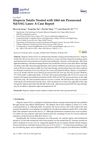
 Laser therapy might help regrow hair in alopecia totalis better than steroids alone.
 December 2018 in “Lasers in Surgery and Medicine”
 Science improves peace by advancing medical treatments, like laser therapies and non-invasive imaging.
 July 2018 in “Elsevier eBooks”
 Up to half of people experience itchy scalp, often due to skin conditions like seborrheic dermatitis or psoriasis, and treatments vary based on the specific cause.
 July 2018 in “Elsevier eBooks”
 The most common cause of hair loss in children is tinea capitis, followed by alopecia areata and telogen effluvium.
 May 2018 in “White Rose eTheses Online (University of Leeds, The University of Sheffield, University of York)”
 Alopecia areata may be treated by using EGCG to balance immune cells and reduce inflammation.
 April 2018 in “Journal of Investigative Dermatology”
 Older hair follicle stem cells have a reduced ability to renew themselves, leading to more hair loss.