 April 2018 in “Journal of Investigative Dermatology”
 Both Th1 and Th2 immune responses are increased in alopecia areata, with Th2 response more strongly linked to how severe the disease is.
 April 2018 in “Journal of Investigative Dermatology”
 Activating Nrf2 helps wounds heal faster by increasing hair follicle stem cells.
 April 2018 in “The journal of investigative dermatology/Journal of investigative dermatology”
 Samcyprone ointment is effective for treating common warts if a sensitization reaction occurs first.
 December 2017 in “The journal of investigative dermatology. Symposium proceedings/The Journal of investigative dermatology symposium proceedings”
 The summit aimed to speed up finding treatments for alopecia areata.
 June 2017 in “Poster presentations”
 All four treatments for early rheumatoid arthritis had similar safety profiles.
 April 2016 in “The journal of investigative dermatology/Journal of investigative dermatology”
 The back of the scalp has more nerve fibers than the front, which may explain why some people feel more sensitivity there.
 April 2016 in “The journal of investigative dermatology/Journal of investigative dermatology”
 BMP signaling controls hair growth and skin color.
 January 2016 in “Springer eBooks”
 Alopecia Areata is an unpredictable autoimmune hair loss condition with limited and variable treatment effectiveness.
 January 2016 in “Springer eBooks”
 Understanding drug interactions, side effects, and patient-specific factors is crucial for effective dermatological care.
 June 2013 in “Annals of the rheumatic diseases”
 Methotrexate dose has little effect on its toxicity when used with adalimumab for early rheumatoid arthritis.
 July 2025 in “Revista Eletrônica Acervo Científico”
 Hydroxychloroquine is most effective for scarring alopecias, especially when combined with other treatments.
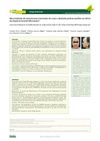 June 2024 in “BioSCIENCE”
 Microinfusion of methotrexate can help treat frontal fibrosing alopecia.
 April 2023 in “Research Society and Development”
 Corticosteroids are safe and effective for treating Alopecia Areata.
 September 2021 in “Revista Interdisciplinar em Saúde”
 Oral isotretinoína effectively stabilizes frontal fibrosing alopecia.
 December 2025 in “International Journal of Innovative Technologies in Social Science”
 Oral JAK inhibitors effectively treat alopecia areata and are generally well-tolerated.
25 citations
,
March 2021 in “Australasian Journal of Dermatology” Ustekinumab successfully treated a man's resistant skin condition when other treatments failed.
12 citations
,
January 2024 in “Journal of the American Academy of Dermatology”  April 2023 in “The journal of investigative dermatology/Journal of investigative dermatology”
 JAK inhibitors help hair growth by boosting beta-catenin activity in hair root cells.
1 citations
,
May 2025 in “Journal of the European Academy of Dermatology and Venereology” Ritlecitinib and baricitinib are effective for alopecia areata, but more research is needed to determine which is better.
December 2025 in “Actas Dermo-Sifiliográficas” Ritlecitinib is effective and safe for treating severe alopecia areata in people aged 12 and older.
5 citations
,
April 2019 in “Journal of Investigative Dermatology” Oral JAK inhibitors improved alopecia areata by modulating immune responses and boosting hair growth.
2 citations
,
February 2023 in “Actas Dermo-Sifiliográficas” Baricitinib effectively improved both atopic dermatitis and alopecia areata symptoms in a patient.
April 2025 in “International Journal of Dermatology” JAK inhibitors effectively reduce alopecia areata symptoms in Black patients.
Baricitinib is effective for Alopecia Areata but requires careful patient history evaluation.
21 citations
,
November 2018 in “Journal of the European Academy of Dermatology and Venereology” The combination of encorafenib and binimetinib caused few skin issues.
74 citations
,
February 2018 in “Journal of the American Academy of Dermatology”  December 2023 in “Journal of Cosmetic Dermatology”
 Baricitinib effectively and safely improves hair growth in patients with severe alopecia areata.
February 2026 in “International Journal of Dermatology” Ritlecitinib shows promise in improving hair regrowth in adolescents with alopecia areata.
July 2026 in “Journal of the American Academy of Dermatology” 4 citations
,
November 2023 in “SKIN The Journal of Cutaneous Medicine” Ritlecitinib is safe for treating alopecia areata for up to 48 weeks.