July 2025 in “Journal of Ayurveda Case Reports” Ayurvedic treatment significantly improved hair regrowth in a child with Alopecia Universalis.
 June 2025 in “Journal of Cosmetic Dermatology”
 Exosome therapy with laser treatment helped hair regrowth in a child with a rare skin condition.
 February 2025 in “Pediatric Dermatology”
 Some pediatric Ewing's sarcoma patients may experience permanent hair loss after chemotherapy, and treatments might not fully restore hair.
February 2025 in “Brazilian Journal of Hair Health” Personalized multimodal treatment significantly improved hair growth and scalp coverage in androgenetic alopecia without side effects.
January 2025 in “Indian Dermatology Online Journal” Mycosis fungoides can have unusual symptoms and may be misdiagnosed, but specific cell markers might suggest a lower risk of worsening.

The patch effectively promotes hair growth for alopecia areata without pain.
 January 2025 in “Journal of Materials Chemistry B”
 The new microneedle treatment could be a more effective and convenient option for hair loss.
 December 2024 in “International Journal For Multidisciplinary Research”
 Topical creams are commonly used for treating non-infective skin diseases in children, with antifungals being the most prescribed.
 November 2024 in “JAMA Dermatology”
 Low-dose oral minoxidil may help with hair loss, but more research is needed.
 October 2024 in “JEADV Clinical Practice”
 UK dermatologists commonly use corticosteroids and minoxidil to treat hair loss conditions.
 July 2024 in “Journal of Cosmetic Dermatology”
 Fractional laser therapy is a promising, effective, and minimally invasive treatment for hair loss.
May 2024 in “JAAD Case Reports” A young man was diagnosed with a rare hair loss condition usually seen in older women.
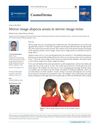
Mirror-image twins can have alopecia areata on opposite sides of their heads.
 April 2024 in “Frontiers in pharmacology”
 Brepocitinib 30mg is most effective for moderate-to-severe alopecia areata, but ritlecitinib 50mg may offer a better balance of safety and effectiveness.
 April 2024 in “Dermatology and therapy”
 There are significant gaps and inconsistencies in diagnosing and treating alopecia areata in Greece and Italy.
 April 2024 in “Remedium Journal about the Russian market of medicines and medical equipment”
 Pharmacy workers need more education to better help people with hair loss.
 January 2024 in “SAGE Open Medical Case Reports”
 Minoxidil can help increase facial hair growth.
Adult acne significantly affects quality of life, highlighting the need for early treatment to prevent scarring and psychological stress.
 December 2023 in “Journal of Korean Society of Beauty Cultral Arts”
 Scalp massages and medical treatments for hair loss are more satisfying than folk remedies.
 November 2023 in “The journal of investigative dermatology/Journal of investigative dermatology”
 Early treatment and multidisciplinary care are key to managing Frontal Fibrosing Alopecia and preventing further hair loss.
 September 2023 in “International Journal of Trichology”
 Tofacitinib helped a woman regrow hair with no major side effects.
 September 2023 in “Journal of The American Academy of Dermatology”
 Raman spectroscopy is promising for measuring and enhancing drug delivery in alopecia treatments.
September 2023 in “Journal of the American Academy of Dermatology” Obese children respond worse to CARP treatment than non-obese children.
 July 2023 in “Media Dermato Venereologica Indonesiana”
 Corticosteroids effectively treated a 60-year-old man's skin condition.
June 2023 in “International Journal of Dermatology” Congenital alopecia areata may be genetic, and topical corticosteroids often help regrow hair.
June 2023 in “Value in Health” Alopecia areata treatments often cause headaches and infections, highlighting the need for safer options.
 May 2023 in “International journal of science and research”
 2% minoxidil solution improved hair density and quality in children with Loose Anagen Hair Syndrome.
May 2023 in “Journal of Drugs in Dermatology” REVIVV® serum improves hair growth and reduces shedding in androgenetic alopecia.

A 12-year-old girl was misdiagnosed with alopecia areata but actually had a nevus sebaceus with a genetic mutation.
 April 2023 in “Journal of Investigative Dermatology”
 Long-term Imiquimod treatment causes initial skin inflammation that lessens over time, and topical corticosteroids reduce this inflammation and cytokines in a mouse model of psoriasis.