 April 2024 in “Pharmaceuticals”
 Bimatoprost helps with hair growth and eye conditions but can be costly and have side effects.
 318 citations
,
January 2022 in “Signal Transduction and Targeted Therapy”
318 citations
,
January 2022 in “Signal Transduction and Targeted Therapy” The Wnt/β-catenin pathway is important for body functions and diseases, and targeting it may treat conditions like cancer, but with safety challenges.
 21 citations
,
January 2022 in “Biomaterials Science”
21 citations
,
January 2022 in “Biomaterials Science” RNA delivery is best for in-body use, while RNP delivery is good for outside-body use. Both methods are expected to greatly impact future treatments.
 November 2025 in “Bioscientia Medicina Journal of Biomedicine and Translational Research”
 A combined treatment with microneedling and vitamin D3 led to complete hair regrowth in a woman with stubborn patch alopecia areata.
 11 citations
,
June 1996 in “Nutrition”
11 citations
,
June 1996 in “Nutrition” Vitamin D3 may prevent hair loss from chemotherapy, but side effects and cancer cell protection are concerns.
1 citations
,
January 1998 in “International journal of cancer” Rubbing vitamin D3 on skin can help prevent hair loss from chemotherapy and slow breast tumor growth in mice.
 9 citations
,
June 2019 in “Archives of Dermatological Research”
9 citations
,
June 2019 in “Archives of Dermatological Research” Both topical calcipotriol and narrowband UVB improved alopecia, but combining them didn't enhance the effect on hair loss severity, despite higher vitamin D3 levels.
 51 citations
,
January 2012 in “Annals of dermatology/Annals of Dermatology”
51 citations
,
January 2012 in “Annals of dermatology/Annals of Dermatology” A boy with alopecia regrew hair using a vitamin D cream after other treatments failed.
53 citations
,
October 1998 in “The journal of investigative dermatology/Journal of investigative dermatology” Topical calcitriol-analogs can reduce hair loss caused by chemotherapy.
 1 citations
,
November 2017 in “The journal of investigative dermatology/Journal of investigative dermatology”
1 citations
,
November 2017 in “The journal of investigative dermatology/Journal of investigative dermatology” Mohs micrographic surgery is effective for treating basal cell carcinoma on the eyelid, while radiotherapy has higher recurrence rates, and topical vitamin D3 may reduce and delay BCC formation in mice.
 January 2015 in “Indian Journal of Dermatology, Venereology and Leprology”
 The document concludes that various skin conditions have specific characteristics and treatments, and highlights the importance of vitamin D in managing these dermatological issues.
 7 citations
,
May 2014 in “Clinical practice”
7 citations
,
May 2014 in “Clinical practice” Cooling the scalp may prevent hair loss from chemotherapy, hair often grows back after treatment, and nail issues usually improve after stopping the drug.
2 citations
,
September 2019 Alopecia areata treatments should be personalized, using options like steroids, JAK inhibitors, and other therapies based on individual needs.
 6 citations
,
August 1989 in “European journal of pediatrics”
6 citations
,
August 1989 in “European journal of pediatrics” Child with rickets improved with a specific vitamin D therapy, but alopecia did not change.
 June 1996 in “Journal of Dermatological Science”
 Vitamin D3 applied to mouse skin caused more wrinkles and sagging due to changes in the skin's outer layer.
 January 2021 in “Advances in health sciences research/Advances in Health Sciences Research”
 Two siblings with gray patch tinea capitis were successfully treated after identifying risk factors.
20 citations
,
May 2007 in “JDDG Journal der Deutschen Dermatologischen Gesellschaft” Etanercept effectively treated a severe skin condition when other treatments failed.
 29 citations
,
December 2017 in “International Journal of Dermatology”
29 citations
,
December 2017 in “International Journal of Dermatology” People with alopecia areata often have lower vitamin D levels, which are linked to more severe and longer-lasting hair loss, but vitamin D receptor levels in the skin don't show the same pattern and don't predict treatment success.
 February 2018 in “Egyptian Journal of Radiation Sciences and Applications”
 Patients with Discoid Lupus Erythematosus have lower vitamin D and antioxidant levels and higher oxidative stress.
 47 citations
,
September 2023 in “Pharmacological Reports”
47 citations
,
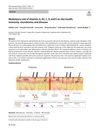
September 2023 in “Pharmacological Reports” Vitamins A, B3, C, D, and E can improve skin health and immunity.
 July 2012 in “British Journal of Dermatology”
 Hair loss treatments show limited improvement, sunscreen thickness affects vitamin D production, and the effectiveness of IVIg for toxic epidermal necrolysis is uncertain.
 2 citations
,
March 2023 in “3C Empresa Investigación y pensamiento crítico”
2 citations
,
March 2023 in “3C Empresa Investigación y pensamiento crítico” Alopecia areata patients have higher IFN-γ and low vitamin D3 levels.
 15 citations
,
August 2022 in “Journal of endocrinological investigation”
15 citations
,
August 2022 in “Journal of endocrinological investigation” Vitamin D and calcium are important for quick and effective skin wound healing.
 18 citations
,
September 2003 in “The journal of investigative dermatology/Journal of investigative dermatology”
18 citations
,
September 2003 in “The journal of investigative dermatology/Journal of investigative dermatology” VDUP1 is found in skin and hair follicles, interacts with sciellin, and may help regulate skin cell differentiation.
 50 citations
,
October 1986 in “European journal of pediatrics”
50 citations
,
October 1986 in “European journal of pediatrics” A boy with severe Vitamin D-resistant rickets did not respond to treatment and lacked a common symptom, suggesting a need for alternative treatments.
 20 citations
,
May 2016 in “Journal of Cosmetic Dermatology”
20 citations
,
May 2016 in “Journal of Cosmetic Dermatology” Low vitamin D receptor levels found in hair loss patients; topical vitamin D treatment suggested.

Low vitamin D3 and ferritin levels may cause hair loss in pregnant women.
 5 citations
,
May 2018 in “Journal of the American Academy of Dermatology”
5 citations
,
May 2018 in “Journal of the American Academy of Dermatology” Lower vitamin D levels might be linked to more severe alopecia areata, but more research is needed to understand if vitamin D can help treat it.
23 citations
,
January 2016 in “International Journal of Trichology” Women with female pattern hair loss have lower Vitamin D3 levels.
55 citations
,
January 2020 in “Advances in experimental medicine and biology” Vitamin D and its receptor may help prevent skin cancer.