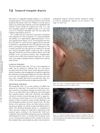
 April 2012 in “Informa Healthcare eBooks”
 Temporal triangular alopecia is a lifelong condition with hairless patches on the side of the head that may be present from birth.
1 citations
,
January 2024 in “Pharmaceuticals” A new carrier improves skin delivery of tofacitinib for treating inflammatory skin diseases.
 7 citations
,
July 2008 in “Experimental Dermatology”
7 citations
,
July 2008 in “Experimental Dermatology” The study concluded that a protein important for hair strength is regulated by certain molecular processes and is affected by growth phases.
135 citations
,
October 1997 in “Journal of biological chemistry/The Journal of biological chemistry” Trichohyalin is modified by enzymes to form strong structures in hair cells.
 5 citations
,
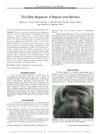
April 2016 in “The American Journal of Dermatopathology”
5 citations
,
April 2016 in “The American Journal of Dermatopathology” A tick bite caused temporary hair loss in a man, which is a rare condition that usually gets better within 3 months.
141 citations
,
June 2002 in “Philosophical Transactions of the Royal Society B Biological Sciences” The study revealed how specific genes and proteins control root hair growth in plants.
January 2019 in “Florida International University Digital Commons (Florida International University)” TOF-SIMS improved chemical mapping in cells, confirming gunshot residue, tracking anti-tumor drugs, and identifying molecules in mosquitoes and wounds.
November 2025 in “Journal of Investigative Dermatology” NUL-5 may boost hair growth by improving hair follicle health and structure.
 January 2026 in “The Eurasian Journal of Life Sciences”
 Pectin nanofibers show promise for medical use due to their unique properties.
 28 citations
,
July 2007 in “Development”
28 citations
,
July 2007 in “Development” TAF4 is important for skin cell growth and helps prevent skin cancer in mice.
 August 2020 in “Textile research journal”
 The model helps understand how wool fiber structure affects its strength and flexibility.
32 citations
,
August 2016 in “Science Signaling” Alopecia areata patients show unique protein activity patterns, suggesting imbalanced signaling pathways.
January 2013 in “Touro Scholar (Touro College)” DPCP works best for alopecia areata, but more research is needed for better treatments.
 11 citations
,
October 2017 in “Journal of Investigative Dermatology”
11 citations
,
October 2017 in “Journal of Investigative Dermatology” Applying certain inhibitors to the skin can promote hair growth without harming cells.
 44 citations
,
July 2005 in “Aesthetic Plastic Surgery”
44 citations
,
July 2005 in “Aesthetic Plastic Surgery” Hair transplantation successfully treated a woman's hair loss caused by a tight ponytail.
1 citations
,
October 2025 in “Journal of Investigative Dermatology” Delgocitinib cream may help treat frontal fibrosing alopecia.
23 citations
,
January 1981 Hair is mostly made of three protein types: helical, high-sulfur, and high-tyrosine.
 49 citations
,
August 2018 in “International Journal of Dermatology”
49 citations
,
August 2018 in “International Journal of Dermatology” Topical JAK inhibitors may help treat alopecia universalis by promoting hair regrowth.
 7 citations
,
March 2022 in “Frontiers in Genetics”
7 citations
,
March 2022 in “Frontiers in Genetics” The research found specific genes that may cause longer hair in Tianzhu White Yak.
4 citations
,
July 2024 in “Animals” The KRTAP19-5 gene affects wool curvature in Chinese Tan sheep, with Variant B reducing curvature.
86 citations
,
August 2000 in “Pigment cell research” Melanocyte activity in hair follicles is linked to the hair growth cycle, being active in growth phases and inactive in rest phases.
13 citations
,
July 2019 in “PLoS ONE” Deleting podoplanin in mice promotes hair growth by enhancing cell migration.
 1 citations
,
April 2017 in “Journal of Investigative Dermatology”
1 citations
,
April 2017 in “Journal of Investigative Dermatology” Tofacitinib may slow hair loss in scarring alopecias but is unlikely to regrow significant hair.
January 2024 in “SSRN Electronic Journal” 13 citations
,
July 1994 in “PubMed” Keratins K6 and K16 are expressed more freely in regenerating mouse skin than K1 and K10.
11 citations
,
April 1993 in “PubMed” Human hair cells can change based on their environment, especially interactions with certain skin cells.
 30 citations
,
April 2017 in “European Journal of Cell Biology”
30 citations
,
April 2017 in “European Journal of Cell Biology” CIP/KIP proteins help stop cell division and support hair growth.
January 2007 in “The FASEB journal” Human hair keratins help nerve regeneration and support Schwann cell activity.
July 2024 in “Journal of Investigative Dermatology” Brepocitinib improves cicatricial alopecia and reduces key immune markers.
 December 2025 in “Nature Communications”
 Skin organoids can model tuberculosis infection and help test treatments.