 March 2024 in “GSC Advanced Research and Reviews”
 Different light affects cell functions and can help treat skin conditions.
 March 2024 in “Journal of Microbiology and Biotechnology”
 Phloroglucinol may help improve hair loss by promoting hair growth and reducing oxidative stress.
 February 2024 in “PloS one”
 Tofacitinib and adalimumab are promising treatments for cicatricial alopecia with few side effects.
 January 2024 in “Biological & clinical sciences research journal”
 Apigenin, found in plants and vegetables, has many health benefits, including anti-inflammatory, antioxidant, and anticancer effects.
 January 2024 in “International Journal of Health Science”
 Scalp cooling and low-power light therapy show promise in reducing chemotherapy-induced hair loss but need more research.
 January 2024 in “Tropical journal of pharmaceutical research”
 Cirsium japonicum var. spinossimum seeds may help reduce inflammation and fight cancer.
 November 2023 in “Frontiers in veterinary science”
 The study provides insights into hair growth mechanisms in yaks.
 October 2023 in “bioRxiv (Cold Spring Harbor Laboratory)”
 A protein called EGFR protects hair follicle stem cells, and when it's disrupted, hair follicles can be damaged, but blocking certain pathways can restore hair growth.
 September 2023 in “Asian journal of beauty & cosmetology”
 Lipids are important for healthy hair, but their exact role is not fully understood and needs more research.
 September 2023 in “Scientific reports”
 Segmental hair analysis can track testosterone over time but needs adjustments for sex, hair color, and washing frequency.
 August 2023 in “Clinical Endocrinology and Metabolism”
 Balancing hormones can help women feel youthful and healthy.
 May 2023 in “Acta Universitatis Agriculturae et Silviculturae Mendelianae Brunensis”
 Royal Jelly gel is stable and may help with scar treatment.
 February 2023 in “Asian journal of pharmaceutical research and development”
 Flavonoids in Iraqi marshland plants have potential health benefits like antioxidant and anti-inflammatory effects.
 February 2023 in “Cosmoderma”
 Combining red LED therapy with beta-carotene is more effective for treating photoaging than red LED therapy alone.
 October 2022 in “Journal of advanced research in medicine”
 A woman with Sheehan syndrome improved with hormone treatment.
 September 2022 in “Skin appendage disorders”
 Seborrheic dermatitis may contribute to the development of central centrifugal cicatricial alopecia.
 February 2022 in “Journal of Armed Forces Medical College”
 The patient with autoimmune hypothyroidism improved after treatment for thyroid and associated conditions.
 May 2021 in “International journal of developmental research”
 Estrogens and progesterone are key in regulating melasma pigmentation.
 April 2021 in “Journal of Advances in Environmental Health Research”
 Dental amalgam releases harmful mercury, posing health risks, and should be replaced with safer materials.
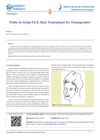
A hair transplant using hair from the back of the head and pubic area was successful in creating a feminine hairline for a male-to-female transgender person.
 May 2020 in “International Journal of Engineering Applied Sciences and Technology”
 Bioactive plant materials like lemon, garlic, and neem effectively fight harmful bacteria.
 January 2020 in “Der Pharmacia Lettre”
 Nanoparticle-based herbal remedies could be promising for treating hair loss with fewer side effects and lower cost, but more research is needed.
 May 2019 in “Pakistan Journal of Pharmaceutical Sciences”
 CO2 laser treatment may be more effective for skin rejuvenation.
 January 2019 in “ARC journal of pharmaceutical sciences”
 Acne can be managed with various treatments and requires psychological support due to its emotional impact.
 July 2018 in “Elsevier eBooks”
 The most common cause of hair loss in children is tinea capitis, followed by alopecia areata and telogen effluvium.

Microneedle technology is effective for skin rejuvenation and enhancing cosmeceutical delivery, with ongoing innovation and increasing commercialization.
 January 2018 in “Elsevier eBooks”
 The document concludes that alopecia has significant social and psychological effects, leading to a market for hair loss treatments.
 January 2018 in “Springer eBooks”
 Lasers are FDA-approved for permanent hair reduction, not removal, and more research is needed to improve treatments.
 January 2018 in “Springer eBooks”
 Different races and genders have unique skin and hair issues, requiring specialized care and more research for effective treatment.
 January 2017 in “Acta dermato-venereologica”
 The congress showed that psychological therapy can help skin condition patients, social media affects acne stigma, education improves atopic dermatitis, and patient satisfaction in dermatology is high, especially with good doctor engagement.