 July 2022 in “The journal of investigative dermatology/Journal of investigative dermatology”
 A patient with a PLEC mutation has epidermolysis bullosa, muscular dystrophy, and myasthenia gravis, which improved with steroid treatment.
1 citations
,
October 2000 in “Journal of Investigative Dermatology” The Thr1022Ala variant in the hairless gene is not a disease-causing mutation.
 3 citations
,
February 2020 in “The journal of gene medicine”
3 citations
,
February 2020 in “The journal of gene medicine” A mutation in the HR gene causes a rare form of irreversible hair loss in two Kashmiri families. Whole exome sequencing is effective for finding such mutations.
 April 2023 in “The journal of investigative dermatology/Journal of investigative dermatology”
 The protein p21 is more abundant in normal skin cells than in melanoma cells and may help protect against melanoma, with UVB light affecting its levels.
 April 2016 in “Journal of Investigative Dermatology”
 Tumor cell adhesion is linked to higher risk of SLN metastasis and melanoma recurrence, and a model including these factors predicts these outcomes better than one with just clinical data.
March 2026 in “Journal of Investigative Dermatology” 24 citations
,
September 2023 in “Science Advances” Mettl3 is essential for normal tissue development and self-renewal by regulating gene expression.
 April 2016 in “Journal of Investigative Dermatology”
 SOX4 is crucial for the development of melanoma.
59 citations
,
November 2011 in “Development” Trps1 is essential for proper hair follicle development.
 June 2026 in “Frontiers in Oncology”
 GSDMA deficiency slows skin cancer growth.
 24 citations
,
April 2017 in “Oncology Reports”
24 citations
,
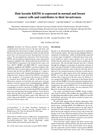
April 2017 in “Oncology Reports” The hair keratin gene KRT81 is found in both normal and breast cancer cells and helps them invade surrounding tissues.
Deleting Twist1 in skin cells reduces UVB-induced skin cancer risk.
 July 2024 in “Research Square (Research Square)”
 SIRT3 and SIRT7 decrease, while NFATC1 and PDL-1 increase in Androgenetic Alopecia.
 36 citations
,
July 2014 in “Neuromuscular Disorders”
36 citations
,
July 2014 in “Neuromuscular Disorders” A patient with a larger than usual genetic mutation had a broader range of symptoms for a muscle disease.
November 2022 in “Journal of Investigative Dermatology” NCSTN gene mutation causes abnormal skin cell differentiation and more inflammation, contributing to Hidradenitis Suppurativa.
34 citations
,
May 2001 in “Endocrinology” Mrp3 helps in wound healing and hair growth.
 July 2024 in “British journal of dermatology/British journal of dermatology, Supplement”
 A variant in the KRT31 gene causes a rare hereditary hair disorder called monilethrix.
70 citations
,
August 2006 in “Cancer Research” AP-1 controls tumor cell type by affecting key signaling pathways.
 2 citations
,
August 2022 in “The journal of investigative dermatology/Journal of investigative dermatology”
2 citations
,
August 2022 in “The journal of investigative dermatology/Journal of investigative dermatology” A specific mutation in the K25 gene causes a rare genetic disorder with curly hair at birth and later hair loss, along with dental issues.
 66 citations
,
December 2013 in “Nature Cell Biology”
66 citations
,
December 2013 in “Nature Cell Biology” Inactive hair follicle stem cells help prevent skin cancer.
 April 2017 in “The journal of investigative dermatology/Journal of investigative dermatology”
 Most patients experienced mild to moderate skin problems during a trial for a desmoid tumor treatment.
 3 citations
,
March 2010 in “Dermatologica Sinica”
3 citations
,
March 2010 in “Dermatologica Sinica” A Taiwanese patient had hair loss and skin bumps without the usual gene mutation, suggesting other genetic factors might be involved.
11 citations
,
February 2011 in “The Journal of Dermatology” Mutations in the hairless gene cause a rare form of permanent hair loss.
37 citations
,
January 1986 in “Carcinogenesis” ODC expression in mouse skin and tumors is varied and can be inhibited by retinoic acid or cycloheximide.
2 citations
,
May 2020 in “Journal of the American Academy of Dermatology” Hair shaft changes may be linked to CCCA, but their role is unclear.
 23 citations
,
January 2014 in “International Journal of Biological Sciences”
23 citations
,
January 2014 in “International Journal of Biological Sciences” African American men with prostate cancer have more androgen receptor mutations, which may lead to more aggressive cancer compared to Caucasian American men.
 15 citations
,
April 2017 in “Cell Stem Cell”
15 citations
,
April 2017 in “Cell Stem Cell” Some brain cancer cells avoid immune system detection, and certain treatments could target this to slow their growth; also, certain fat cell precursors help regenerate hair and skin after injury.
69 citations
,
January 2015 in “Cell & tissue research/Cell and tissue research” Keratin mutations cause skin diseases and could lead to new treatments.
28 citations
,
February 2007 in “Cancer Research” Blocking certain proteins in mouse skin can reduce and shrink skin tumors.
November 2024 in “Journal of Investigative Dermatology” ATP-sensitive potassium channels are important for hair growth.