52 citations
,
July 2001 in “Molecular and cellular endocrinology” Activin A helps heal skin wounds and protects the brain after injury.
85 citations
,
March 2008 in “Journal of Cell Science” The mutation causing Hutchinson-Gilford progeria syndrome leads to severe skin problems and early death in mice.
November 2025 in “OPAL (Open@LaTrobe) (La Trobe University)” Gentamicin-loaded exosomes improve healing of infected diabetic wounds in mice.
Trichohyalin, a protein from pig tongue, was purified and found to have a filamentous structure.
December 2025 in “Medicine” Glutamine may protect against alopecia areata, while certain cholesterol and glucose levels may increase risk.
1 citations
,
October 2013 in “The American Journal of Gastroenterology” Infliximab can trigger lupus-like symptoms in Crohn's disease patients.
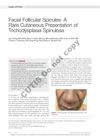
Trichodysplasia spinulosa can occur after a heart transplant due to immunosuppressive drugs.
1 citations
,
November 2024 in “Blood” PI3Kδ inhibition may effectively treat cutaneous chronic graft-versus-host disease.
1 citations
,
August 2019 in “Chinese Medical Journal” A man developed facial skin lesions after a stem cell transplant, which improved with specific treatments.
 3 citations
,
January 2005 in “Biological & Pharmaceutical Bulletin”
3 citations
,
January 2005 in “Biological & Pharmaceutical Bulletin” The peptide GPIGS helps hair cells grow and speeds up hair regrowth in mice.
13 citations
,
May 2019 in “Archives of dermatological research” Tranexamic acid reduces skin aging more in female mice.
4 citations
,
April 2025 in “Antioxidants” Alpha-ketoglutarate protects rabbit skin cells from oxidative damage by activating a specific cell pathway.
2 citations
,
March 2024 in “Dermatologic Surgery” The chemical peel improved the appearance of hand spots safely and effectively.
15 citations
,
August 2019 in “F1000Research” CMG2 and TEM8 receptors have distinct roles in skin and growth disorders, affecting collagen breakdown and growth.
6 citations
,
April 2016 in “Australasian journal of dermatology” Renal transplant patients on tacrolimus and sirolimus may develop acne keloidalis nuchae.
September 2025 in “Stem Cell Research & Therapy” TAZ boosts fat cell formation in goat stem cells by activating a specific signaling pathway.
40 citations
,
September 2004 in “Biomacromolecules” The Glu413Lys mutation in keratin affects hair stability, while Glu413Asp does not.
Keratinocytes can reverse the effects of the GNAQ oncogene, inhibiting melanoma cell growth.
 April 2016 in “Journal of The American Academy of Dermatology”
 A woman's skin symptoms led to a diagnosis of systemic AL amyloidosis, but she died from sepsis shortly after.
1 citations
,
January 2008  69 citations
,
February 1983 in “Gut”
69 citations
,
February 1983 in “Gut” Men with coeliac disease may have hormone imbalances that could affect sexual function, but these can improve with better gut health.
January 2026 in “Biochemical Pharmacology”  September 2013 in “Science”
 Special astrocytes improved learning and memory in rats after a stroke.
 July 2023 in “International Journal of Molecular Sciences”
 N,N-Dimethylglycine Sodium Salt helps reduce skin inflammation and improves skin cell growth and healing.
89 citations
,
October 2003 in “Biology of the Cell” Galectin-1 helps in RNA processing in cell nuclei.
1 citations
,
March 2023 in “Journal of Natural Fibers” A gentler, less damaging method for curling hair using tyrosine works well initially but fades after washing.
 May 2022 in “Liver transplantation”
 The document explains how the immune system reacts to organ transplants and the treatments used to prevent rejection.
37 citations
,
November 2007 in “Journal of Biological Chemistry” Ku80 is a key receptor for Thymosin β4, affecting cell migration and wound healing.
March 2025 in “International Journal of Trichology” Gloriosa superba poisoning can cause sudden hair loss, but hair usually regrows fully.
4 citations
,
March 2025 in “Journal of Cosmetic Dermatology” Semaglutide may cause hair loss, but more research is needed to confirm this.