 January 1980 in “Journal of the Japan Veterinary Medical Association”
 Iodine deficiency in sows likely caused hair loss in newborn piglets.
 July 2022 in “The journal of investigative dermatology/Journal of investigative dermatology”
 Hair growth cycles need varied signals in space and time.
 January 2010 in “Journal of The American Academy of Dermatology”
 The document provided instructions for completing a CME exam on diagnosing and managing hair loss.
 March 2026 in “Frontiers in Medicine”
 Different types of alopecia cause hair loss due to immune system issues, with some allowing regrowth and others causing permanent loss.
 61 citations
,
September 2010 in “Genomics”
61 citations
,
September 2010 in “Genomics” The study found that immune responses disrupt hair growth cycles, causing hair loss in alopecia areata.
 December 2011 in “Korean journal of veterinary research”
 A Miniature Pinscher dog with hair loss and scaling was diagnosed with pattern alopecia and improved with melatonin treatment.
 5 citations
,
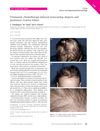
March 2015 in “Clinical and Experimental Dermatology”
5 citations
,
March 2015 in “Clinical and Experimental Dermatology” Chemotherapy caused a woman's permanent hair loss and early menopause.
 2 citations
,
July 2021 in “Dermatologic Therapy”
2 citations
,
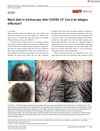
July 2021 in “Dermatologic Therapy” A woman's hair loss after COVID-19 was likely due to a mix of pressure-induced alopecia and acute telogen effluvium.
January 2025 in “International Journal of Trichology” Increased hair growth after a cast is temporary and harmless.
April 2023 in “Journal of Investigative Dermatology” Proper cell death regulation is crucial for normal hair follicle regeneration and skin remodeling.
 March 2026 in “Frontiers in Veterinary Science”
 All-trans retinoic acid slows cell growth and increases cell death in goat hair follicles through a specific pathway.
August 2004 in “Veterinary Dermatology” The red panda's hair loss was caused by an endocrine issue linked to ovarian tumors.
2 citations
,
July 2013 in “PubMed” The pubic hair loss was likely due to anorexia nervosa.
April 2023 in “Al-Azhar International Medical Journal /Al-Azhar International Medical Journal” COVID-19 infection is linked to temporary hair loss in Egyptian women.
86 citations
,
June 1998 in “Journal of Investigative Dermatology” The hairless gene mutation causes baldness by disrupting hair follicle structure.
January 2014 in “European Journal of Dermatology” A method was found to visualize hair regrowth and avoid unnecessary side effects from treatments.
 1 citations
,
April 2022 in “Revista Da Associacao Medica Brasileira”
1 citations
,
April 2022 in “Revista Da Associacao Medica Brasileira” COVID-19 can cause different types of hair loss, and proper diagnosis by a specialist may be needed.
 March 2012 in “Journal of The American Academy of Dermatology”
 Dermoscopy helps diagnose different hair loss conditions, and characteristics vary among ethnicities and individual cases.
 May 2022 in “Acta Scientific Women's Health”
 A woman lost over 80% of her hair due to a condition called telogen effluvium after having COVID-19.
30 citations
,
October 1999 in “Differentiation” Mutant MK6a transgenes in mice cause blistering, hair loss, and potential human alopecia.
COVID-19 may be linked to hair loss called Telogen Effluvium, affecting quality of life and self-esteem.
24 citations
,
May 2000 in “Journal of the American Academy of Dermatology” Pseudopelade can affect both the scalp and beard, causing hair loss.
 January 2024 in “Annals of Agricultural and Environmental Medicine”
 Red LED light therapy helps reduce hair loss and improves hair regrowth in long COVID patients.
 19 citations
,
November 1993 in “Mammalian Genome”
19 citations
,
November 1993 in “Mammalian Genome” A gene mutation in mice causes permanent hair loss and skin issues.
 April 2023 in “The journal of investigative dermatology/Journal of investigative dermatology”
 T cells with memory features grow in number and gather around hair follicles when there are not enough immune cells.
 April 2022 in “Indexia revista médico - científica”
 Alopecia causes sudden hair loss, possibly due to genetic, environmental, or immune factors.
 75 citations
,
October 2016 in “Genes & Development”
75 citations
,
October 2016 in “Genes & Development” Cells in hair follicles help create fat cells in the skin by releasing a protein called Sonic Hedgehog.
 6 citations
,
December 1997 in “Journal of The American Academy of Dermatology”
6 citations
,
December 1997 in “Journal of The American Academy of Dermatology” CTE can distort results in hair growth trials, so exclude it carefully.
January 2006 in “The Year book of dermatology” 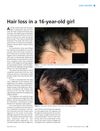 November 2014 in “Prescriber”
 The 16-year-old girl with hair loss was successfully treated for alopecia areata, leading to significant hair regrowth.